


NF1-like optic pathway gliomas in children: clinical and molecular characterization of this specific presentation
- PMID: 32642735
- PMCID: PMC7317061
- DOI: 10.1093/noajnl/vdz054
NF1-like optic pathway gliomas in children: clinical and molecular characterization of this specific presentation
Abstract
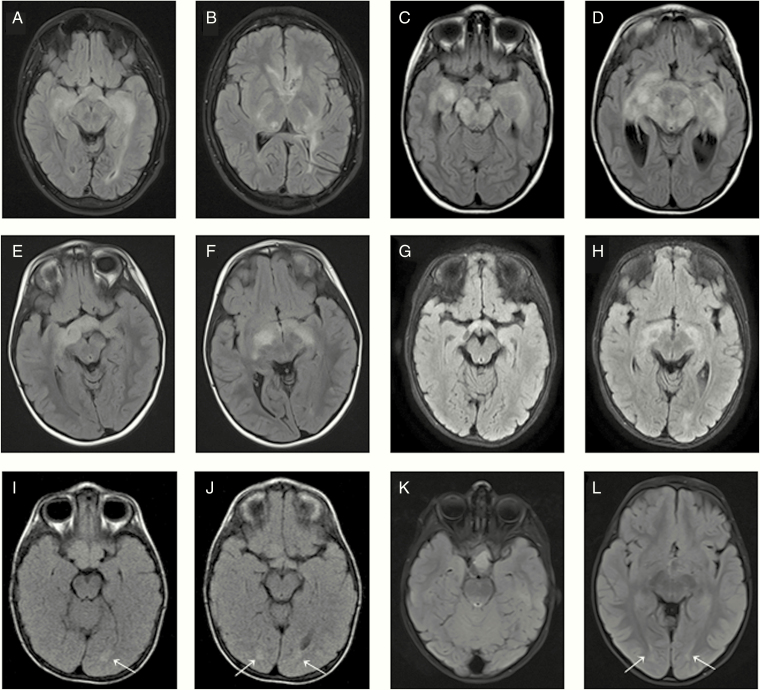
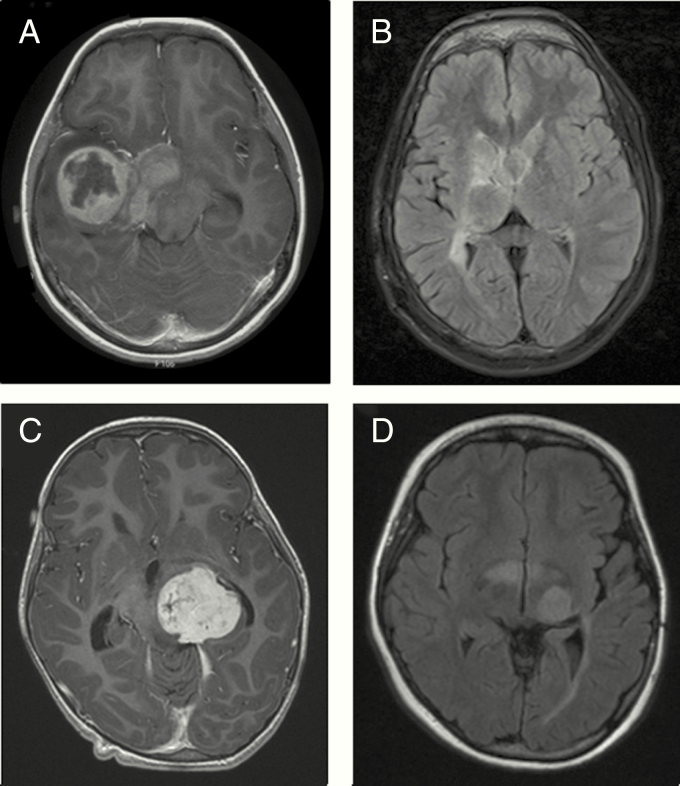
Background: Pediatric neurofibromatosis type 1 (NF1)-associated optic pathway gliomas (OPGs) exhibit different clinico-radiological features, treatment, and outcome compared with sporadic OPGs. While NF1-associated OPGs are caused by complete loss-of-function of the NF1 gene, other genetic alterations of the RAS-MAPK pathway are frequently described in the sporadic cases. We identified a group of patients who presented OPGs with typical radiological features of NF1-associated OPGs but without the NF1 diagnostic criteria. We aim to investigate into the possible molecular mechanisms underlying this "NF1-like" pediatric OPGs presentation.
Methods: We analyzed clinico-radiological features of 16 children with NF1-like OPGs and without NF1 diagnostic criteria. We performed targeted sequencing of the NF1 gene in constitutional samples (n = 16). The RAS-MAPK pathway major genes were sequenced in OPG tumor samples (n = 11); BRAF FISH and IHC analyses were also performed.
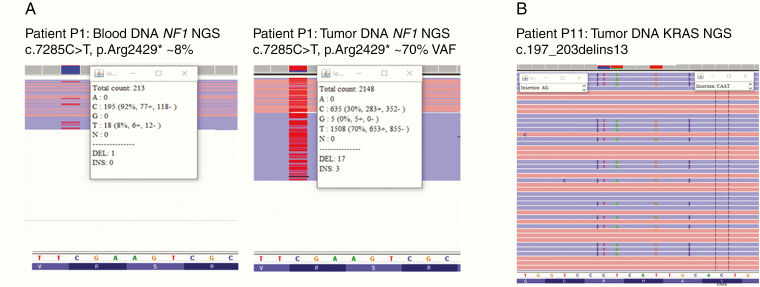
Results: In one patient's blood and tumor samples, we identified a NF1 nonsense mutation (exon 50: c.7285C>T, p.Arg2429*) with ~8% and ~70% VAFs, respectively, suggesting a mosaic NF1 mutation limited to the brain (segmental NF1). This patient presented signs of neurodevelopmental disorder. We identified a somatic alteration of the RAS-MAPK pathway in eight tumors: four BRAF activating p.Val600Glu mutations, three BRAF:KIAA oncogenic fusions, and one putative gain-of-function complex KRAS indel inframe mutation.
Conclusions: NF1-like OPGs can rarely be associated with mosaic NF1 that needs specific constitutional DNA analyses for diagnosis. Further studies are warranted to explore unknown predisposition condition leading to the NF1-like OPG presentation, particularly in patients with the association of a neurodevelopmental disorder.
Keywords: BRAF fusion; NF1; mosaicism; pediatric optic pathway glioma; pilocytic astrocytoma; segmental neurofibromatosis.
© The Author(s) 2019. Published by Oxford University Press, the Society for Neuro-Oncology and the European Association of Neuro-Oncology.
Figures
References
-
- Falzon K, Drimtzias E, Picton S, Simmons I. Visual outcomes after chemotherapy for optic pathway glioma in children with and without neurofibromatosis type 1: results of the International Society of Paediatric Oncology (SIOP) Low-Grade Glioma 2004 trial UK cohort. Br J Ophthalmol. 2018;0(1):1–5. - PubMed
-
- Helfferich J, Nijmeijer R, Brouwer OF, et al. Neurofibromatosis type 1 associated low grade gliomas: a comparison with sporadic low grade gliomas. Crit Rev Oncol Hematol. 2016;104:30–41. - PubMed
-
- Walker DA, Liu J, Kieran M, et al. ; CPN Paris 2011 Conference Consensus Group A multi-disciplinary consensus statement concerning surgical approaches to low-grade, high-grade astrocytomas and diffuse intrinsic pontine gliomas in childhood (CPN Paris 2011) using the Delphi method. Neuro Oncol. 2013;15(4):462–468. - PMC - PubMed
-
- Blanchard G, Lafforgue MP, Lion-François L, et al. ; NF France network Systematic MRI in NF1 children under six years of age for the diagnosis of optic pathway gliomas. Study and outcome of a French cohort. Eur J Paediatr Neurol. 2016;20(2):275–281. - PubMed
LinkOut - more resources
Full Text Sources
Research Materials
Miscellaneous