


Why are patients dissatisfied following a total knee replacement? A systematic review
- PMID: 32642827
- PMCID: PMC7584563
- DOI: 10.1007/s00264-020-04607-9
Why are patients dissatisfied following a total knee replacement? A systematic review
Abstract
Background: Although total knee replacement (TKR) is an effective intervention for end-stage arthritis of the knee, a significant number of patients remain dissatisfied following this procedure. Our aim was to identify and assess the factors affecting patient satisfaction following a TKR.
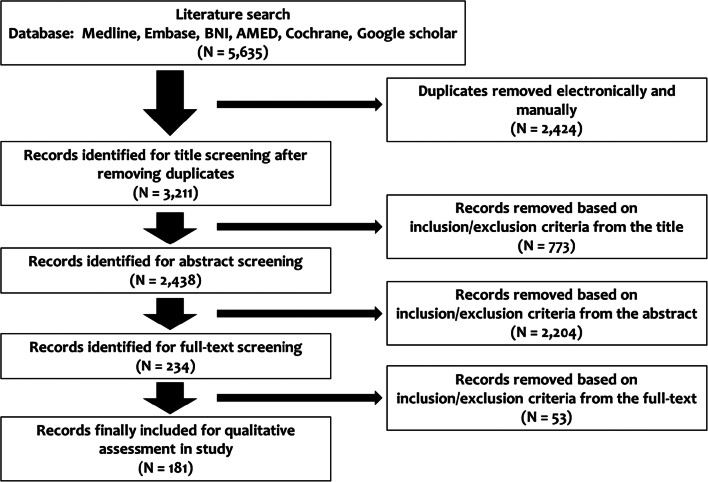
Materials and methods: In accordance with the PRISMA guidelines, two reviewers searched the online databases for literature describing factors affecting patient satisfaction following a TKR. The research question and eligibility criteria were established a priori. Any clinical outcome study that described factors relating to overall satisfaction after primary TKR was included. Quality assessment for the included studies was performed by two accredited orthopaedic surgeons experienced in clinical research.
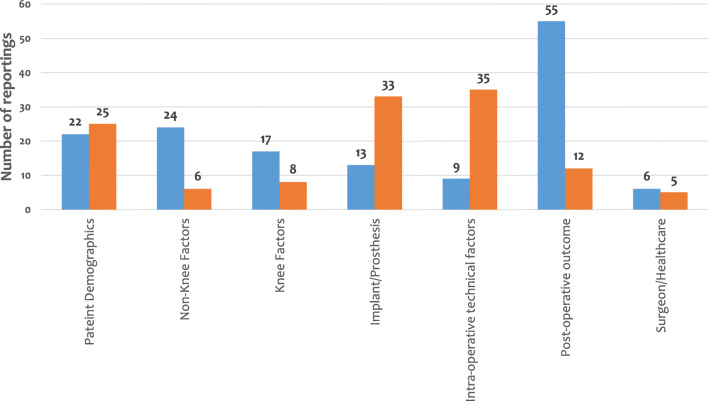
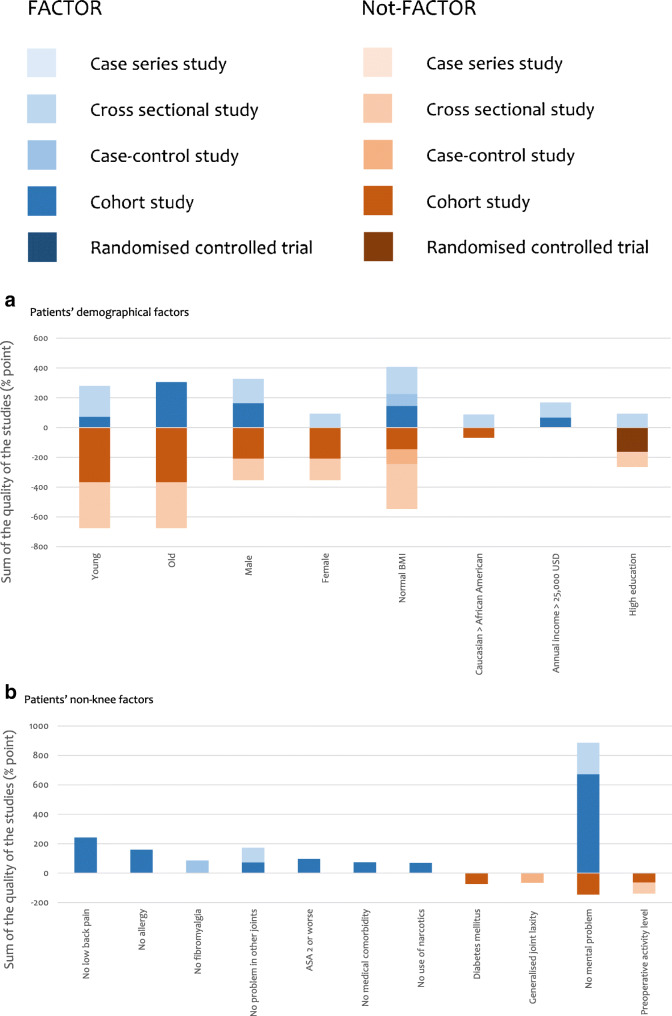
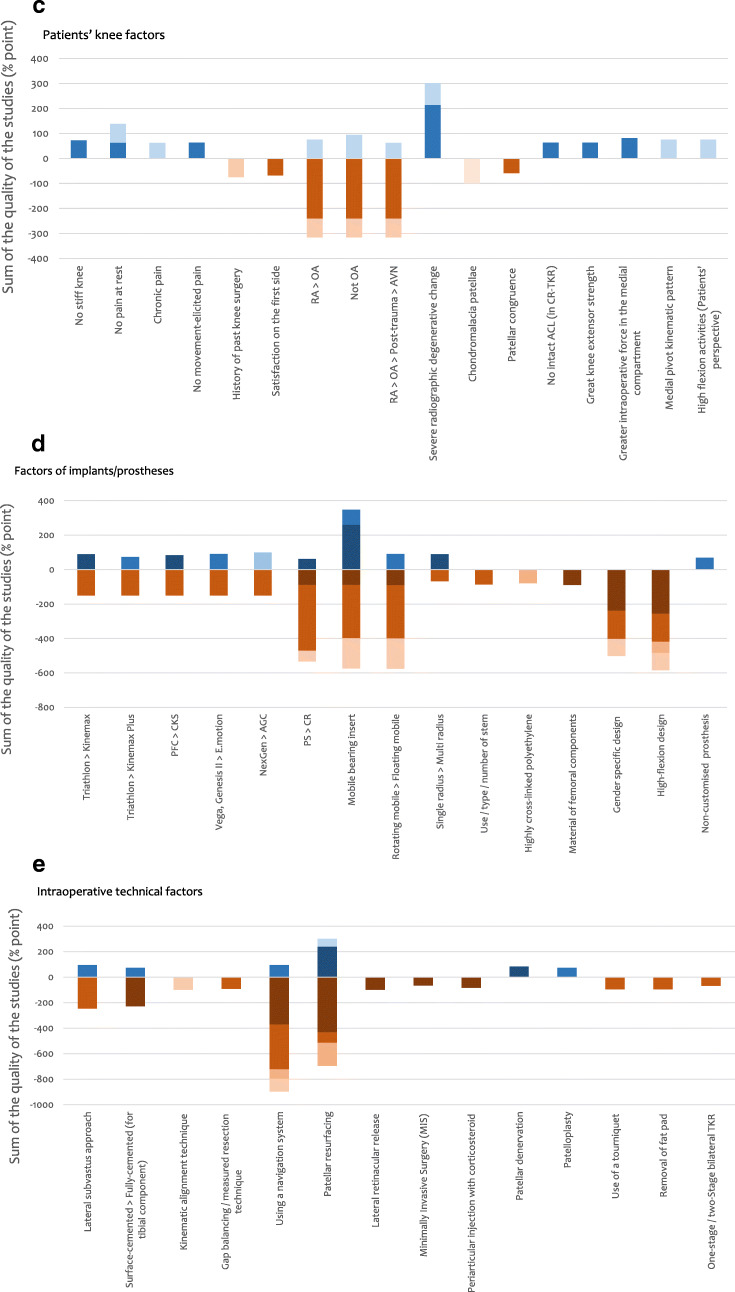
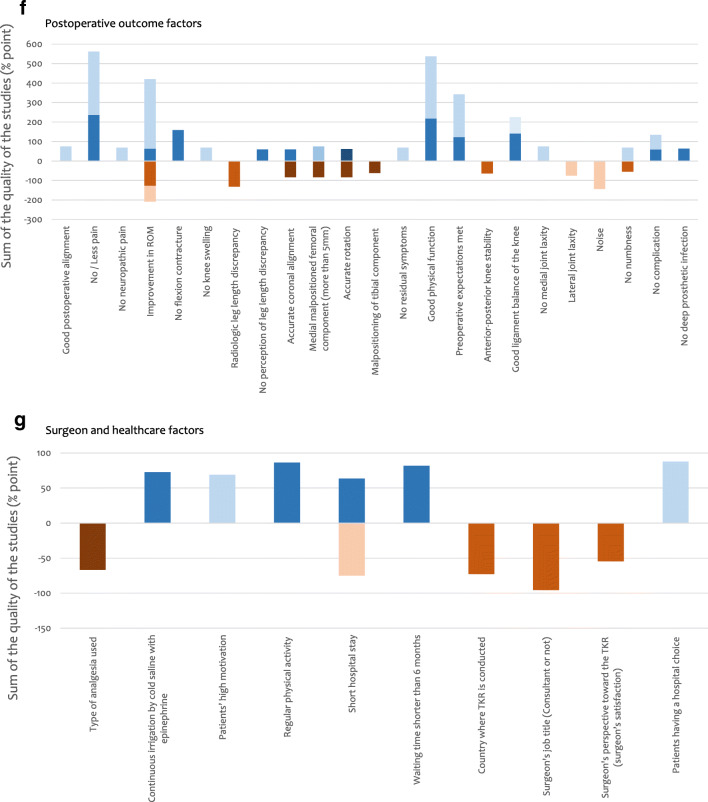
Results: The systematic review identified 181 relevant articles in total. A history of mental health problems was the most frequently reported factor affecting patient satisfaction (13 reportings). When the results of the quality assessment were taken into consideration, a negative history of mental health problems, use of a mobile-bearing insert, patellar resurfacing, severe pre-operative radiological degenerative change, negative history of low back pain, no/less post-operative pain, good post-operative physical function and pre-operative expectations being met were considered to be important factors leading to better patient satisfaction following a TKR.
Conclusion: Surgeons performing a TKR should take these factors into consideration prior to deciding whether a patient is suitable for a TKR. Secondarily, a detailed explanation of these factors should form part of the process of informed consent to achieve better patient satisfaction following TKR. There is a great need for a unified approach to assessing satisfaction following a TKR and also the time at which satisfaction is assessed.
Keywords: Dissatisfaction; Satisfaction; Systematic review; Total knee arthroplasty; Total knee replacement.
Conflict of interest statement
The authors declare that they have no conflict of interest.
Figures
References
-
- NICE report: Osteoarthritis: the care and management of osteoarthritis. https://www.nice.org.uk/guidance/cg177/resources/osteoarthritis-care-and.... (date last accessed 16 Dec 2018)
-
- NJR Annual reports 2016. http://www.njrcentre.org.uk/njrcentre/Reports,PublicationsandMinutes/Ann... (date last accessed 16 Dec 2018)
-
- Insall JN, Dorr LD, Scott RD, Scott WN. Rationale of the Knee Society clinical rating system. Clin Orthop Relat Res. 1989;248:13–14. - PubMed
-
- Hakim J, Volpin G, Amashah M, Alkeesh F, Khamaisy S, Cohen M, Ownallah J (2019) Long-term outcome of total knee arthroplasty in patients with morbid obesity. Int Orthop - PubMed
Publication types
MeSH terms
LinkOut - more resources
Full Text Sources
Medical
Miscellaneous
