


Long-term cognitive outcome in adult survivors of an early childhood posterior fossa brain tumour
- PMID: 32642850
- PMCID: PMC7498491
- DOI: 10.1007/s10147-020-01725-7
Long-term cognitive outcome in adult survivors of an early childhood posterior fossa brain tumour
Abstract
Purpose: Posterior fossa brain tumours (PFT) and their treatment in young children are often associated with subsequent cognitive impairment. However, reported follow-up periods rarely exceed 10 years. This study reports very long-term cognitive consequences of surviving an early childhood PFT.
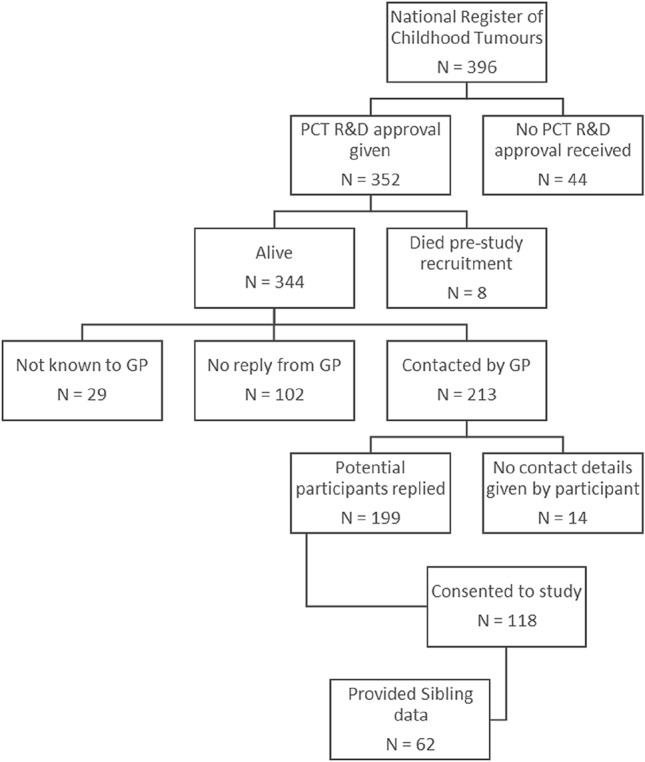
Methods: 62 adult survivors of a PFT, ascertained from a national register, diagnosed before 5 years of age, and a sibling control, received a single IQ assessment an average of 32 years (range 18-53) after initial diagnosis, using the Weschler Abbreviated Scale of Intelligence. Regression models were fitted to survivor-sibling pair differences on verbal and performance IQ (VIQ and PIQ) scores to investigate whether increasing time between PFT diagnosis and follow-up IQ assessment contributed to survivor-sibling IQ differences.
Results: At follow-up, survivors had, on average, VIQ 15 points and PIQ 19 points lower than their siblings. There was no significant effect of time since diagnosis on survivor-sibling VIQ difference. Survivors who received radiotherapy showed no significant effect of time since diagnosis on survivor-sibling PIQ difference. Survivors who did not receive radiotherapy demonstrated a trend for it to reduce.
Conclusions: VIQ and PIQ deficits persist in adulthood, suggesting the effect of a fixed injury imposing on cognitive development, rather than an ongoing pathological process.
Implications for cancer survivors: The findings will help parents and others supporting survivors of an early life PFT to identify and plan for possible cognitive outcomes, and highlight the importance of early interventions to optimize cognitive function during the developmental period.
Keywords: Childhood brain tumour; Cognition; Posterior fossa; Survivorship.
Conflict of interest statement
The authors declare that they have no conflict of interest.
Figures

References
MeSH terms
Grants and funding
LinkOut - more resources
Full Text Sources
Medical
