


Development of an electronic patient-reported outcome measure (ePROM) system to aid the management of patients with advanced chronic kidney disease
- PMID: 32642867
- PMCID: PMC7343684
- DOI: 10.1186/s41687-020-00223-8
Development of an electronic patient-reported outcome measure (ePROM) system to aid the management of patients with advanced chronic kidney disease
Abstract
Background: Effective management of patients with chronic kidney disease (CKD) relies on timely detection of clinical deterioration towards end stage kidney failure. We aimed to design an electronic Patient-Reported Outcome Measure (ePROM) system, which would allow patients with advanced CKD (pre-dialysis) to: (i) remotely self-report their symptoms using a simple and secure online platform; (ii) share the data with the clinical team in real-time via the electronic patient record to help optimise care. We adopted a staged development process which included: a systematic review of PROMs used in CKD; formation of a co-design team; prototype system design/development, user acceptance testing and refinement; finalisation of the system for testing in a pilot/feasibility trial.
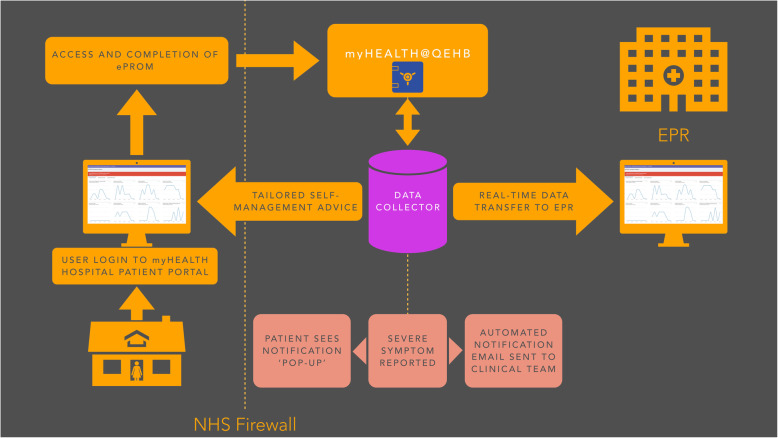
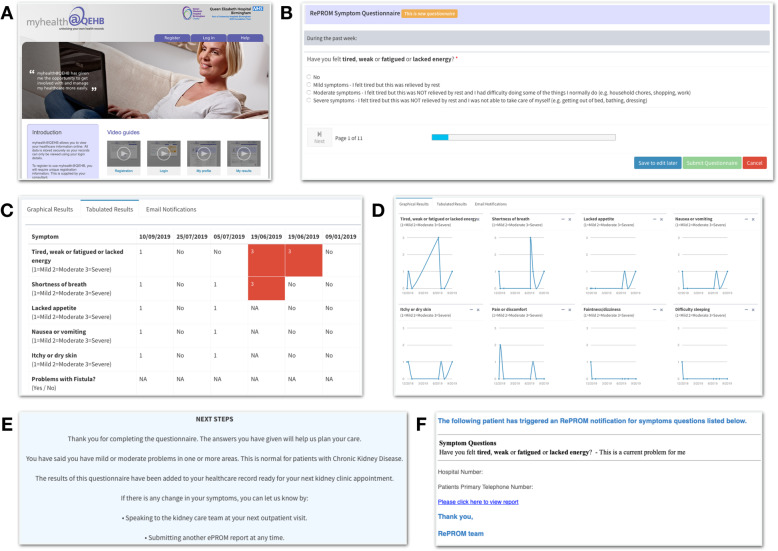
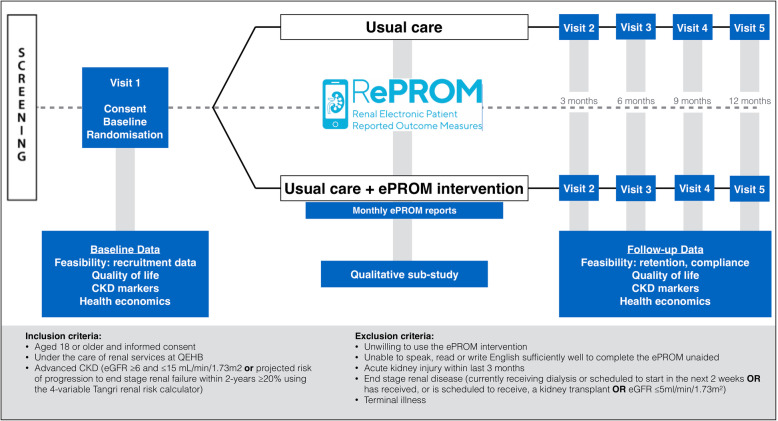
Results: A co-design team was convened, including patients with lived experience of CKD; clinical team members; IT/Informatics experts; academics; and Birmingham Clinical Trials Unit representatives. A prototype system was developed and iterative changes made before finalisation during a series of operational meetings. The system allows patients to remotely self-report their symptoms; provides tailored self-management advice; allows monitoring of real-time patient ePROM data; sends automated notifications to the patient/clinical team in the advent of a severe symptom report; and incorporates longitudinal ePROM symptom data into the electronic patient record. Feasibility of the system will be evaluated as part of the National Institute for Health Research funded RePROM (Renal electronic Patient-Reported Outcome Measure) pilot trial (ISRCTN12669006).
Conclusions: Routine ePROM collection with real-time feedback has the potential to improve outcomes and reduce health service costs. We have successfully developed a trial-ready ePROM system for advanced CKD, the feasibility of which is currently being explored in a pilot trial. Assuming feasibility is demonstrated, formal evaluation of efficacy will take place in a future multi-centre randomised controlled trial.
Keywords: Chronic kidney disease; Patient-reported outcomes; Symptom monitoring.
Conflict of interest statement
EB and MCh report grants from National Institute for Health Research (NIHR). MCa is a NIHR Senior Investigator and receives funding from the NIHR Birmingham Biomedical Research Centre, the NIHR Surgical Reconstruction and Microbiology Research Centre and NIHR ARC West Midlands at the at the University of Birmingham and University Hospitals Birmingham NHS Foundation Trust, Health Data Research UK, Innovate UK (part of UK Research and Innovation), Macmillan Cancer Support, UCB Pharma. MC has received personal fees from Astellas, Takeda, Merck, Daiichi Sankyo, Glaukos, GSK and the Patient-Centered Outcomes Research Institute (PCORI) outside the submitted work. DK reports grants from Macmillan Cancer Support, Innovate UK, the NIHR, NIHR Birmingham Biomedical Research Centre, and NIHR SRMRC at the University of Birmingham and University Hospitals Birmingham NHS Foundation Trust, and personal fees from Merck and GSK outside the submitted work.
Figures
References
-
- TKHA G. Kidney health: delivering excellence. Kidney Research UK. 2013; [Available at: http://www.kidneyresearchuk.org/file/media/Kidney-Health-Delivering-Exce... Oct.pdf Accessed Nov 2015].
-
- Jesky MD, Dutton M, Dasgupta I, Yadav P, Ng KP, Fenton A, et al. Health-related quality of life impacts mortality but not progression to end-stage renal disease in pre-dialysis chronic kidney disease: a prospective observational study. PLoS One. 2016;11(11):e0165675. doi: 10.1371/journal.pone.0165675. - DOI - PMC - PubMed
Grants and funding
LinkOut - more resources
Full Text Sources
