Review
. 2020 Jan-Dec:14:1753466620938553.
doi: 10.1177/1753466620938553.

Precision medicine and its implementation in patients with NTRK fusion genes: perspective from developing countries

Affiliations
Review

Precision medicine and its implementation in patients with NTRK fusion genes: perspective from developing countries

Andrés F Cardona et al. Ther Adv Respir Dis. 2020 Jan-Dec.

Abstract

Precision oncology is the field that places emphasis on the diagnosis and treatment of tumors that harbor specific genomic alterations susceptible to inhibition or modulation. Although most alterations are only present in a minority of patients, a substantial effect on survival can be observed in this subgroup. Mass genome sequencing has led to the identification of a specific driver in the translocations of the tropomyosin receptor kinase family (NTRK) in a subset of rare tumors both in children and in adults, and to the development and investigation of Larotrectinib. This medication was granted approval by the US Food and Drug Administration for NTRK-positive tumors, regardless of histology or age group, as such, larotrectinib was the first in its kind to be approved under the premise that molecular pattern is more important than histology in terms of therapeutic approach. It yielded significant results in disease control with good tolerability across a wide range of diseases including rare pediatric tumors, salivary gland tumors, gliomas, soft-tissue sarcomas, and thyroid carcinomas. In addition, and by taking different approaches in clinical trial design and conducting allocation based on biomarkers, the effects of target therapies can be isolated and quantified. Moreover, and considering developing nations and resource-limited settings, precision oncology could offer a tool to reduce cancer-related disability and hospital costs. In addition, developing nations also present patients with rare tumors that lack a chance of treatment, outside of clinical trials. This, in turn, offers the possibility for international collaboration, and contributes to employment, education, and health service provisions. The reviews of this paper are available via the supplemental material section.

Keywords: NTRK; larotrectinib; precision medicine; tropomyosin receptor kinase family.


Conflict of interest statement

Conflict of interest statement: The authors declare that there is no conflict of interest.

Figures

Figure 1.
Figure 1.
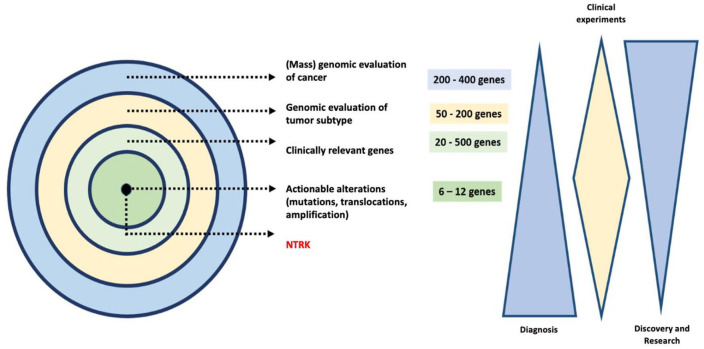
The use of precision oncology for the determination of potentially actionable genes with directed targeted therapy (a sequence from mass gene exploration until NTRK identification). Despite the cost of the generalized implementation of in-depth genomics, the directed use of state-of-the-art therapeutic strategies has demonstrated a global saving of 5.6% in the participating population. This care strategy based on value could reduce the global costs of directed oncological treatment after 18 months of intervention in more than 7.5%, a valid event for one in four patients with advanced cancer.
Figure 2.
Figure 2.
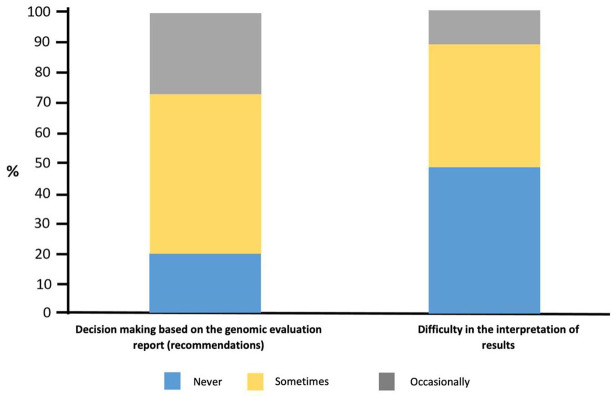
The use of NGS tests during the last 12 months among United States oncologists.
Figure 3.
Figure 3.
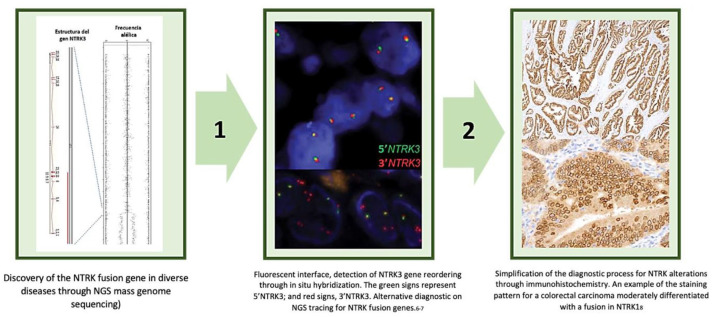
Diagnostic transition of NTRK fusion genes from their initial evaluation with polymerase chain reaction (PCR) sequencing techniques for mass genome sequencing (NGS),– (Step 1), the use of fluorescence in situ hybridization (FISH), and sieving though immunohistochemistry (Step 2).
Figure 4.
Figure 4.
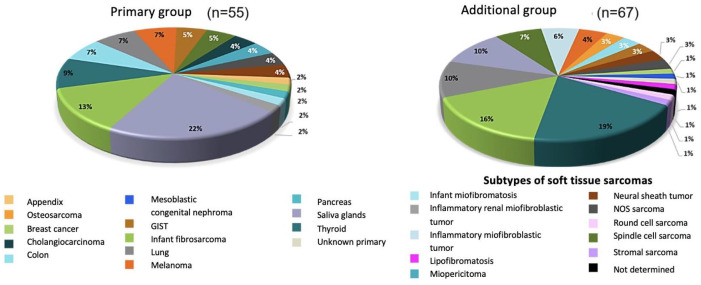
Distribution of positive NTRK tumors.
Figure 5.
Figure 5.
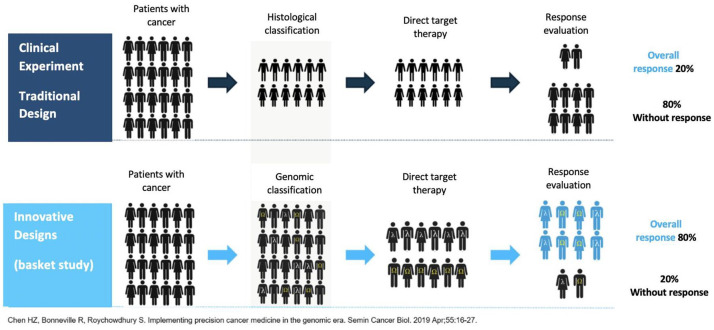
Comparison between the design of traditional clinical and innovative experiments for the evaluation of specific molecular targets in low incidence tumors.
Figure 6.
Figure 6.
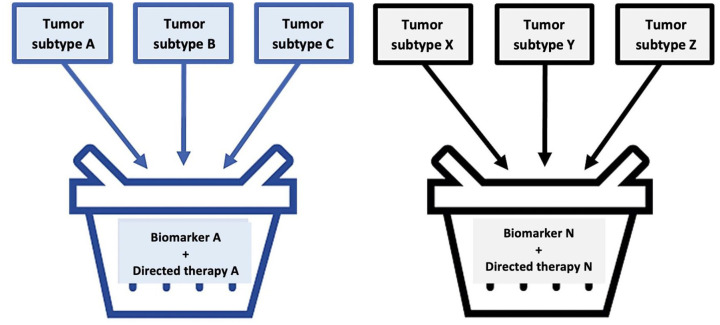
Pictorial description of a basket study.
Figure 7.
Figure 7.
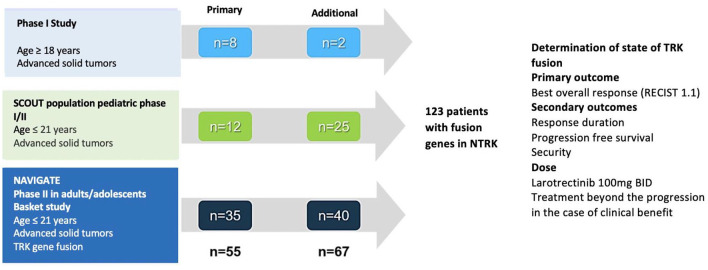
Studies developed to test larotrectinib in multiple pathologies; for pediatric and adult populations.
Figure 8.
Figure 8.
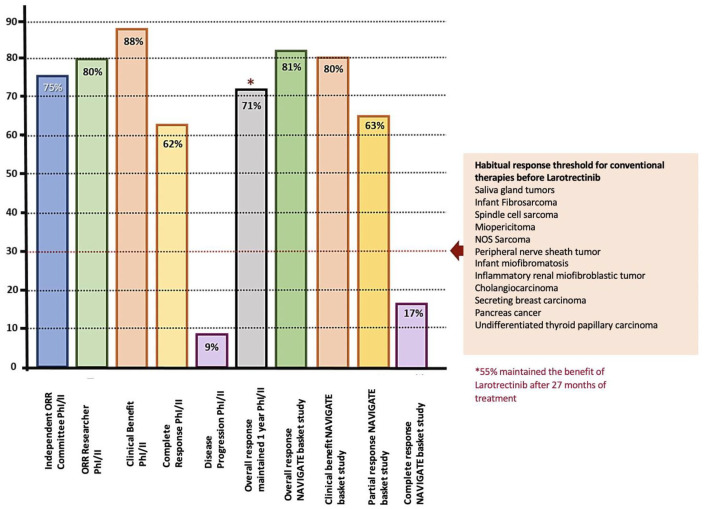
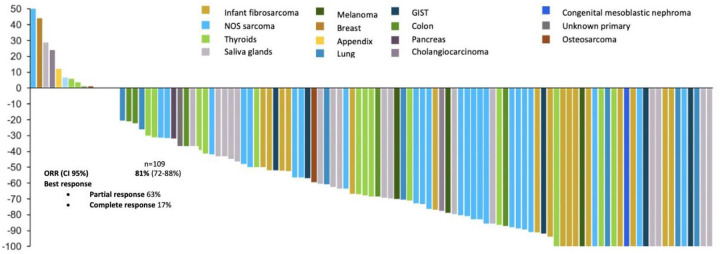
Characterization of the response with larotrectinib in the phase I and II study sequence (including the NAVIGATE basket study), with respect to the threshold obtained with previously used diverse conventional interventions.
Figure 9.
Figure 9.
Efficiency of larotrectinib in diverse tumors (updated comprehensive data set, 2018). The overall response is 81% and the complete response 17%.
Figure 10.
Figure 10.
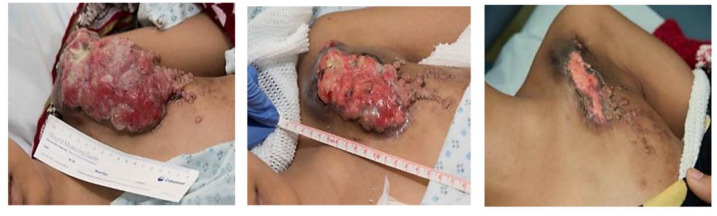
Representative case of a 14-year-old girl with a secreting breast tumor showing impressive response to larotrectinib.

References

    1. Meyerson M, Gabriel S, Getz G. Advances in understanding cancer genomes through second-generation sequencing. Nat Rev Genet 2010; 11: 685–696. - PubMed
    1. Nakagawa H, Wardell CP, Furuta M, et al. Cancer whole-genome sequencing: present and future. Oncogene 2015; 34: 5943–5950. - PubMed
    1. Cancer Genome Atlas Research Network. Comprehensive genomic characterization defines human glioblastoma genes and core pathways. Nature 2008; 455: 1061–1068. - PMC - PubMed
    1. International Cancer Genome Consortium; Hudson TJ, Anderson W, Artez A, et al. International network of cancer genome projects. Nature 2010; 464: 993–998. - PMC - PubMed
    1. Vogelstein B, Papadopoulos N, Velculescu VE, et al. Cancer genome landscapes. Science 2013; 339: 1546–1558. - PMC - PubMed

MeSH terms

Substances