


Influence of Dentine Pre-Treatment by Sandblasting with Aluminum Oxide in Adhesive Restorations. An In Vitro Study
- PMID: 32645819
- PMCID: PMC7372407
- DOI: 10.3390/ma13133026
Influence of Dentine Pre-Treatment by Sandblasting with Aluminum Oxide in Adhesive Restorations. An In Vitro Study
Abstract
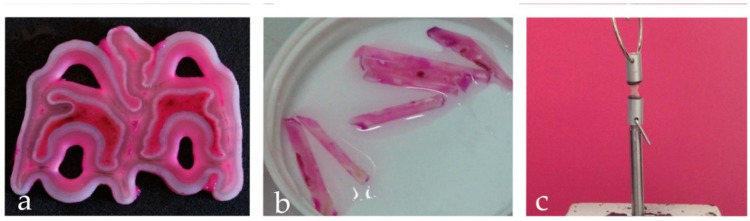
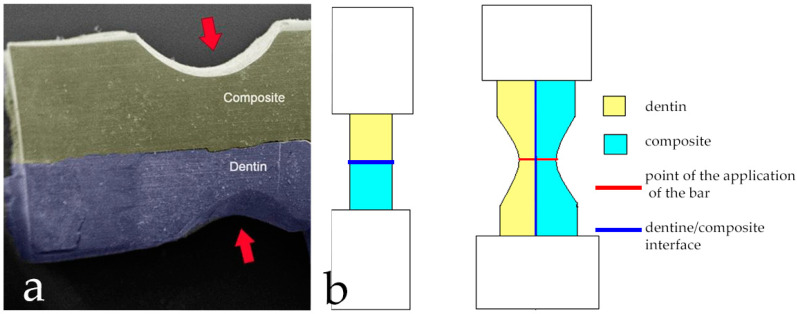
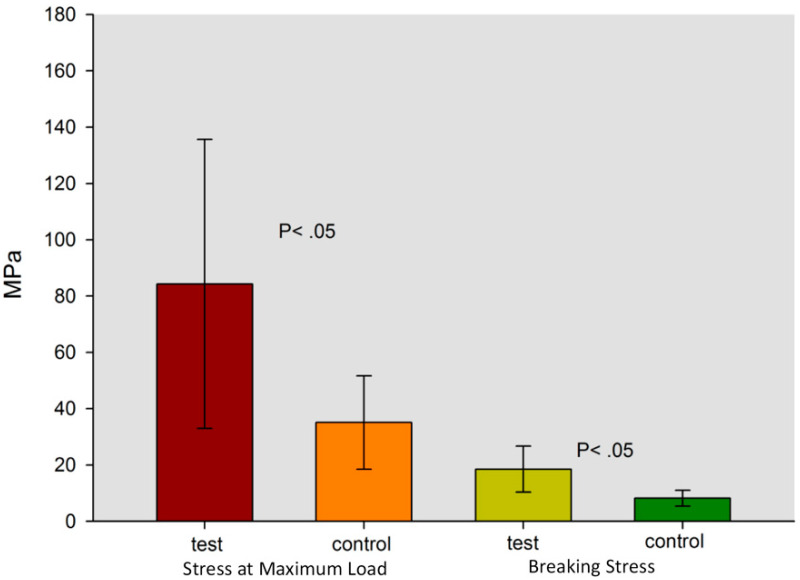
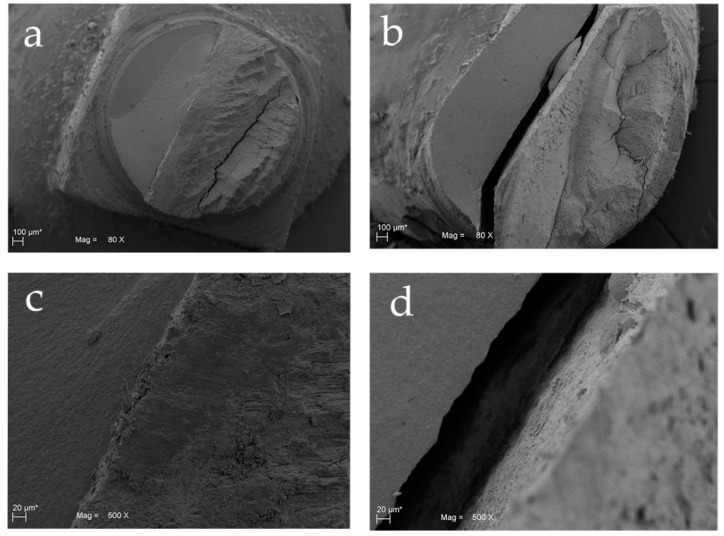
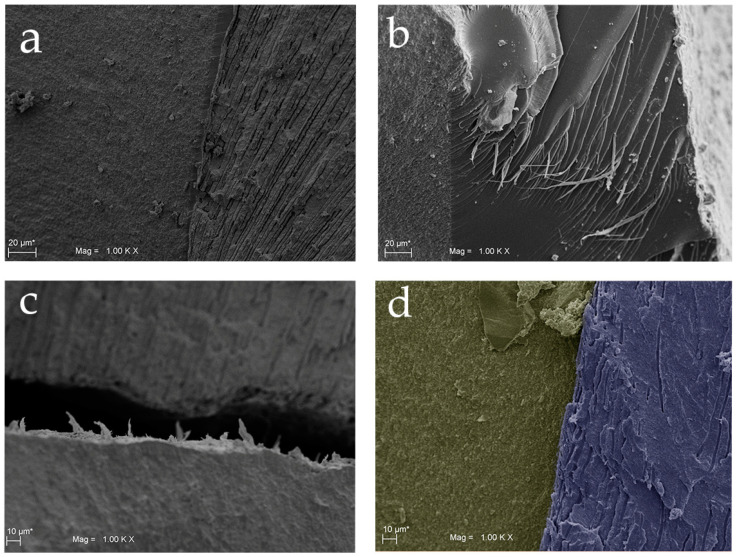
Dentine pretreatment through sandblasting procedures has been widely studied but no curve test results are currently available. Thus, the aim herein was to in vitro compare the adhesive strength in sandblasted or not samples using a universal testing machine. Thirty -two bovine teeth were divided into two groups, namely test (n = 16 bars), sandblasting with aluminum oxide particles (50 µm) was performed before the adhesion procedures), and control (n = 16 bars), where no sandblasting procedure was performed. A bi-material curve test was used to evaluate the characteristics of the dentine pretreatment in terms of tensile stress and fracture strength. A scanning electron microscope (SEM) was used to analyze the fracture topography in the composite, bonding, dentin, and at the relative interfaces. The results demonstrated a statistically significant difference between the two groups in terms of tensile stress at maximum load showing values of 84.300 ± 51.342 MPa and 35.071 ± 16.609 MPa, respectively for test and control groups (p = 0.033). Moreover, a fracture strength test showed values of 18.543 ± 8.145 MPa for test and 8.186 ± 2.833 MPa for control group (p = 0.008). In conclusion, the sandblasting treatment of the dentine significantly influenced the mechanical resistance of the adhesion in this in vitro study.
Keywords: adhesive dentistry; dentine pretreatment; fracture resistance; in vitro study; sandblasting procedure; tensile stress test.
Conflict of interest statement
The authors declare no conflict of interest.
Figures
References
-
- Sinjari B., D’Addazio G., Traini T., Varvara G., Scarano A., Murmura G., Caputi S. A 10-year retrospective comparative human study on screw-retained versus cemented dental implant abutments. J. Biol. Regul. Homeost. Agents. 2019;33:787–797. - PubMed
-
- Van den Breemer C.R., Özcan M., Pols M.R., Postema A.R., Cune M.S., Gresnigt M.M. Adhesion of resin cement to dentin: Eects of adhesive promoters, immediate dentin sealing strategies, and surface conditioning. Int. J. Esthet. Dent. 2019;14:52–63. - PubMed
LinkOut - more resources
Full Text Sources
