


Blood factors transfer beneficial effects of exercise on neurogenesis and cognition to the aged brain
- PMID: 32646997
- PMCID: PMC7879650
- DOI: 10.1126/science.aaw2622
Blood factors transfer beneficial effects of exercise on neurogenesis and cognition to the aged brain
Abstract
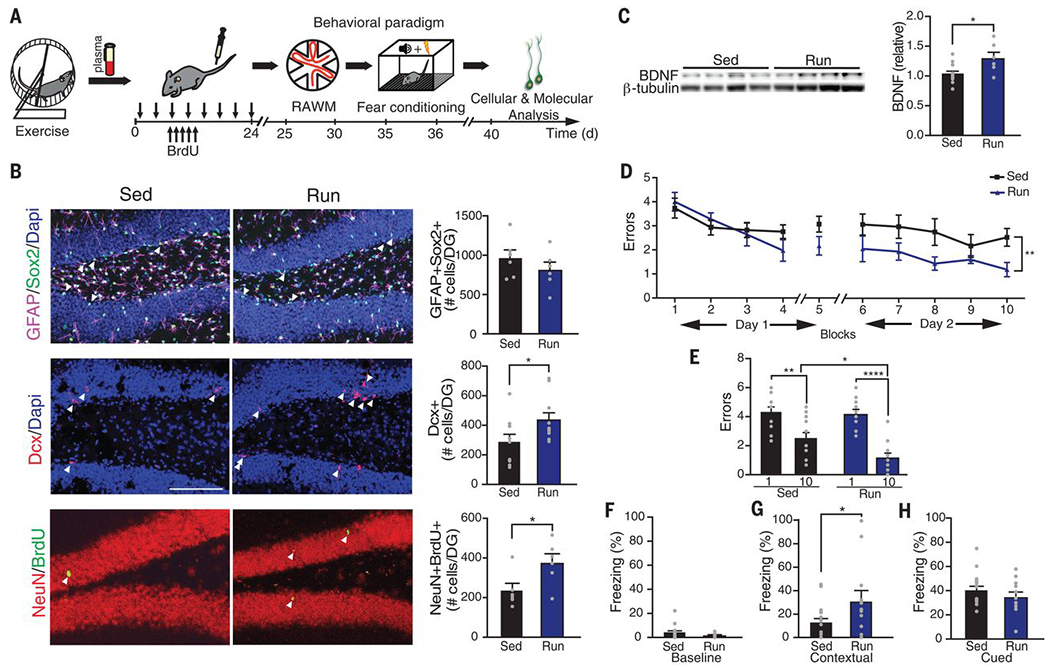
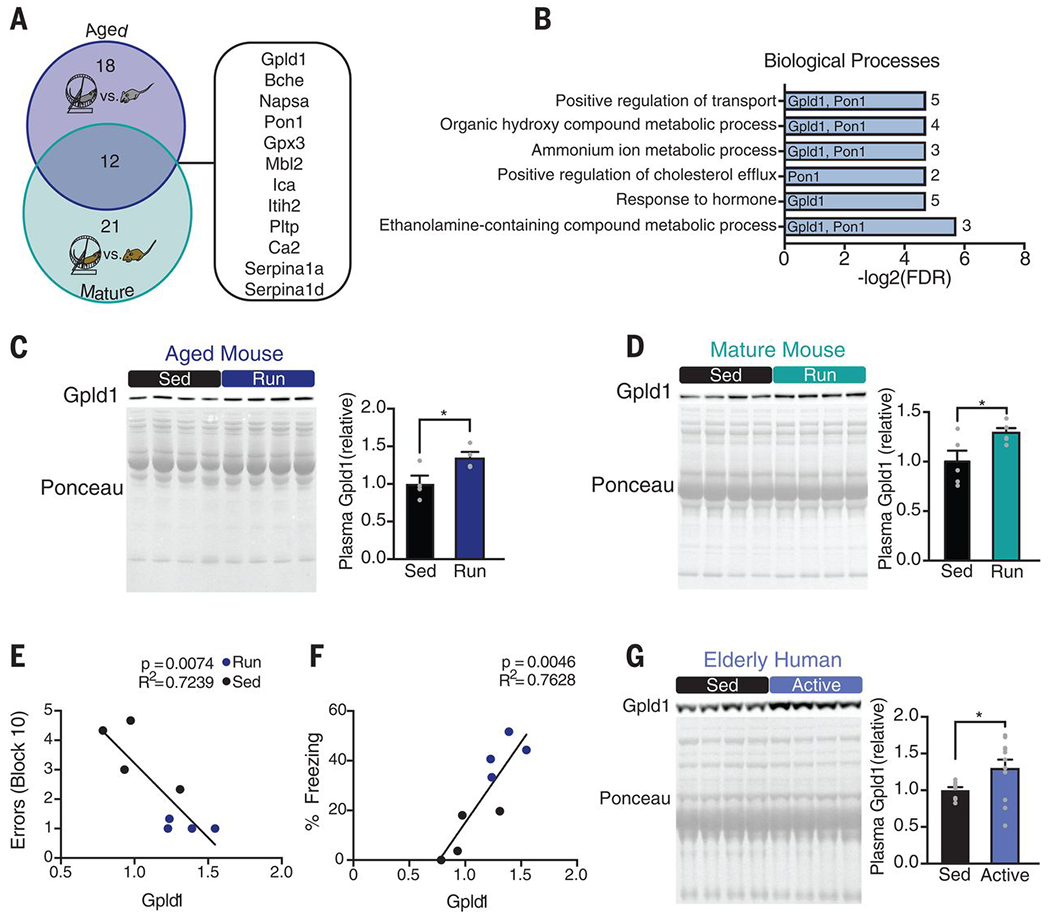
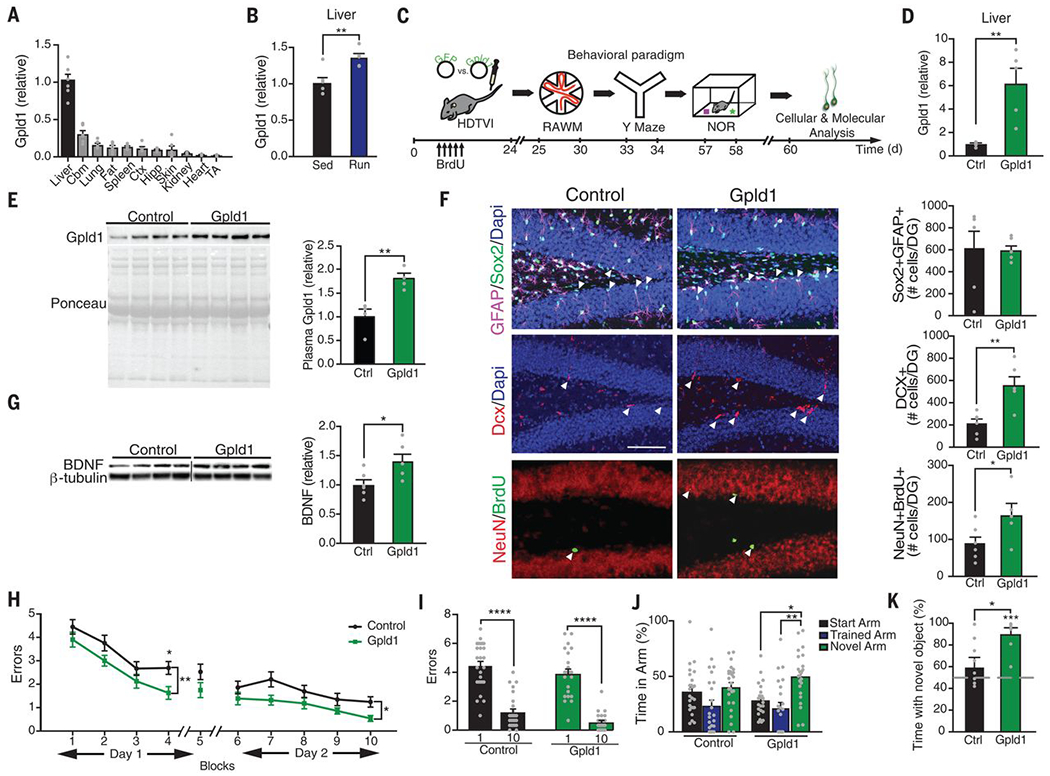
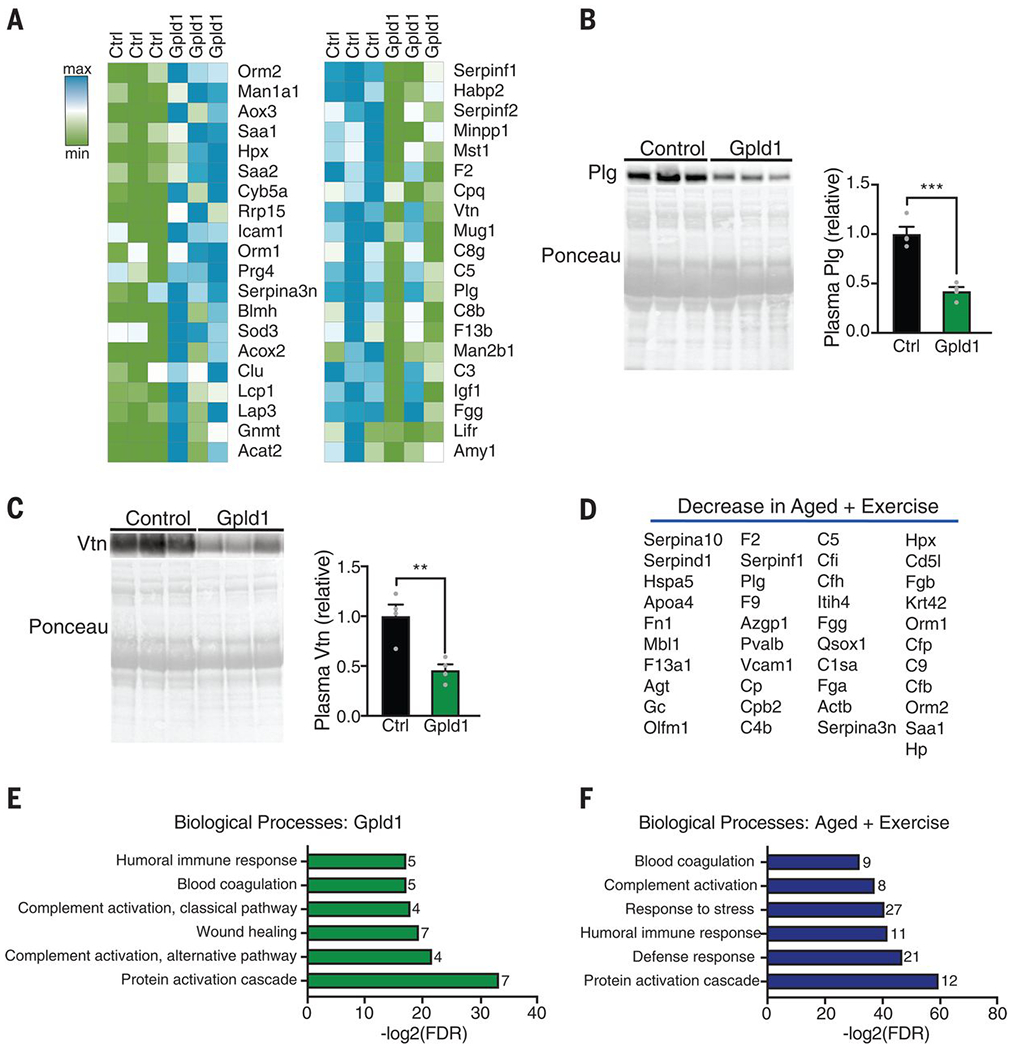
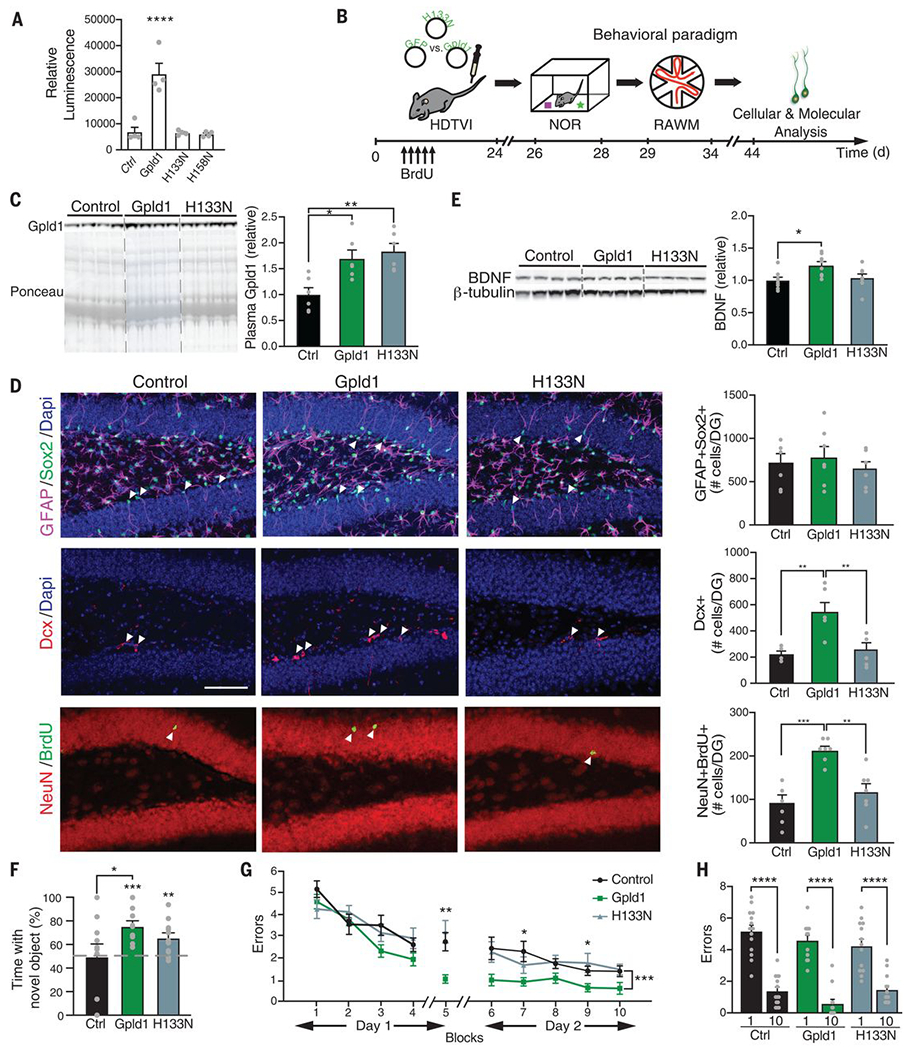
Reversing brain aging may be possible through systemic interventions such as exercise. We found that administration of circulating blood factors in plasma from exercised aged mice transferred the effects of exercise on adult neurogenesis and cognition to sedentary aged mice. Plasma concentrations of glycosylphosphatidylinositol (GPI)-specific phospholipase D1 (Gpld1), a GPI-degrading enzyme derived from liver, were found to increase after exercise and to correlate with improved cognitive function in aged mice, and concentrations of Gpld1 in blood were increased in active, healthy elderly humans. Increasing systemic concentrations of Gpld1 in aged mice ameliorated age-related regenerative and cognitive impairments by altering signaling cascades downstream of GPI-anchored substrate cleavage. We thus identify a liver-to-brain axis by which blood factors can transfer the benefits of exercise in old age.
Copyright © 2020 The Authors, some rights reserved; exclusive licensee American Association for the Advancement of Science. No claim to original U.S. Government Works.
Conflict of interest statement
Figures
Comment in
-
Exercising your mind.Science. 2020 Jul 10;369(6500):144-145. doi: 10.1126/science.abc8830. Science. 2020. PMID: 32646988 No abstract available.
-
A new player in the beneficial effects of exercise on the aged brain.Signal Transduct Target Ther. 2020 Sep 3;5(1):184. doi: 10.1038/s41392-020-00305-5. Signal Transduct Target Ther. 2020. PMID: 32883950 Free PMC article. No abstract available.
References
Publication types
MeSH terms
Substances
Grants and funding
LinkOut - more resources
Full Text Sources
Other Literature Sources
Medical
Miscellaneous
