


Neuroendocrine differentiation in usual-type prostatic adenocarcinoma: Molecular characterization and clinical significance
- PMID: 32649013
- PMCID: PMC9524879
- DOI: 10.1002/pros.24035
Neuroendocrine differentiation in usual-type prostatic adenocarcinoma: Molecular characterization and clinical significance
Abstract
Background: Small cell neuroendocrine (NE) carcinomas of the prostate classically lose androgen receptor (AR) expression, may harbor loss of the RB1, TP53, and PTEN tumor suppressor genes, and are associated with a poor prognosis. However usual-type adenocarcinomas may also contain areas of NE differentiation, and in this context the molecular features and biological significance are less certain.
Methods: We examined the molecular phenotype and oncologic outcomes of primary prostate adenocarcinomas with ≥5% NE differentiation (≥5% chromogranin A-positive NE cells in any given tumor spot on tissue microarray) using three independent study sets: a set of tumors with paneth cell-like NE differentiation (n = 26), a retrospective case-cohort of intermediate- and high-risk patients enriched for adverse outcomes (n = 267), and primary tumors from a retrospective series of men with eventual castration-resistant metastatic prostate cancer (CRPC) treated with abiraterone or enzalutamide (n = 55).
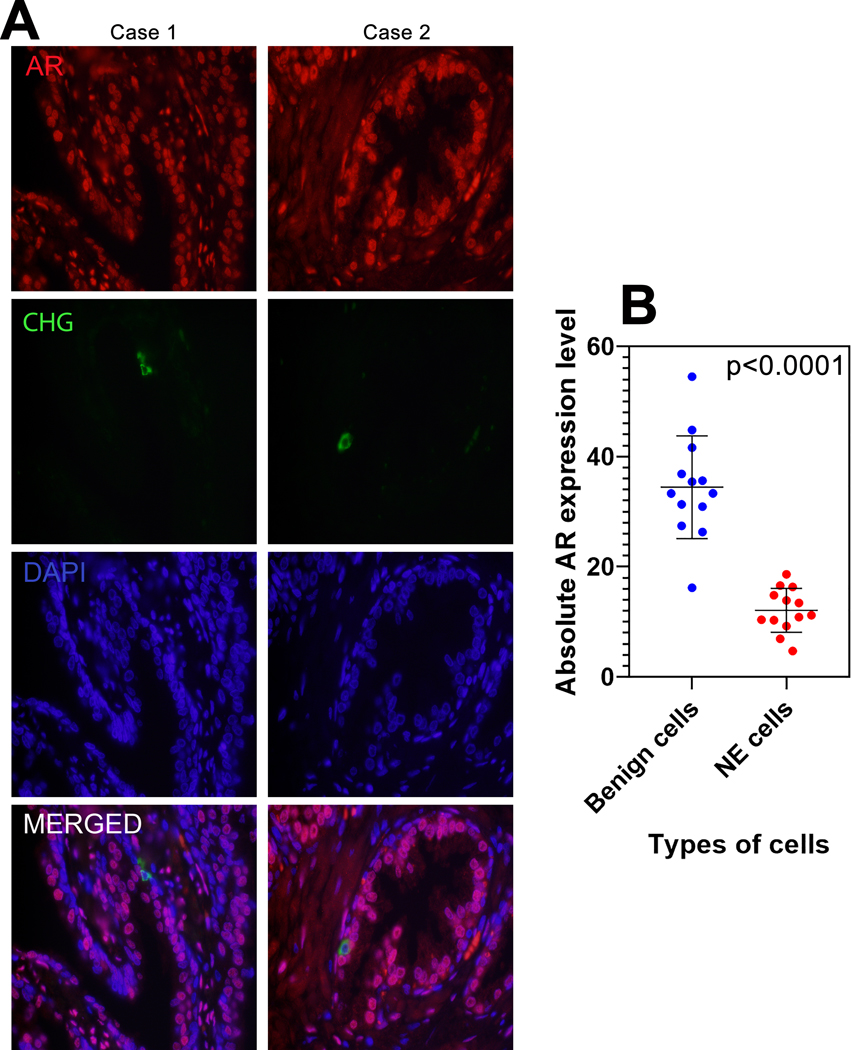
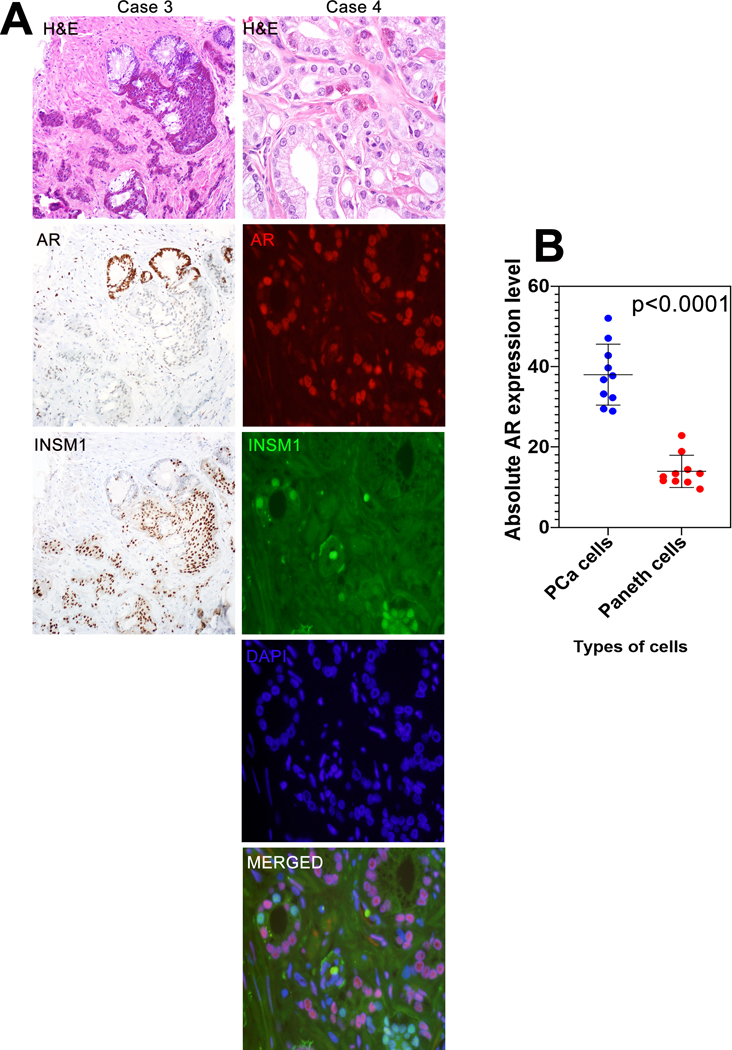
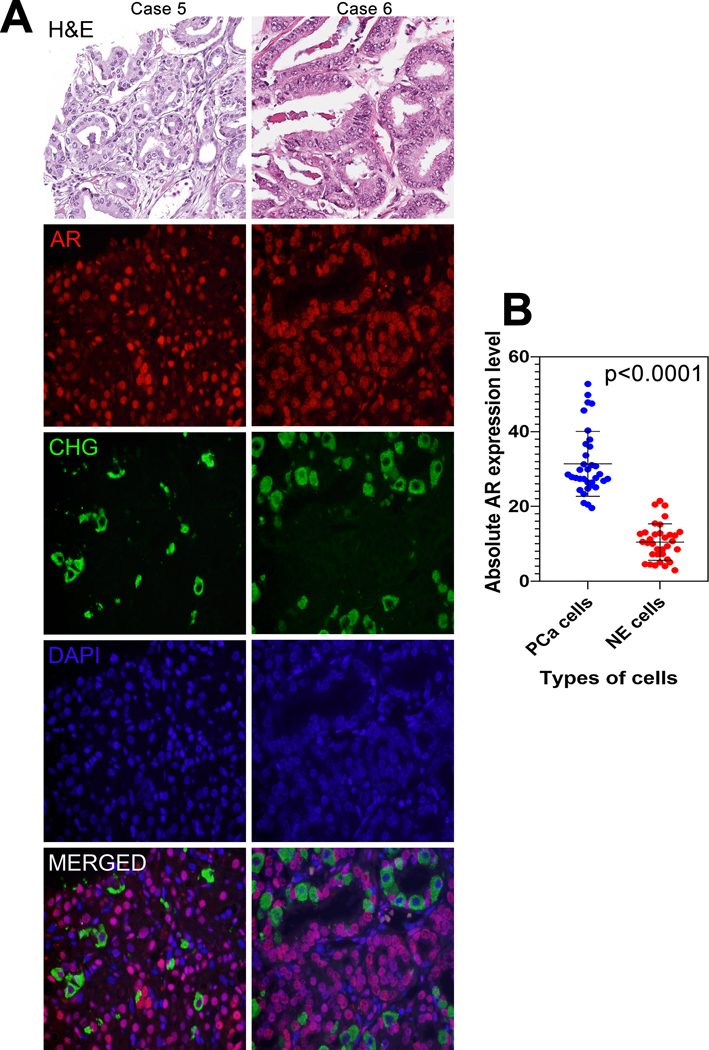
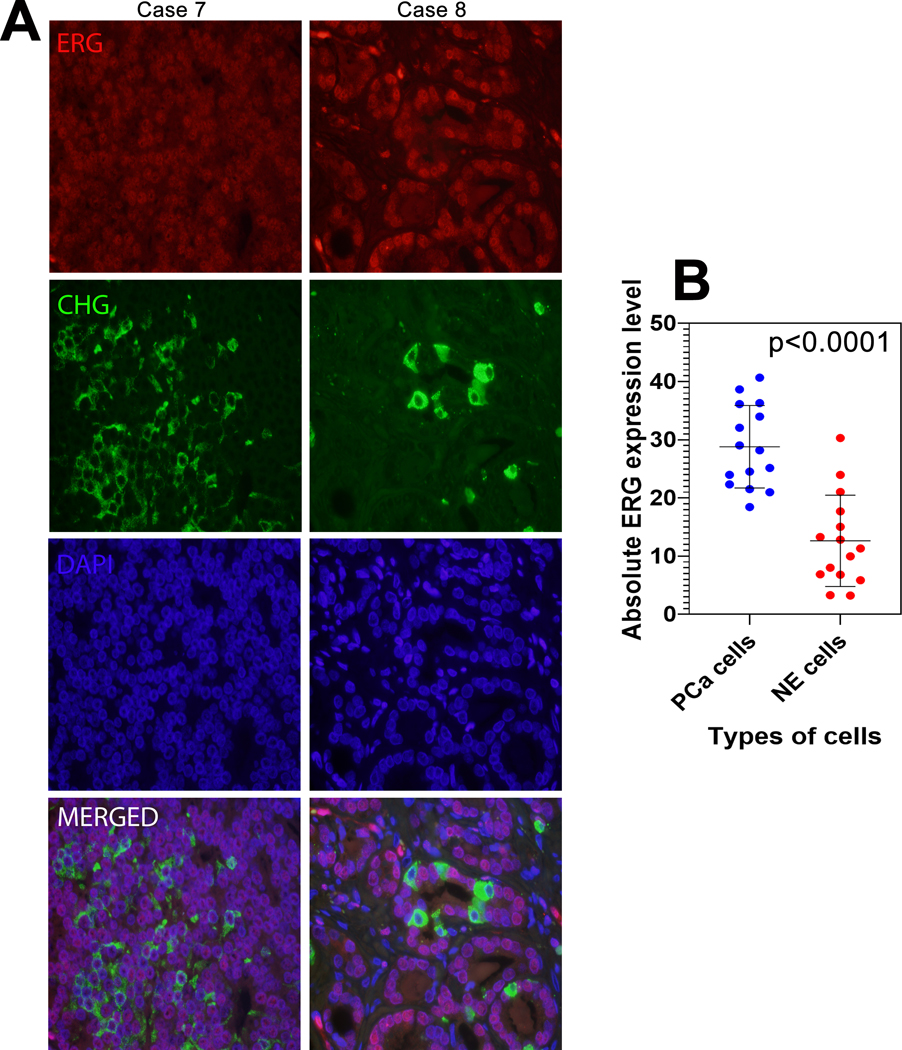
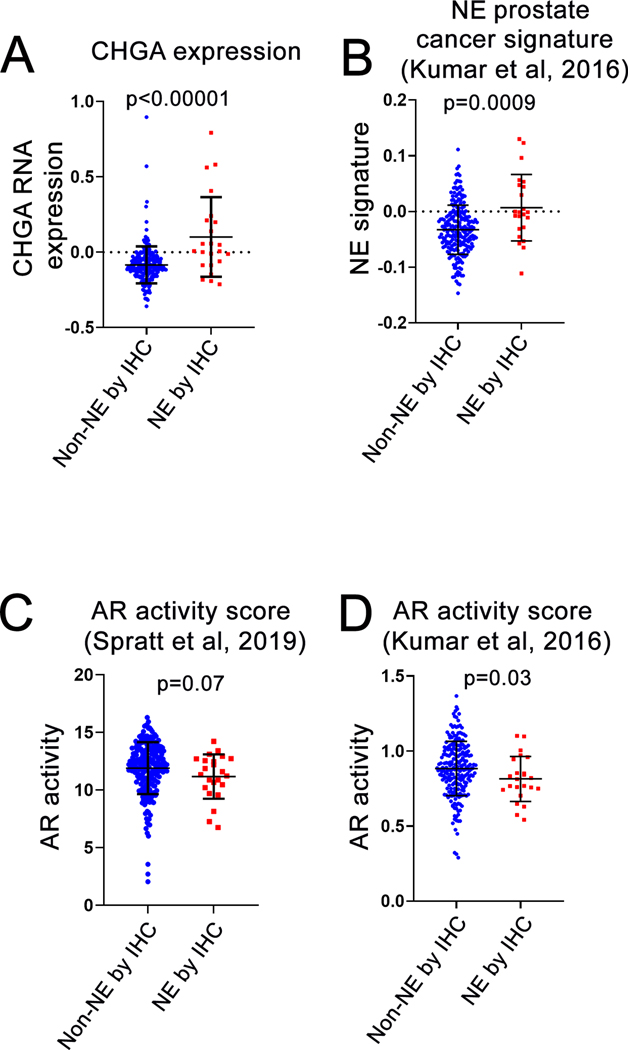
Results: Benign NE cells expressed significantly lower quantified AR levels compared with paired benign luminal cells (P < .001). Similarly, paneth-like NE carcinoma cells or carcinoma cells expressing chromogranin A expressed significantly lower quantified AR levels than paired non-NE carcinoma cells (P < .001). Quantified ERG protein expression, was also lower in chromogranin A-labeled adenocarcinoma cells compared with unlabeled cells (P < .001) and tumors with NE differentiation showed lower gene expression scores for AR activity compared with those without. Despite evidence of lower AR signaling, adenocarcinomas with NE differentiation did not differ by prevalence of TP53 missense mutations, or PTEN or RB1 loss, compared with those without NE differentiation. Finally, NE differentiation was not associated with time to metastasis in intermediate- and high-risk patients (P = .6 on multivariate analysis), nor with progression-free survival in patients with CRPC treated with abiraterone or enzalutamide (P = .9).
Conclusion: NE differentiation in usual-type primary prostate adenocarcinoma is a molecularly and clinically distinct form of lineage plasticity from that occurring in small cell NE carcinoma.
Keywords: androgen receptor; neuroendocrine differentiation; paneth cells; prostate adenocarcinoma.
© 2020 Wiley Periodicals LLC.
Conflict of interest statement
Figures
References
-
- Di Sant’Agnese PA, Cockett AT. The prostatic endocrine-paracrine (neuroendocrine) regulatory system and neuroendocrine differentiation in prostatic carcinoma: a review and future directions in basic research. The Journal of urology 1994;152:1927–31. - PubMed
-
- Fetissof F, Dubois MP, Arbeille-Brassart B, et al. Endocrine cells in the prostate gland, urothelium and Brenner tumors. Immunohistological and ultrastructural studies. Virchows Arch B Cell Pathol Incl Mol Pathol 1983;42:53–64. - PubMed
-
- Fine SW. Neuroendocrine tumors of the prostate. Mod Pathol 2018;31:S122–32. - PubMed
-
- Wang W, Epstein JI. Small cell carcinoma of the prostate. A morphologic and immunohistochemical study of 95 cases. Am J Surg Pathol 2008;32:65–71. - PubMed
Publication types
MeSH terms
Substances
Grants and funding
LinkOut - more resources
Full Text Sources
Medical
Research Materials
Miscellaneous
