


The Gaitprint: Identifying Individuals by Their Running Style
- PMID: 32650424
- PMCID: PMC7412195
- DOI: 10.3390/s20143810
The Gaitprint: Identifying Individuals by Their Running Style
Abstract
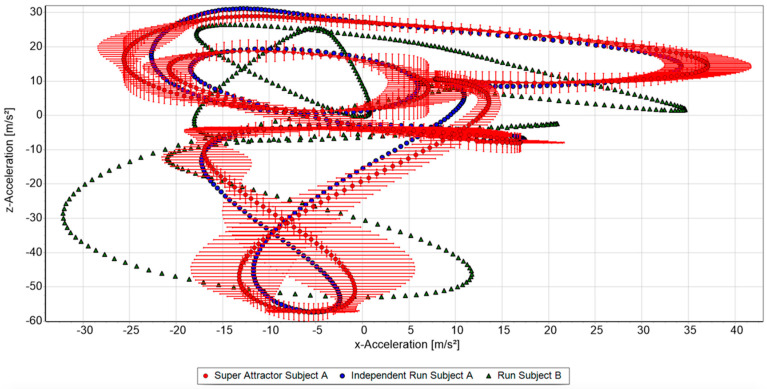
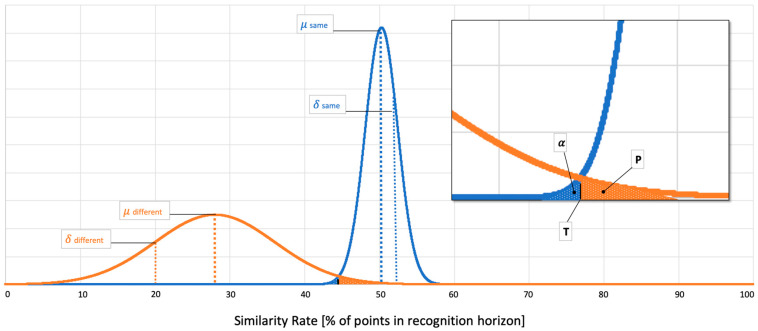
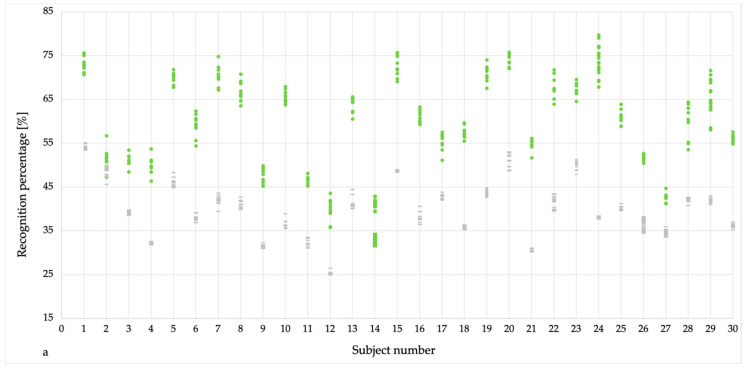
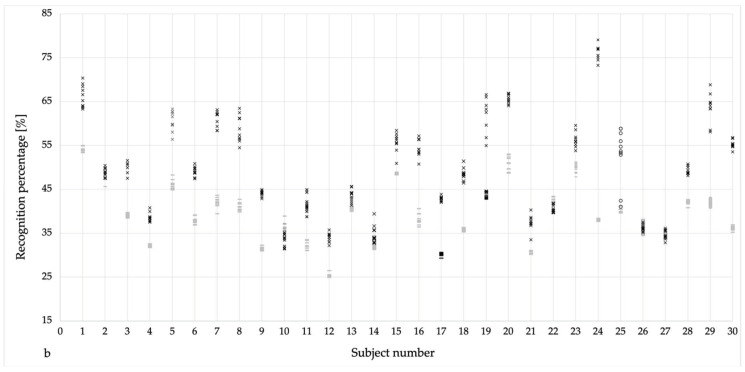
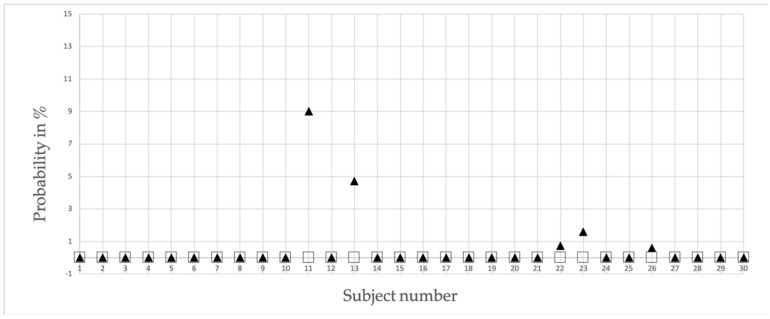
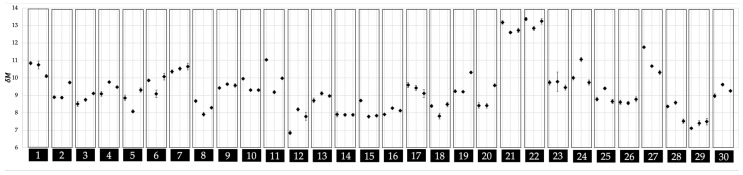
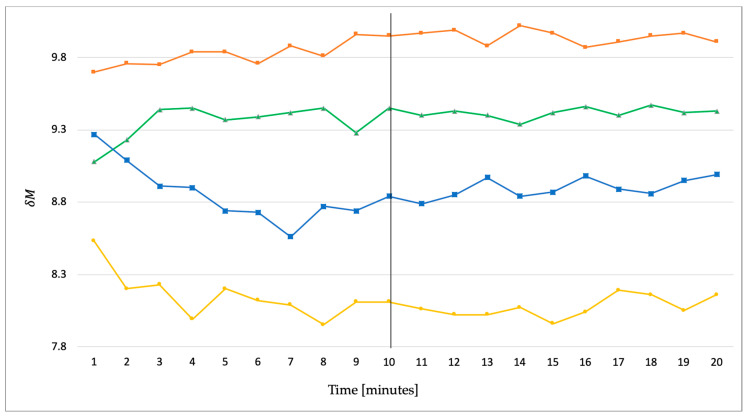
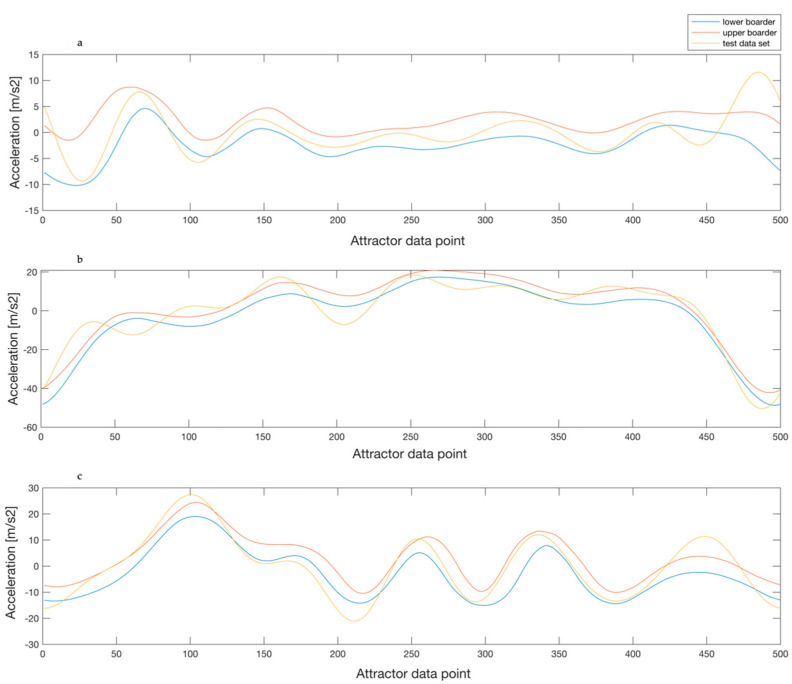
Recognizing the characteristics of a well-developed running style is a central issue in athletic sub-disciplines. The development of portable micro-electro-mechanical-system (MEMS) sensors within the last decades has made it possible to accurately quantify movements. This paper introduces an analysis method, based on limit-cycle attractors, to identify subjects by their specific running style. The movement data of 30 athletes were collected over 20 min. in three running sessions to create an individual gaitprint. A recognition algorithm was applied to identify each single individual as compared to other participants. The analyses resulted in a detection rate of 99% with a false identification probability of 0.28%, which demonstrates a very sensitive method for the recognition of athletes based solely on their running style. Further, it can be seen that these differentiations can be described as individual modifications of a general running pattern inherent in all participants. These findings open new perspectives for the assessment of running style, motion in general, and a person's identification, in, for example, the growing e-sports movement.
Keywords: attractor method; human cyclic motion; individual locomotion; recognition; running quality.
Conflict of interest statement
The authors have declared that no competing interests exist.
Figures
References
-
- Magness S. The Science of Running: How to Find Your Limit and Train to Maximize Your Performance. Origin Press (CA); Mineola, NY, USA: 2014.
-
- Cutting J.E., Kozlowski L.T. Recognizing friends by their walk: Gait perception without familiarity cues. Bull. Psychon. Soc. 1977;9:353–356. doi: 10.3758/BF03337021. - DOI
-
- Johansson G. Visual perception of biological motion and a model for its analysis. Percept. Psychophys. 1973;14:201–211. doi: 10.3758/BF03212378. - DOI
MeSH terms
LinkOut - more resources
Full Text Sources
