


Analysis of food and fluid intake in elite ultra-endurance runners during a 24-h world championship
- PMID: 32652998
- PMCID: PMC7353765
- DOI: 10.1186/s12970-020-00364-7
Analysis of food and fluid intake in elite ultra-endurance runners during a 24-h world championship
Erratum in
-
Correction to: Analysis of food and fluid intake in elite ultra-endurance runners during a 24-h world championship.J Int Soc Sports Nutr. 2021 Apr 21;18(1):32. doi: 10.1186/s12970-021-00427-3. J Int Soc Sports Nutr. 2021. PMID: 33879146 Free PMC article. No abstract available.
Abstract
Background: Properly replacing energy and fluids is a challenge for 24-h ultramarathoners because such unusually high intake may induce adverse effects (gastrointestinal symptoms [GIS] and exercise-associated hyponatremia [EAH]). We analyzed such intake for 12 twelve elite athletes (6 males and 6 females; age: 46 ± 7 years, height: 170 ± 9 cm, weight: 61.1 ± 9.6 kg, total distance run: 193-272 km) during the 2019 24-h World Championships and compared it to the latest nutritional recommendations described by the International Society of Sports Nutrition in 2019. We hypothesized that these elite athletes would easily comply these recommendations without exhibiting detrimental adverse symptoms.
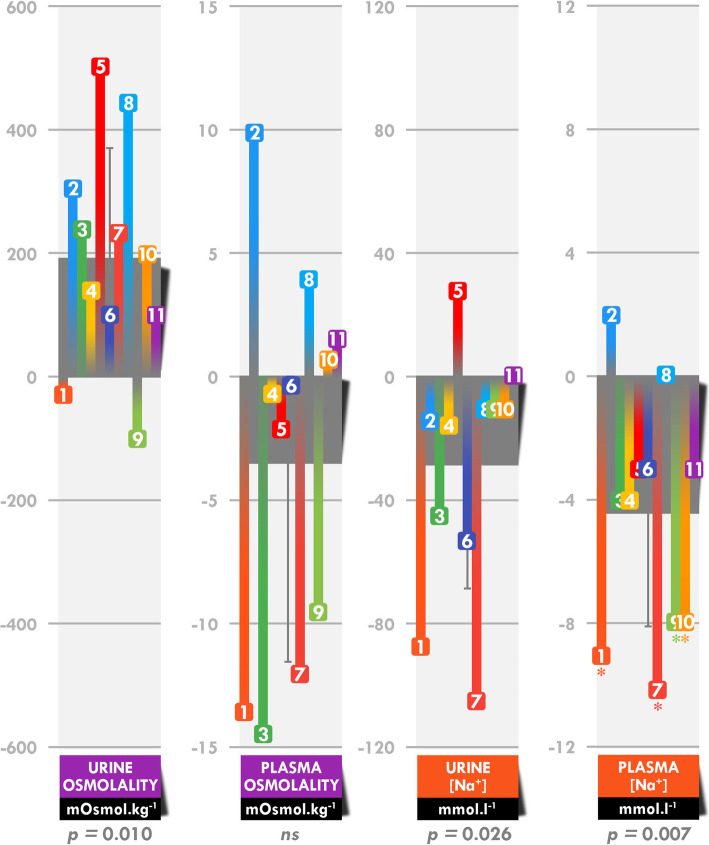
Methods: Ad libitum food and fluid intake was recorded in real-time and energy, macronutrient, sodium, and caffeine intake then calculated using a spreadsheet in which the nutritional composition of each item was previously recorded. GIS, markers of dehydration (body mass modifications, plasma and urine osmolality, and plasma volume; samples obtained 26 h before and just after the race) and EAH (plasma and urine sodium concentrations) were also assessed.
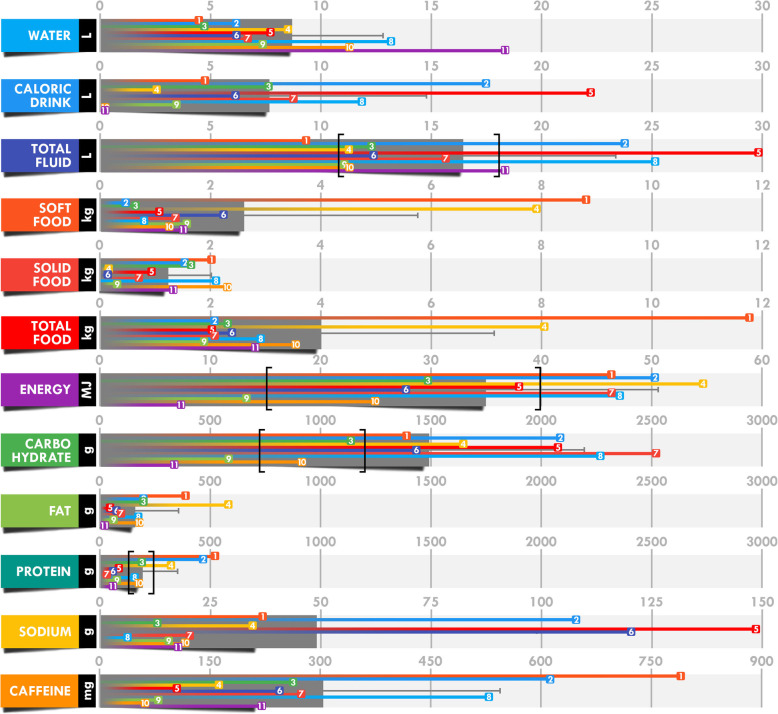
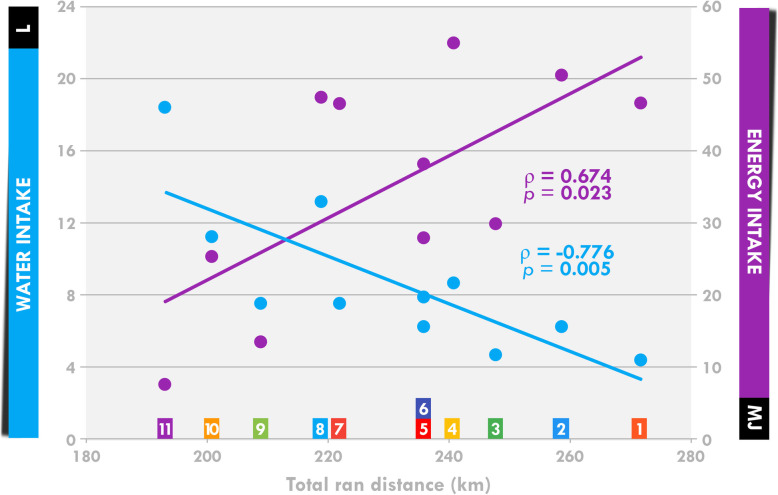
Results: Fluid, energy, and carbohydrate intake of the 11 finishers was 16.4 ± 6.9 L, 35.1 ± 15.7 MJ, and 1.49 ± 0.71 kg, respectively. Individual analyses showed that all but one (for fluid intake) or two (for energy and carbohydrate intake) consumed more than the minimum recommendations. The calculated energy balance remained, however, largely negative (- 29.5 ± 16.1 MJ). Such unusually high intake was not accompanied by detrimental GIS (recorded in 75%, but only transiently [3.0 ± 0.9 h]) or EAH (0%). The athletes were not dehydrated, shown by the absence of significant body mass loss (- 0.92 ± 2.13%) and modifications of plasma osmolality and an increase in plasma volume (+ 19.5 ± 15.8%). Performance (distance ran) positively correlated with energy intake (ρ = 0.674, p = 0.023) and negatively (ρ = - 0.776, p = 0.005) with fluid intake.
Conclusions: Overall, almost all of these elite 24-h ultramarathoners surpassed the nutritional recommendations without encountering significant or the usual adverse effects.
Keywords: Energy balance; Energy expenditure; Hydration; Nutrition; Running; Ultramarathon.
Conflict of interest statement
The authors declare that they have no competing interests.
Figures
References
-
- Costa RJS, Knechtle B, Tarnopolsky M, Hoffman MD. Nutrition for Ultramarathon running: trail, track, and road. Int J Sport Nutr Exerc Metab. 2019;29(2):130–140. - PubMed
-
- Graham SM, Martindale RJJ, McKinley M, Connaboy C, Andronikos G, Susmarski A. The examination of mental toughness, sleep, mood and injury rates in an Arctic ultra-marathon. Eur J Sport Sci. 2020:1–24. In press. - PubMed
-
- Hurdiel R, Riedy SM, Millet GP, Mauvieux B, Peze T, Elsworth-Edelsten C, et al. Cognitive performance and self-reported sleepiness are modulated by time-of-day during a mountain ultramarathon. Res Sports Med. 2018;26(4):482–489. - PubMed
MeSH terms
LinkOut - more resources
Full Text Sources
Miscellaneous
