


Insufficient Calorie Intake Worsens Post-Discharge Quality of Life and Increases Readmission Burden in Heart Failure
- PMID: 32653445
- PMCID: PMC9210452
- DOI: 10.1016/j.jchf.2020.04.004
Insufficient Calorie Intake Worsens Post-Discharge Quality of Life and Increases Readmission Burden in Heart Failure
Abstract
Objectives: The purpose of this study was to evaluate the relationship between calorie intake and post-discharge outcomes in hospitalized patients with heart failure (HF).
Background: Malnutrition increases adverse outcomes in HF, and dietary sodium restriction may inadvertently worsen nutritional intake.
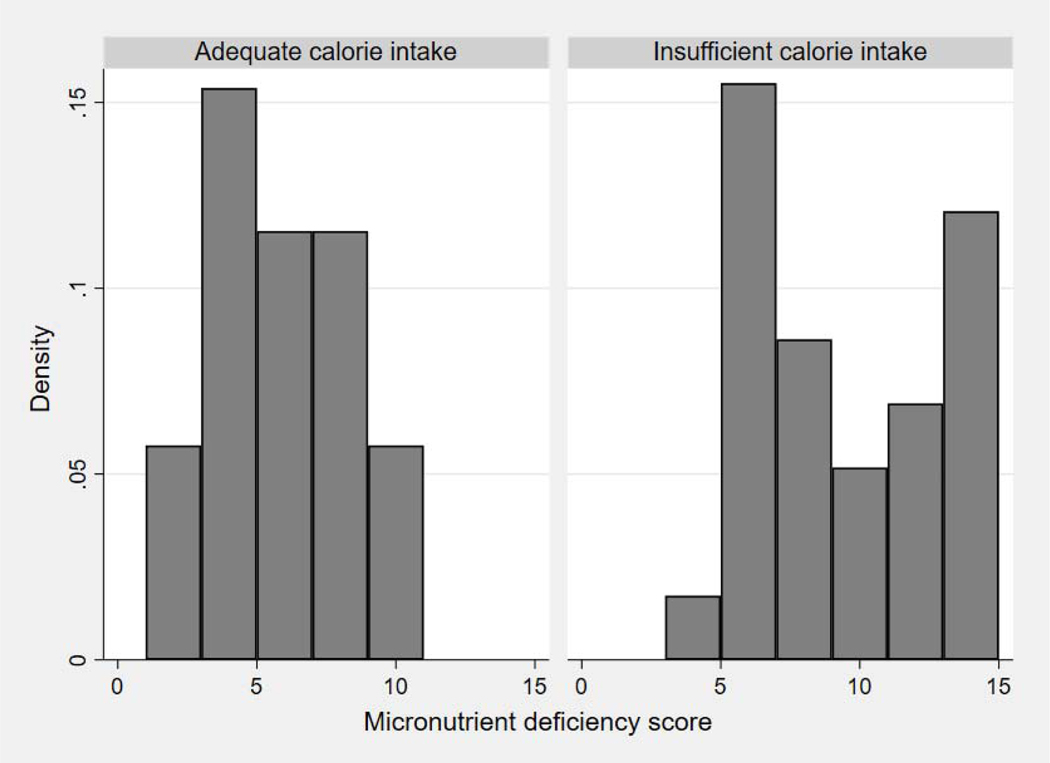
Methods: In a dietary intervention trial, baseline nutritional intake in HF inpatients was estimated using the Block Food Frequency Questionnaire (FFQ), and the Nutritional Risk Index (NRI) was calculated. Insufficient calorie intake was defined as <90% of metabolic needs, and a 15-point micronutrient deficiency score was created. Adjusted linear, logistic, and negative binomial regression were used to evaluate associations between insufficient calorie intake and quality of life (using the Kansas City Cardiomyopathy Questionnaire Clinical Summary [KCCQ-CS]), readmission risk, and days rehospitalized over 12 weeks.
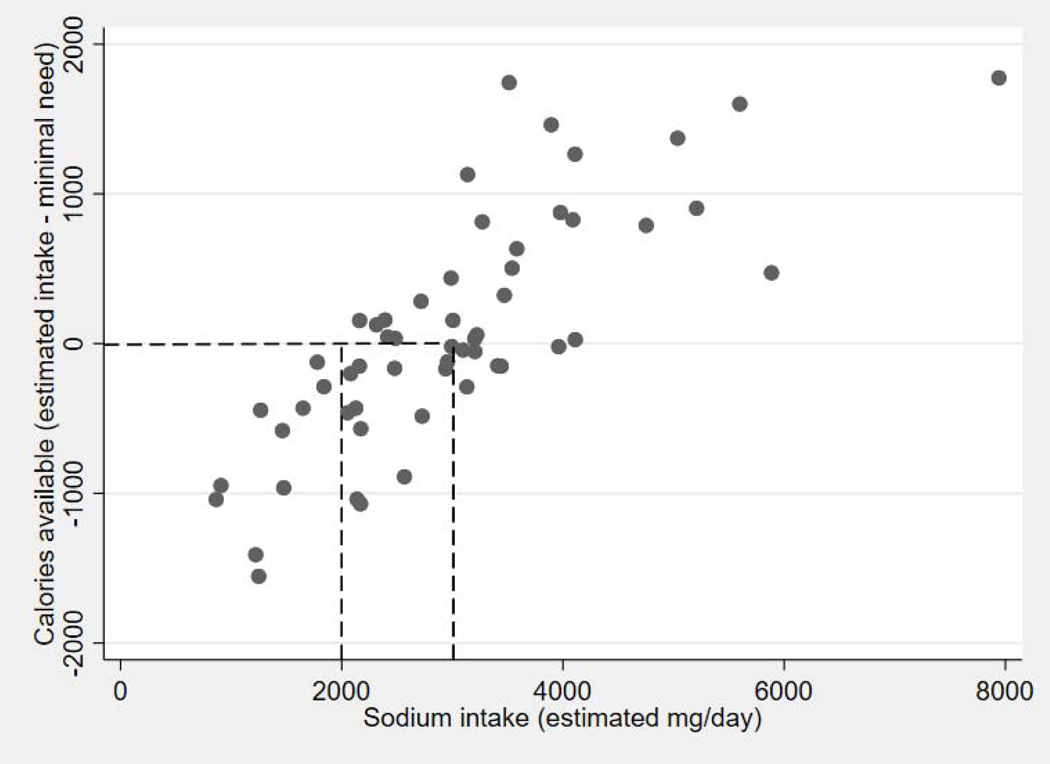
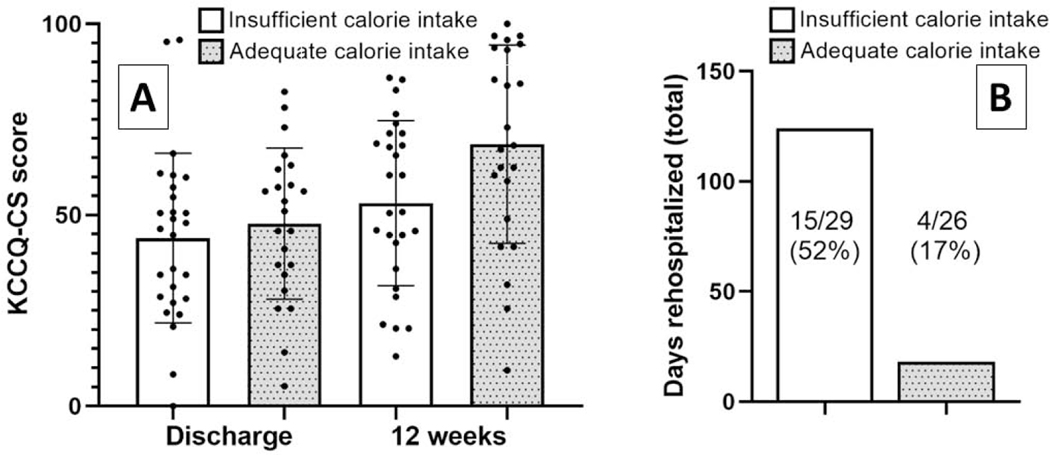
Results: Among 57 participants (70 ± 8 years of age; 31% female; mean body mass index 32 ± 8 kg/m2); median sodium and calorie intake amounts were 2,987 mg/day (interquartile range [IQR]: 2,160 to 3,540 mg/day) and 1,602 kcal/day (IQR: 1,201 to 2,142 kcal/day), respectively; 11% of these patients were screened as malnourished by the NRI. All patients consuming <2,000 mg/day sodium had insufficient calorie intake; this group also more frequently had dietary micronutrient and protein deficiencies. At 12 weeks, patients with insufficient calorie intake had less improvement in the KCCQ-CS score (β = -14.6; 95% confidence interval [CI]: -27.3 to -1.9), higher odds of readmission (odds ratio: 14.5; 95% CI: 2.2 to 94.4), and more days rehospitalized (incident rate ratio: 31.3; 95% CI: 4.3 to 229.3).
Conclusions: Despite a high prevalence for obesity and rare overt malnutrition, insufficient calorie intake was associated with poorer post-discharge quality of life and increased burden of readmission in patients with HF. Inpatient dietary assessment could improve readmission risk stratification and identify patients for nutritional intervention. (Geriatric Out of Hospital Randomized Meal Trial in Heart Failure [GOURMET-HF] NCT02148679).
Keywords: diet; hospitalization; nutrition; sodium.
Copyright © 2020 American College of Cardiology Foundation. Published by Elsevier Inc. All rights reserved.
Figures
Comment in
-
Nutrition, Heart Failure, and Quality of Life: Beyond Dietary Sodium.JACC Heart Fail. 2020 Sep;8(9):765-769. doi: 10.1016/j.jchf.2020.04.006. Epub 2020 Jul 8. JACC Heart Fail. 2020. PMID: 32653442 Free PMC article.
-
Calorie Intake, Post-Discharge Outcomes in Heart Failure, and Food Insecurity.JACC Heart Fail. 2020 Dec;8(12):1052. doi: 10.1016/j.jchf.2020.07.007. JACC Heart Fail. 2020. PMID: 33272382 No abstract available.
-
Reply: Calorie Intake, Post Discharge Outcomes in Heart Failure, and Food Insecurity.JACC Heart Fail. 2020 Dec;8(12):1052-1053. doi: 10.1016/j.jchf.2020.09.008. JACC Heart Fail. 2020. PMID: 33272383 No abstract available.
-
To Feed or Not to Feed: That Is the Question in Heart Failure.JACC Heart Fail. 2021 Feb;9(2):166. doi: 10.1016/j.jchf.2020.09.019. JACC Heart Fail. 2021. PMID: 33509381 No abstract available.
References
-
- Gupta D, Georgiopoulou VV, Kalogeropoulos AP et al. Dietary Sodium Intake in Heart Failure. Circulation 2012;126:479–485. - PubMed
-
- Paterna S, Fasullo S, Parrinello G et al. Short-term effects of hypertonic saline solution in acute heart failure and long-term effects of a moderate sodium restriction in patients with compensated heart failure with New York Heart Association class III (Class C) (SMAC-HF Study). Am J Med Sci 2011;342:27–37. - PubMed
-
- Jefferson K, Ahmed M, Choleva M et al. Effect of a Sodium-Restricted Diet on Intake of Other Nutrients in Heart Failure: Implications for Research and Clinical Practice. J Card Fail 2015;21:959–962. - PubMed
Publication types
MeSH terms
Associated data
Grants and funding
LinkOut - more resources
Full Text Sources
Medical
Research Materials
Miscellaneous
