


Surfactant-based prophylaxis and therapy against COVID-19: A possibility
- PMID: 32653736
- PMCID: PMC7340033
- DOI: 10.1016/j.mehy.2020.110081
Surfactant-based prophylaxis and therapy against COVID-19: A possibility
Abstract
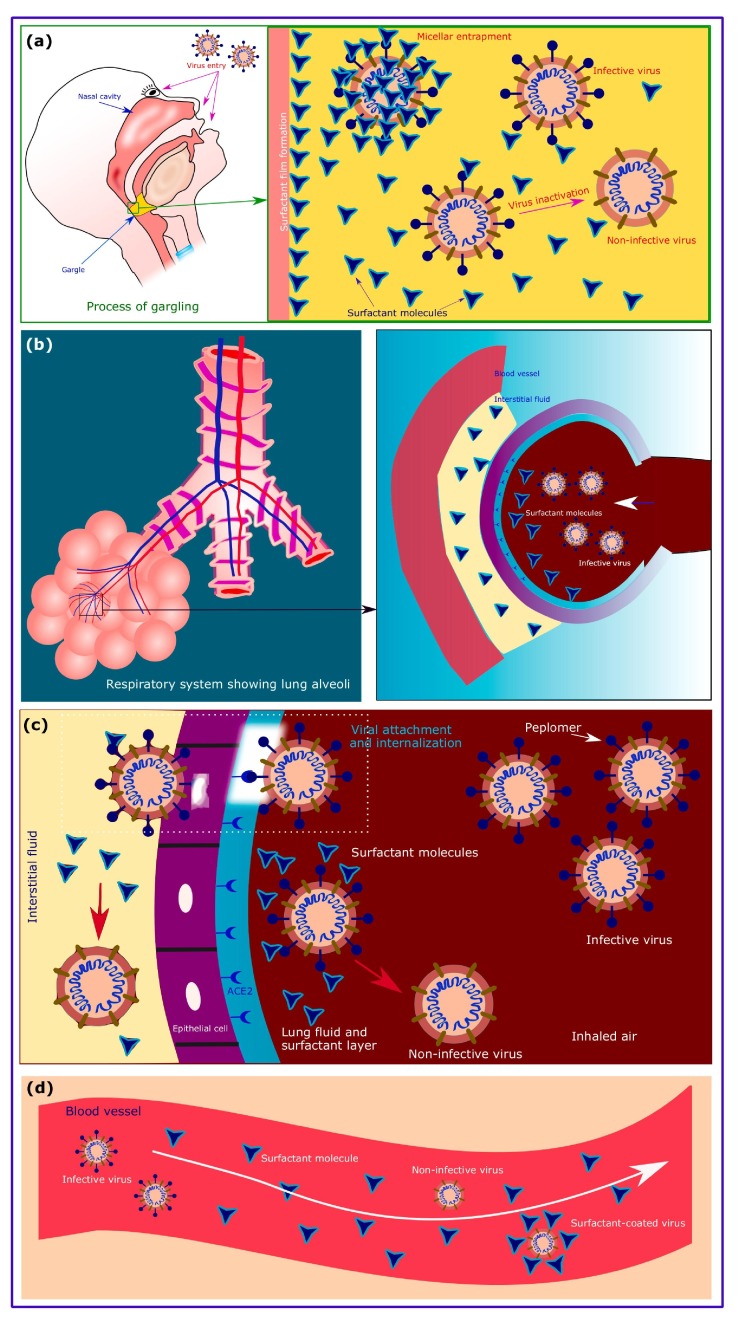
Hand hygiene by washing with soap and water is recommended for the prevention of COVID-19 spread. Soaps and detergents are explained to act by damaging viral spike glycoproteins (peplomers) or by washing out the virus through entrapment in the micelles. Technically, soaps come under a functional category of molecules known as surfactants. Surfactants are widely used in pharmaceutical formulations as excipients. We wonder why surfactants are still not tried for prophylaxis or therapy against COVID-19? That too when many of them have proven antiviral properties. Moreover, lung surfactants have already shown benefits in respiratory viral infections. Therefore, we postulate that surfactant-based prophylaxis and therapy would be promising. We believe that our hypothesis would stimulate debate or new research exploring the possibility of surfactant-based prophylaxis and therapy against COVID-19. The success of a surfactant-based technique would save the world from any such pandemic in the future too.
Keywords: COVID-19; Peplomer; SARS-CoV-2; Spike glycoprotein; Surfactants.
Copyright © 2020 Elsevier Ltd. All rights reserved.
Conflict of interest statement
Declaration of Competing Interest The authors declare that they have no known competing financial interests or personal relationships that could have appeared to influence the work reported in this paper.
Figures
References
-
- Lin H.-R., Li Y.-S., Lin Y.-J. Novel microencapsulated Pluronic–chitosan nanomicelles for lung delivery. Colloid Polym Sci. 2016;294:1209–1216. doi: 10.1007/s00396-016-3879-6. - DOI
MeSH terms
Substances
LinkOut - more resources
Full Text Sources
Other Literature Sources
Miscellaneous
