


Metabolic crosstalk in the tumor microenvironment regulates antitumor immunosuppression and immunotherapy resisitance
- PMID: 32654036
- PMCID: PMC11072448
- DOI: 10.1007/s00018-020-03581-0
Metabolic crosstalk in the tumor microenvironment regulates antitumor immunosuppression and immunotherapy resisitance
Abstract
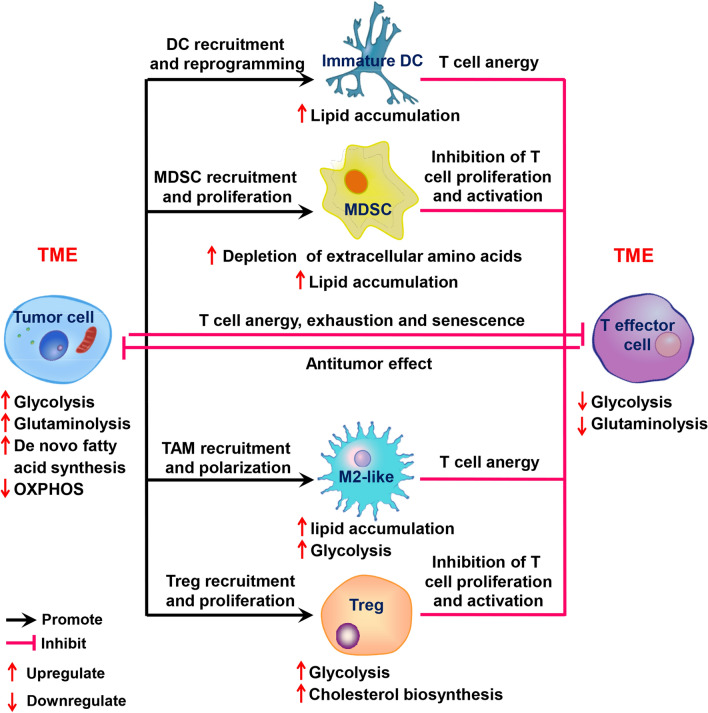
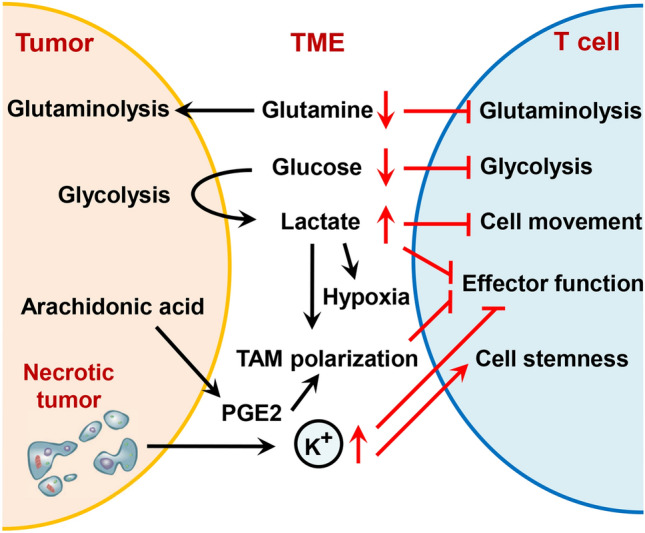
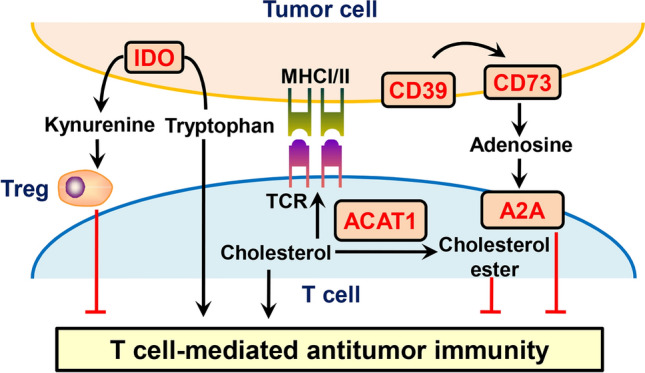
The successful treatment of human cancers by immunotherapy has been made possible by breakthroughs in the discovery of immune checkpoint regulators, including CTLA-4 and PD-1/PD-L1. However, the immunosuppressive effect of the tumor microenvironment still represents an important bottleneck that limits the success of immunotherapeutic approaches. The tumor microenvironment influences the metabolic crosstalk between tumor cells and tumor-infiltrating immune cells, creating competition for the utilization of nutrients and promoting immunosuppression. In addition, tumor-derived metabolites regulate the activation and effector function of immune cells through a variety of mechanisms; in turn, the metabolites and other factors secreted by immune cells can also become accomplices to cancer development. Immune-metabolic checkpoint regulation is an emerging concept that is being studied with the aim of restoring the immune response in the tumor microenvironment. In this review, we summarize the metabolic reprogramming of various cell types present in the tumor microenvironment, with a focus on the interaction between the metabolic pathways of these cells and antitumor immunosuppression. We also discuss the main metabolic checkpoints that could provide new means of enhancing antitumor immunotherapy.
Keywords: Antitumor immunotherapy; Immune checkpoint; Metabolic checkpoint; Metabolic reprogramming; Tumor metabolism.
Figures
References
-
- Vinay DS, Ryan EP, Pawelec G, Talib WH, Stagg J, Elkord E, Lichtor T, Decker WK, Whelan RL, Kumara H, Signori E, Honoki K, Georgakilas AG, Amin A, Helferich WG, Boosani CS, Guha G, Ciriolo MR, Chen S, Mohammed SI, Azmi AS, Keith WN, Bilsland A, Bhakta D, Halicka D, Fujii H, Aquilano K, Ashraf SS, Nowsheen S, Yang X, Choi BK, Kwon BS. Immune evasion in cancer: Mechanistic basis and therapeutic strategies. Semin Cancer Biol. 2015;35(Suppl):S185–S198. doi: 10.1016/j.semcancer.2015.03.004. - DOI - PubMed
Publication types
MeSH terms
Substances
Grants and funding
- 81903138/the National Natural Science Foundation of China
- 81972776/the National Natural Science Foundation of China
- 81803025/the National Natural Science Foundation of China
- 81772928/the National Natural Science Foundation of China
- 81702907/the National Natural Science Foundation of China
- 81772901/the National Natural Science Foundation of China
- 81672993/the National Natural Science Foundation of China
- 81672683/the National Natural Science Foundation of China
- 2019JJ50778/the Natural Science Foundation of Hunan Province
- 2018SK21210/the Natural Science Foundation of Hunan Province
- 2018SK21211/the Natural Science Foundation of Hunan Province
- 2018JJ3704/the Natural Science Foundation of Hunan Province
- 2018JJ3815/the Natural Science Foundation of Hunan Province
LinkOut - more resources
Full Text Sources
Medical
Research Materials
