


Genetic Architecture of Parkinson's Disease in the Indian Population: Harnessing Genetic Diversity to Address Critical Gaps in Parkinson's Disease Research
- PMID: 32655481
- PMCID: PMC7323575
- DOI: 10.3389/fneur.2020.00524
Genetic Architecture of Parkinson's Disease in the Indian Population: Harnessing Genetic Diversity to Address Critical Gaps in Parkinson's Disease Research
Abstract
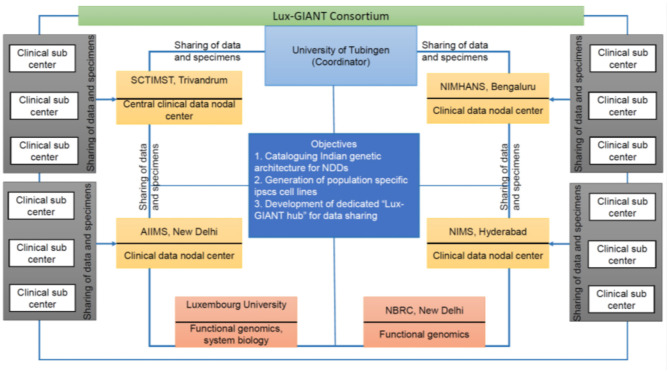
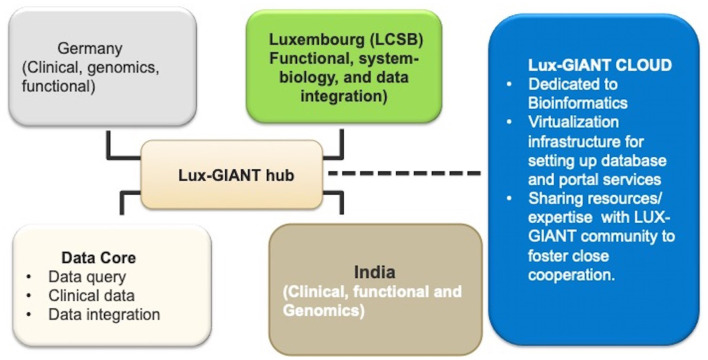
Over the past two decades, our understanding of Parkinson's disease (PD) has been gleaned from the discoveries made in familial and/or sporadic forms of PD in the Caucasian population. The transferability and the clinical utility of genetic discoveries to other ethnically diverse populations are unknown. The Indian population has been under-represented in PD research. The Genetic Architecture of PD in India (GAP-India) project aims to develop one of the largest clinical/genomic bio-bank for PD in India. Specifically, GAP-India project aims to: (1) develop a pan-Indian deeply phenotyped clinical repository of Indian PD patients; (2) perform whole-genome sequencing in 500 PD samples to catalog Indian genetic variability and to develop an Indian PD map for the scientific community; (3) perform a genome-wide association study to identify novel loci for PD and (4) develop a user-friendly web-portal to disseminate results for the scientific community. Our "hub-spoke" model follows an integrative approach to develop a pan-Indian outreach to develop a comprehensive cohort for PD research in India. The alignment of standard operating procedures for recruiting patients and collecting biospecimens with international standards ensures harmonization of data/bio-specimen collection at the beginning and also ensures stringent quality control parameters for sample processing. Data sharing and protection policies follow the guidelines established by local and national authorities.We are currently in the recruitment phase targeting recruitment of 10,200 PD patients and 10,200 healthy volunteers by the end of 2020. GAP-India project after its completion will fill a critical gap that exists in PD research and will contribute a comprehensive genetic catalog of the Indian PD population to identify novel targets for PD.
Keywords: Parkinson's disease; biobank; common genetic variation; genetic diversity; genome-wide association study.
Copyright © 2020 Rajan, Divya, Kandadai, Yadav, Satagopam, Madhusoodanan, Agarwal, Kumar, Ferreira, Kumar, Sreeram Prasad, Shetty, Mehta, Desai, Kumar, Prashanth, Bhatt, Wadia, Ramalingam, Wali, Pandey, Bartusch, Hannussek, Krüger, Kumar-Sreelatha, Grover, Lichtner, Sturm, Roeper, Busskamp, Chandak, Schwamborn, Seth, Gasser, Riess, Goyal, Pal, Borgohain, Krüger, Kishore, Sharma and the Lux-GIANT Consortium.
Figures
References
-
- Nalls MA, Blauwendraat C, Vallerga CL, Heilbron K, Bandres-Ciga S, Chang D, et al. Identification of novel risk loci, causal insights, and heritable risk for Parkinson's disease: a meta-analysis of genome-wide association studies. Lancet Neurol. (2019) 18:1091–102. 10.1016/S1474-4422(19)30320-5 - DOI - PMC - PubMed
LinkOut - more resources
Full Text Sources
Miscellaneous
