


Anti-synthetase syndrome-associated pulmonary veno-occlusive disease
- PMID: 32655855
- PMCID: PMC7331768
- DOI: 10.1177/2045894020935289
Anti-synthetase syndrome-associated pulmonary veno-occlusive disease
Abstract
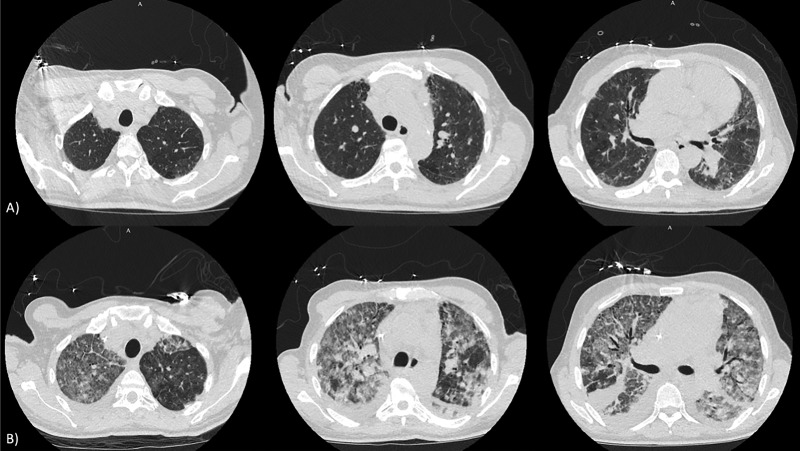
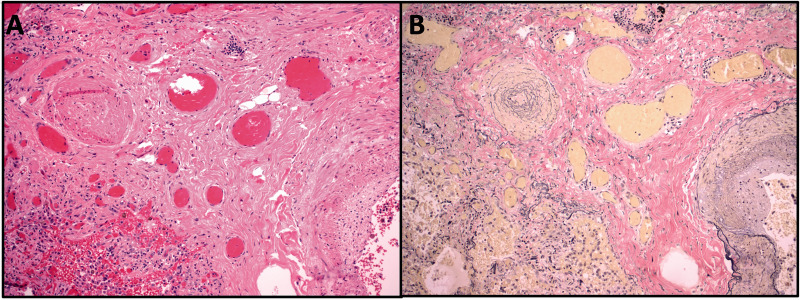
Pulmonary arterial hypertension has been reported with a prevalence of 7.9% in patients with anti-synthetase syndrome; however, anti-synthetase syndrome associated with pulmonary veno-occlusive disease (PVOD) has never before been described in the literature. We present a novel case of anti-synthetase syndrome-associated PVOD in a patient who presented with hypoxic respiratory failure associated with right heart failure and was diagnosed with anti-synthetase syndrome based on his autoimmune serology and pre-capillary pulmonary hypertension on right heart catheterization. He was initiated on pulmonary arterial hypertension therapy, but with escalating dose of parenteral epoprostenol, experienced acute clinical worsening with chest imaging concerning for PVOD that was confirmed on autopsy. Anti-synthetase syndrome can be associated with PVOD, and it should be suspected in patients who have evidence of pre-capillary pulmonary hypertension and who deteriorate with the initiation of pulmonary hypertension-specific therapy.
Keywords: anti-synthetase syndrome; pulmonary arterial hypertension; pulmonary veno-occlusive disease.
© The Author(s) 2020.
Figures
References
-
- Wilkins MR, Aman J, Harbaum L, et al. Recent advances in pulmonary arterial hypertension. F1000Res 2018; 7: >F1000 Faculty Rev-1128.
-
- Galie N, Humbert M, Vachiery JL, et al. 2015 ESC/ERS guidelines for the diagnosis and treatment of pulmonary hypertension. Rev Esp Cardiol (Engl Ed) 2016; 69: 177. - PubMed
-
- Holcomb BW, Jr, Loyd JE, Ely EW, et al. Pulmonary veno-occlusive disease: a case series and new observations. Chest 2000; 118: 1671–1679. - PubMed
-
- Hervier B, Meyer A, Dieval C, et al. Pulmonary hypertension in antisynthetase syndrome: prevalence, aetiology and survival. Eur Respir J 2013; 42: 1271–1282. - PubMed
LinkOut - more resources
Full Text Sources
