


Optimizing High-risk Infant Follow-up in Nonresearch-based Paradigms: The New England Follow-up Network
- PMID: 32656462
- PMCID: PMC7297406
- DOI: 10.1097/pq9.0000000000000287
Optimizing High-risk Infant Follow-up in Nonresearch-based Paradigms: The New England Follow-up Network
Abstract
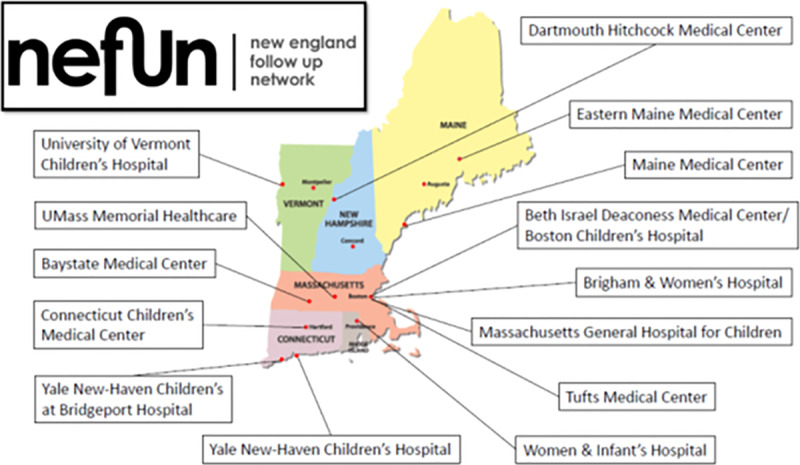
Objectives: To establish the first regional quality improvement collaborative solely dedicated to follow-through care of high-risk infants after Neonatal intensive care unit (NICU) discharge and to characterize extremely low birth weight (ELBW) follow-up in New England.
Methods: Eleven of 14 follow-up programs in New England partnered with the Vermont Oxford Network (VON) ELBW project for an initial data collection project. We collected information about the health status and developmental outcomes of infants born ≤1,000 g or younger than 28 weeks 2014-2016 at the 18-24 months corrected for gestational age (CGA) follow-up visit. VON collected and compiled the data.
Results: Of 993 eligible infants, 516 (52.0%) had follow-up visits. The rehospitalization rate was 33.9%, mostly respiratory illness. Ninety-six children (19.3%) had weight less than 10th percentile and 44 (8.9%) had weight less than third percentile at 18-24 months. Only 170 (61.4%) children had recommended hearing screening after NICU discharge. Forty-six (9.1%) had cerebral palsy; 81 of the 441 infants that completed all 3 sections of the Bayley Scales of Infant Development, third edition (18.4%) had any composite score less than 70. Over half of the social and demographic data were missing.
Conclusion: Most quality initiatives in neonatology stop at NICU discharge. This first project by the New England Follow-up Network showed a low rate for clinical follow-up. It demonstrated many opportunities to improve postdischarge follow-through specific to NICU-based care. Future projects will aim to improve the quality of follow-through services through collaborative learning, data sharing, and comparative outcomes.
Copyright © 2020 the Author(s). Published by Wolters Kluwer Health, Inc.
Figures
References
-
- McCormick MC. Long-term follow-up of infants discharged from neonatal intensive care units. JAMA. 1989;261:1767–1772. - PubMed
-
- American Academy of Pediatrics. Follow-up care of high-risk infants. Pediatrics. 2004;114(Suppl 5):1377–1397.
-
- Wang CJ, McGlynn EA, Brook RH, et al. Quality-of-care indicators for the neurodevelopmental follow-up of very low birth weight children: results of an expert panel process. Pediatrics. 2006;117:2080–2092. - PubMed
-
- Bockli K, Andrews B, Pellerite M, et al. Trends and challenges in United States neonatal intensive care units follow-up clinics. J Perinatol. 2014;34:71–74. - PubMed
-
- Kuppala VS, Tabangin M, Haberman B, et al. Current state of high-risk infant follow-up care in the United States: results of a national survey of academic follow-up programs. J Perinatol. 2012;32:293–298. - PubMed
Grants and funding
LinkOut - more resources
Full Text Sources
Research Materials