Review
. 2020 Jul 9;21(14):4869.
doi: 10.3390/ijms21144869.

Regulation of Adult Neurogenesis in Mammalian Brain

Affiliations
Review

Regulation of Adult Neurogenesis in Mammalian Brain

Maria Victoria Niklison-Chirou et al. Int J Mol Sci. .

Abstract

Adult neurogenesis is a multistage process by which neurons are generated and integrated into existing neuronal circuits. In the adult brain, neurogenesis is mainly localized in two specialized niches, the subgranular zone (SGZ) of the dentate gyrus and the subventricular zone (SVZ) adjacent to the lateral ventricles. Neurogenesis plays a fundamental role in postnatal brain, where it is required for neuronal plasticity. Moreover, perturbation of adult neurogenesis contributes to several human diseases, including cognitive impairment and neurodegenerative diseases. The interplay between extrinsic and intrinsic factors is fundamental in regulating neurogenesis. Over the past decades, several studies on intrinsic pathways, including transcription factors, have highlighted their fundamental role in regulating every stage of neurogenesis. However, it is likely that transcriptional regulation is part of a more sophisticated regulatory network, which includes epigenetic modifications, non-coding RNAs and metabolic pathways. Here, we review recent findings that advance our knowledge in epigenetic, transcriptional and metabolic regulation of adult neurogenesis in the SGZ of the hippocampus, with a special attention to the p53-family of transcription factors.

Keywords: epigenetic modification; metabolism; neurogenesis; p53; p73; transcription factors.


Conflict of interest statement

The authors declare no conflict of interest.

Figures
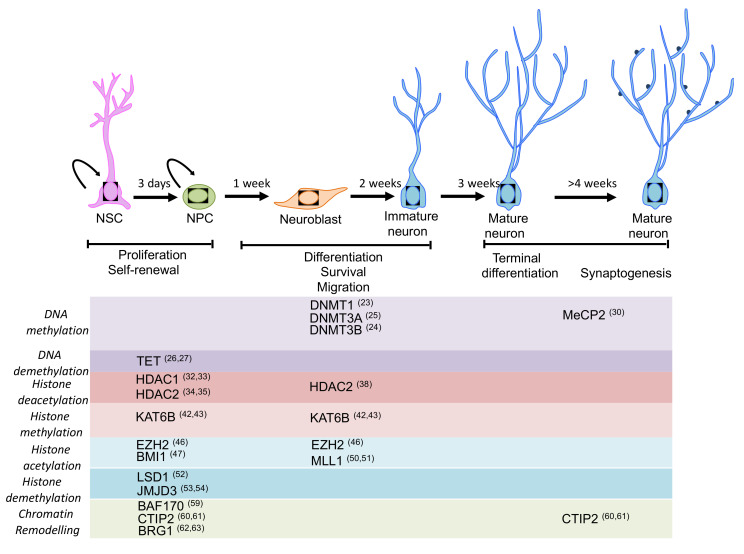
Figure 1
Figure 1
Schematic representation of the main stages of neurogenesis and the epigenetic machinery involved in the regulation of neurogenesis. Expression pattern of the main epigenetic regulators for which a function in adult neurogenesis has been described or proposed. Most of the regulators play an important role in self-renewal, proliferation and fate specification during neurogenesis (please see main text for details).
Figure 2
Figure 2
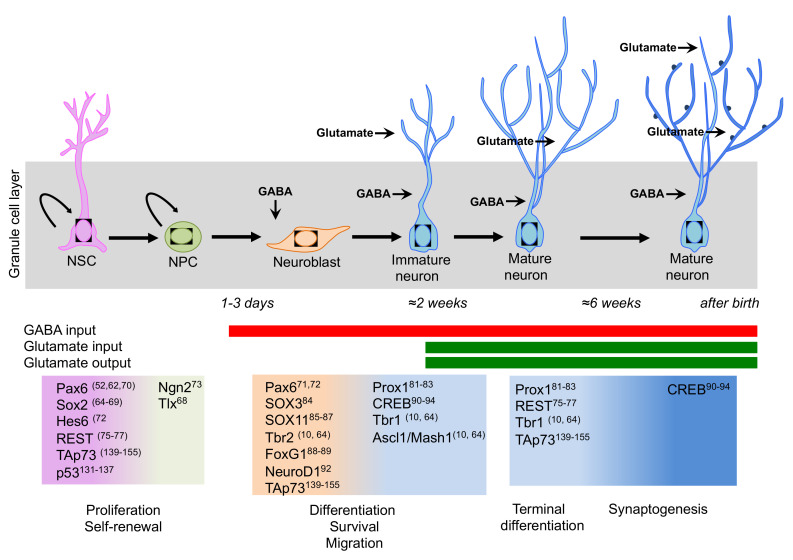
Schematic representation of the transcription factor network involved in neurogenesis in the adult hippocampus. A sequential and coordinated expression pattern of the neurogenic transcription factors is fundamental for the proper progression from neural stem cells (NSCs) to mature neurons (Please see main text for details). During neurogenesis, a switch takes place from GABA excitatory to GABA inhibitory and glutamate excitatory inputs.
Figure 3
Figure 3
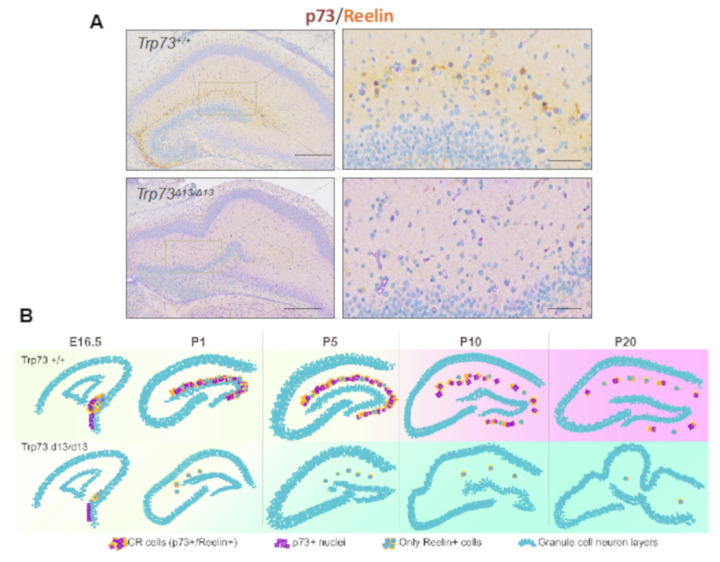
Trp73D13/D13 mice display hippocampal dysgenesis and CR cells depletion. (A) Immunohistochemistry of postnatal day 5 (P5) mouse hippocampus displays disrupted morphology and reduced presence of Reelin+ CR cells in Trp73D13/D13 genotype. Scale bars indicate 500 µm and 50 m.(B) Representative summary of morphological developmental progression in the hippocampus of Trp73+/+ and Trp73D13/D13 from embryonic 16.5 (E16.5) to postnatal day 20 (P20) stage. Adapted with modifications from Amelio et al. [162].
Figure 4
Figure 4
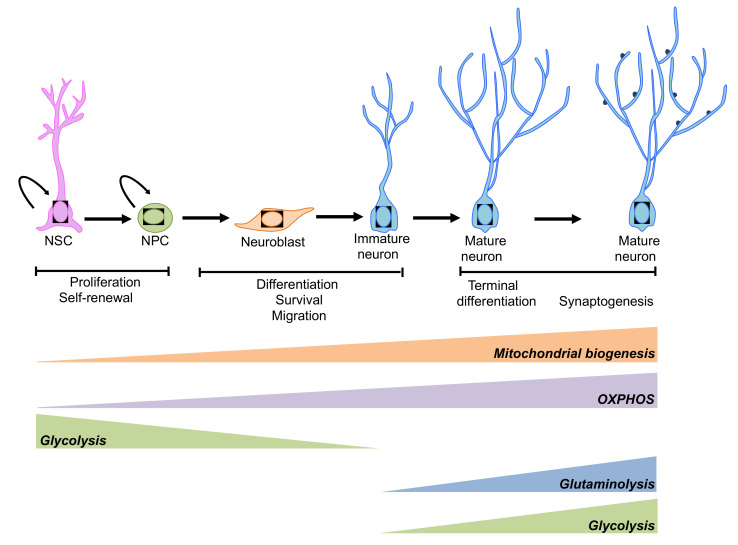
Schematic representation of the metabolic pathways involved in the regulation of neurogenesis. An extensive reprogramming of cell metabolism is associated with neurogenesis. NSCs and neuronal progenitor cells (NPCs) rely mainly on glycolysis, while mature neurons preferentially use OXPHOS. However, under some circumstances aerobic glycolysis and glutaminolysis has been observed during neuronal terminal differentiation (please see main text for details).

References

    1. Ming G.L., Song H. Adult neurogenesis in the mammalian brain: Significant answers and significant questions. Neuron. 2011;70:687–702. doi: 10.1016/j.neuron.2011.05.001. - DOI - PMC - PubMed
    1. Yadirgi G., Marino S. Adult neural stem cells and their role in brain pathology. J. Pathol. 2009;217:242–253. doi: 10.1002/path.2480. - DOI - PubMed
    1. Kole A.J., Annis R.P., Deshmukh M. Mature neurons: Equipped for survival. Cell Death Dis. 2013;4:e689. doi: 10.1038/cddis.2013.220. - DOI - PMC - PubMed
    1. Ming G.L., Song H. Adult neurogenesis in the mammalian central nervous system. Annu. Rev. Neurosci. 2005;28:223–250. doi: 10.1146/annurev.neuro.28.051804.101459. - DOI - PubMed
    1. Zhao C., Deng W., Gage F.H. Mechanisms and functional implications of adult neurogenesis. Cell. 2008;132:645–660. doi: 10.1016/j.cell.2008.01.033. - DOI - PubMed

Substances