


Evolutionary dynamics of the chloroplast genome sequences of six Colobanthus species
- PMID: 32661280
- PMCID: PMC7359349
- DOI: 10.1038/s41598-020-68563-5
Evolutionary dynamics of the chloroplast genome sequences of six Colobanthus species
Abstract
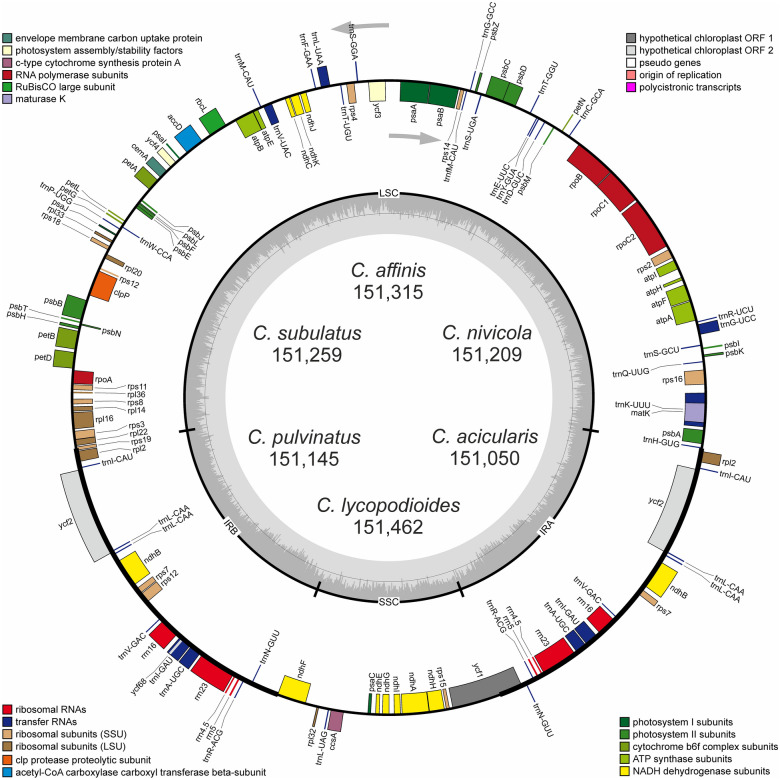
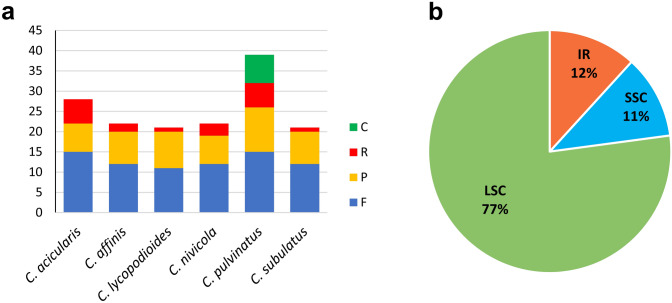
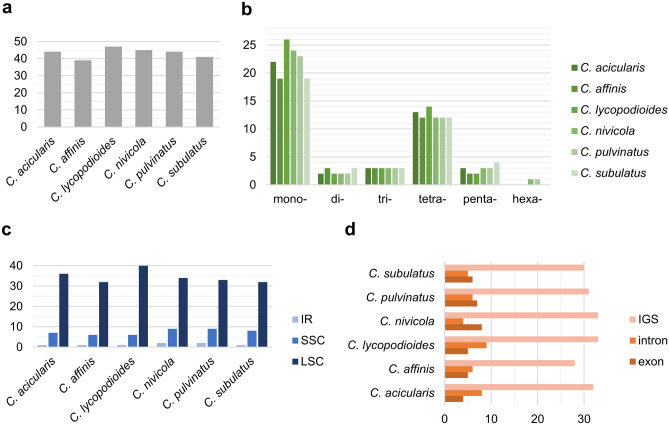
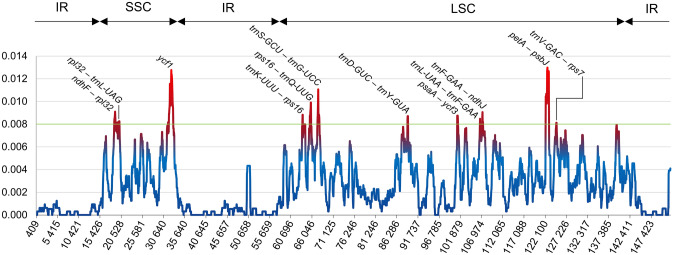
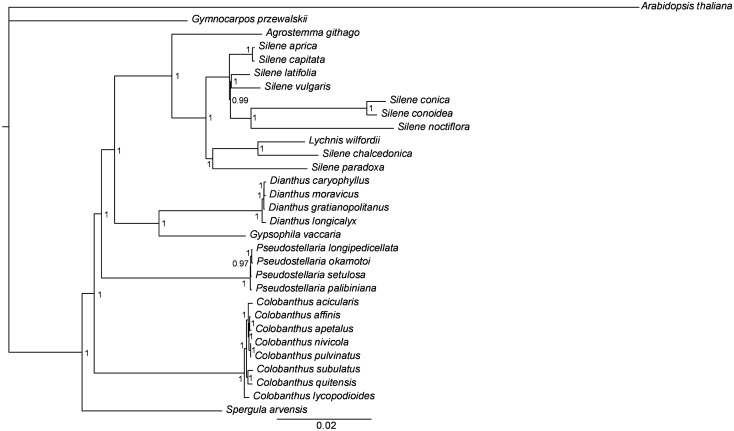
The complete plastome sequences of six species were sequenced to better understand the evolutionary relationships and mutation patterns in the chloroplast genome of the genus Colobanthus. The length of the chloroplast genome sequences of C. acicularis, C. affinis, C. lycopodioides, C. nivicola, C. pulvinatus and C. subulatus ranged from 151,050 to 151,462 bp. The quadripartite circular structure of these genome sequences has the same overall organization and gene content with 73 protein-coding genes, 30 tRNA genes, four rRNA genes and five conserved chloroplast open reading frames. A total of 153 repeat sequences were revealed. Forward repeats were dominant, whereas complementary repeats were found only in C. pulvinatus. The mononucleotide SSRs composed of A/T units were most common, and hexanucleotide SSRs were detected least often. Eleven highly variable regions which could be utilized as potential markers for phylogeny reconstruction, species identification or phylogeography were identified within Colobanthus chloroplast genomes. Seventy-three protein-coding genes were used in phylogenetic analyses. Reconstructed phylogeny was consistent with the systematic position of the studied species, and the representatives of the same genus were grouped in one clade. All studied Colobanthus species formed a single group and C. lycopodioides was least similar to the remaining species.
Conflict of interest statement
The authors declare no competing interests.
Figures

References
-
- The Plant List 2013. Version 1.1.https://www.theplantlist.org/browse/A/Caryophyllaceae/Colobanthus. (2019).
-
- West JG. Colobanthus curtisiae (Caryophyllaceae), a new species from eastern Tasmania, Australia. R. Soc. Tasm. Hobart. 1991;124(2):75–78.
-
- Giełwanowska I, et al. Biology of generative reproduction of Colobanthus quitensis (Kunth) Bartl. from King George Island, South Shetland Islands. Pol. Polar Res. 2011;32:139–155.
-
- The AGS online Plant Encyclopaedia. Alpine Garden Society. http://encyclopaedia.alpinegardensociety.net/plants/Colobanthus. (2019).
-
- Harbaugh DT, et al. A new lineage-based tribal classification of the family Caryophyllaceae. Int. J. Plant Sci. 2010;171(2):185–198.
Publication types
MeSH terms
LinkOut - more resources
Full Text Sources
