


Filtration Performance of FDA-Cleared Surgical Masks
- PMID: 32661453
- PMCID: PMC7357397
Filtration Performance of FDA-Cleared Surgical Masks
Abstract
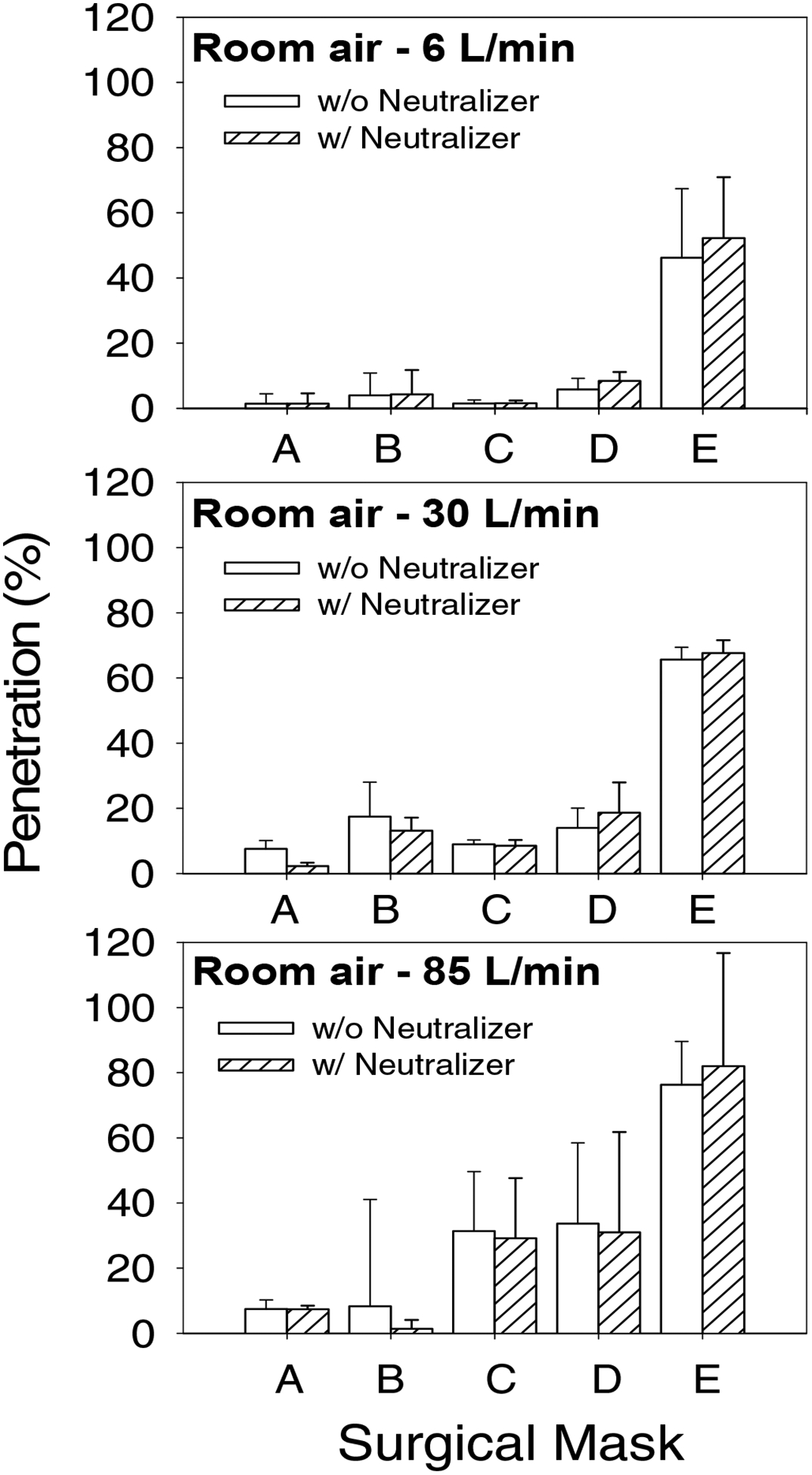
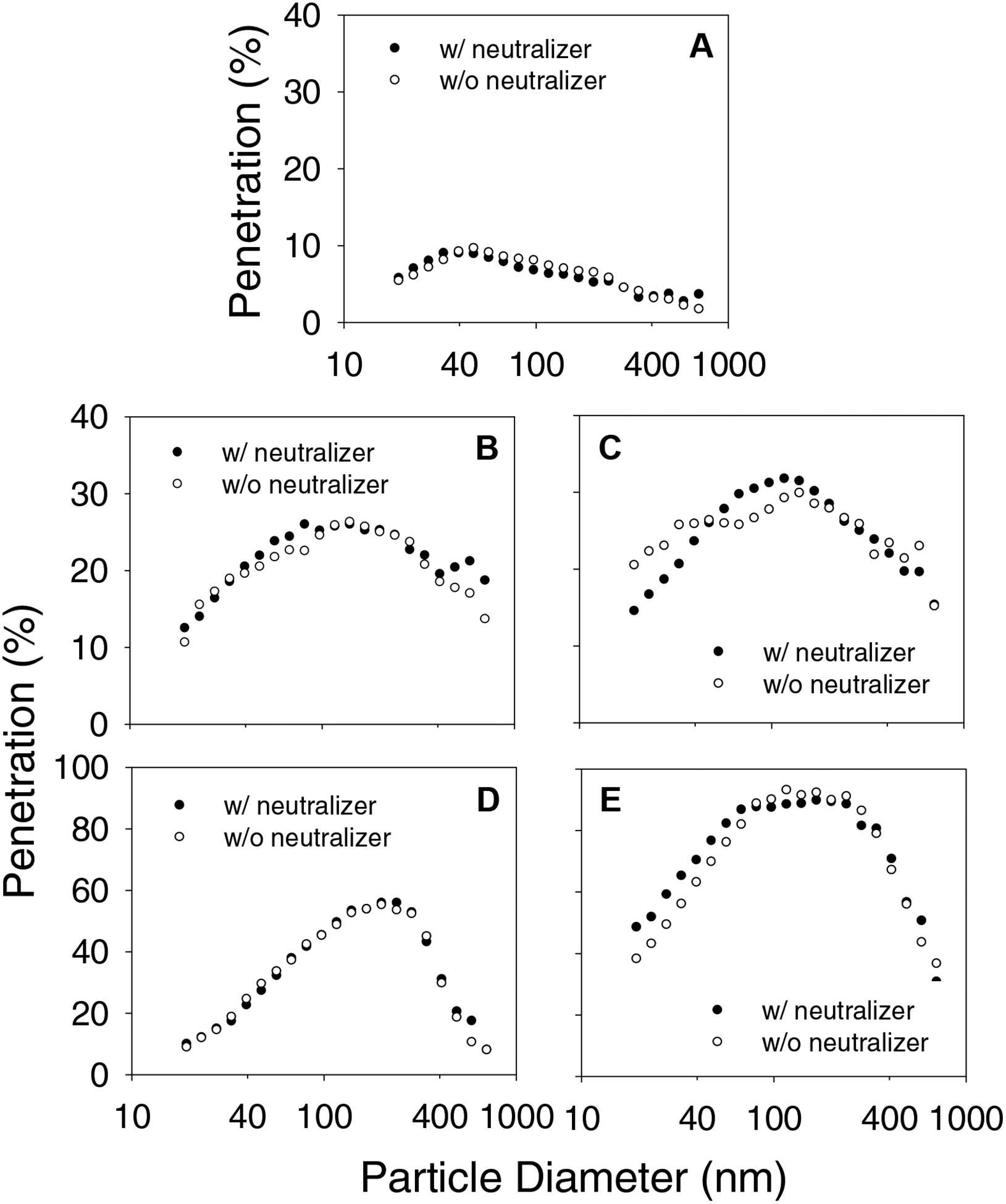
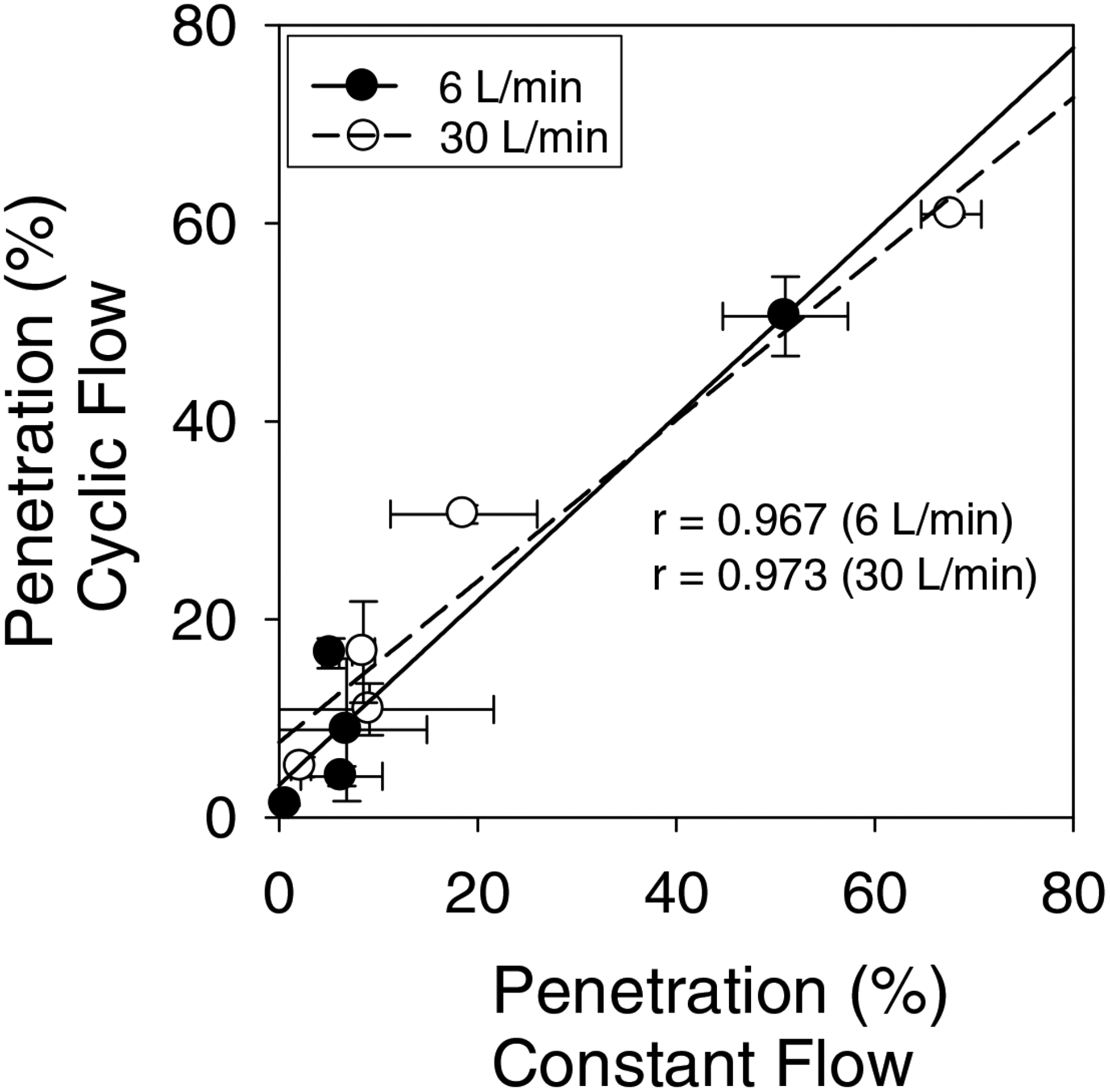
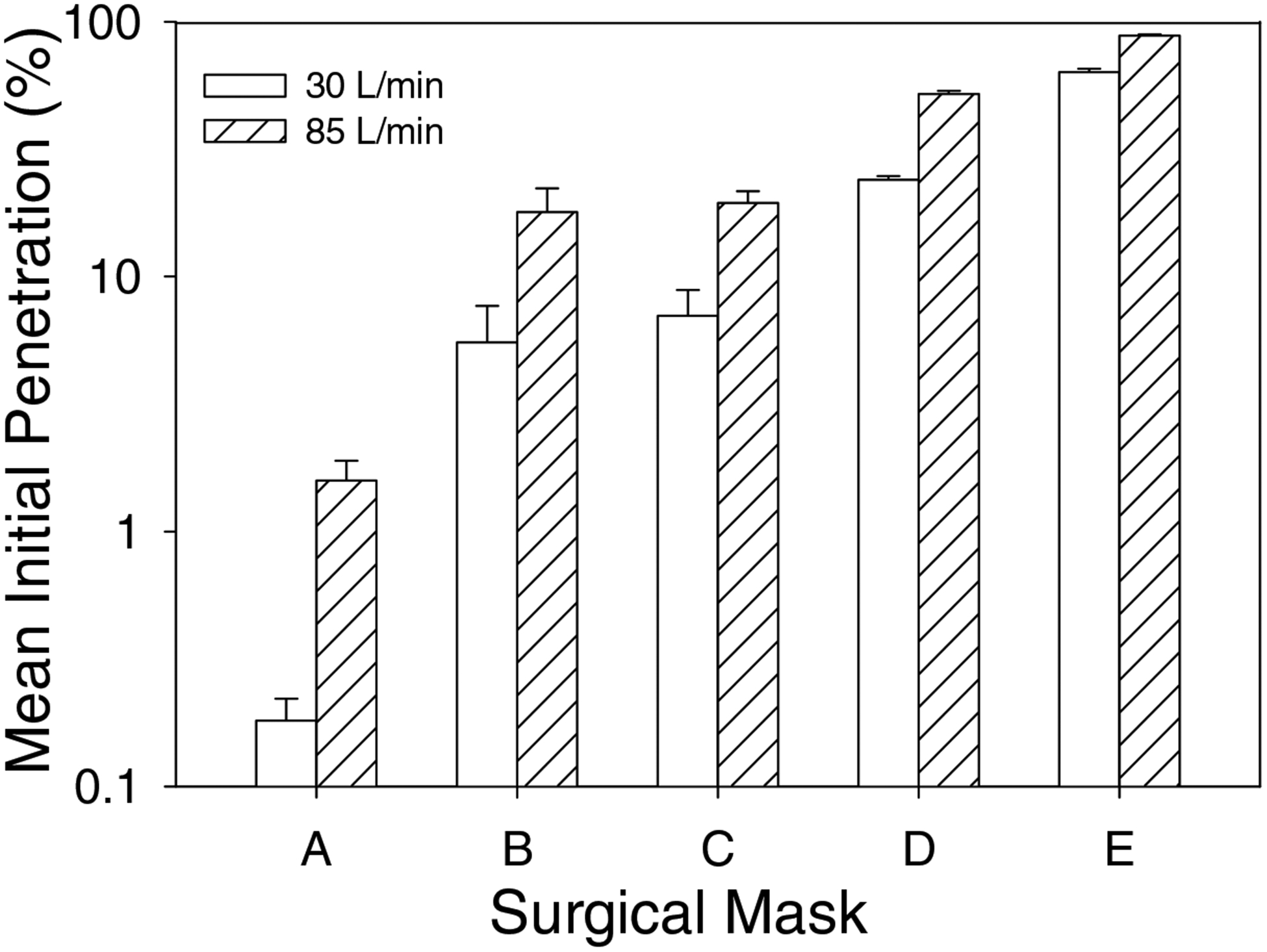
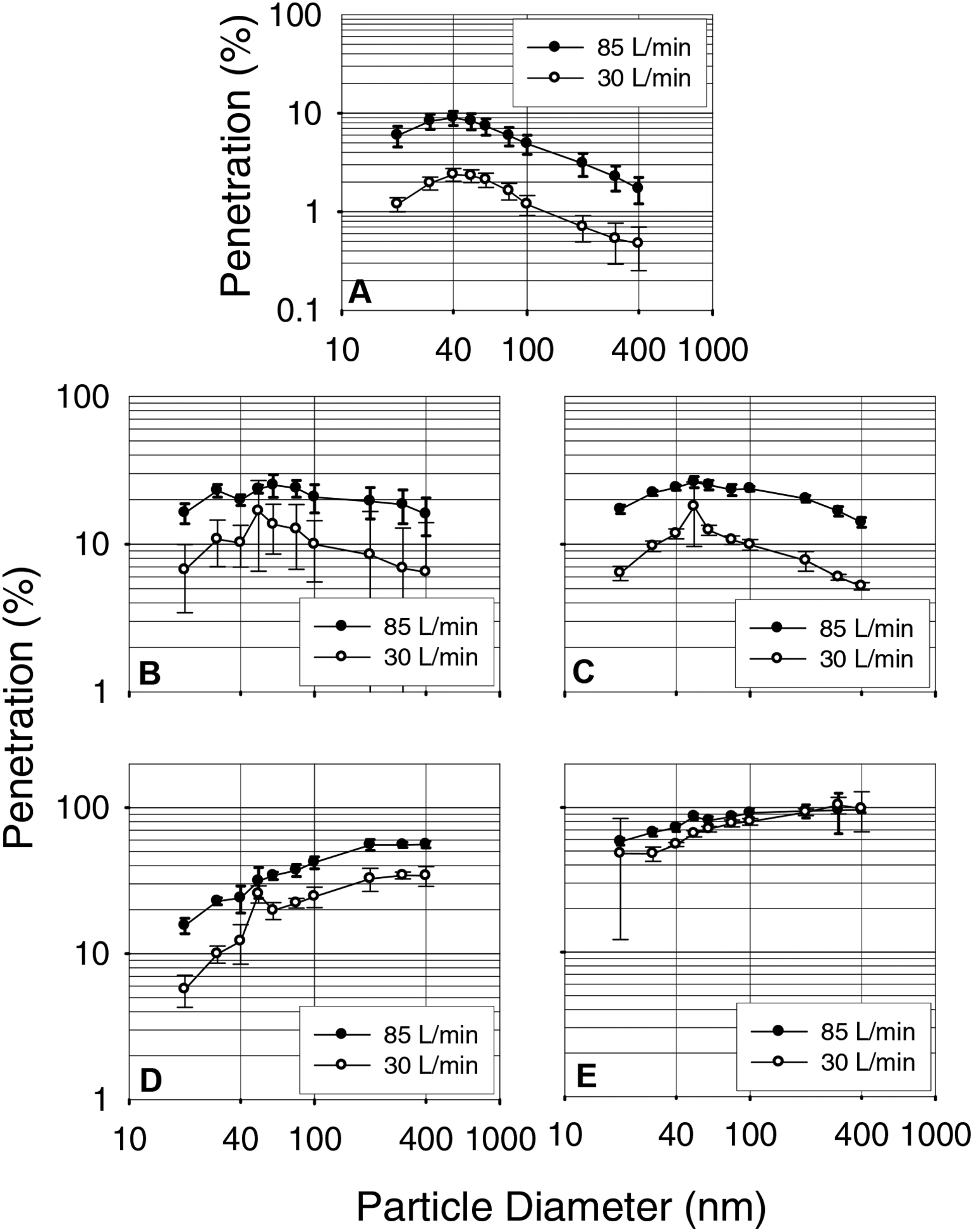
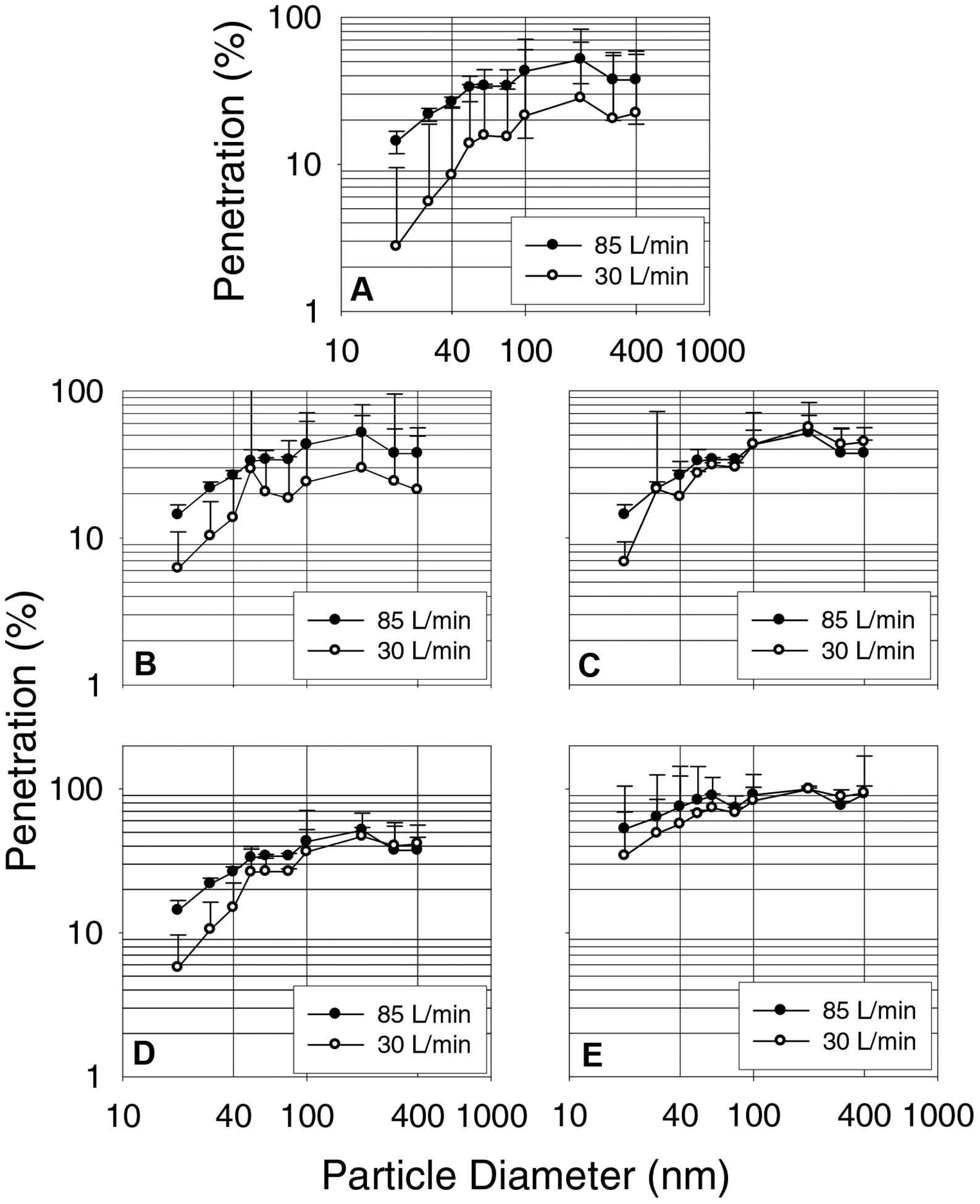
Ashortage of NIOSH-approved respirators is predicted during an influenza pandemic and other infectious disease outbreaks. Healthcare workers may use surgical masks instead of respirators due to non-availability and for economical reasons. This study investigated the filtration performance of surgical masks for a wide size range of submicron particles including the sizes of many viruses. Five models of FDA-cleared surgical masks were tested for room air particle penetrations at constant and cyclic flow conditions. Penetrations of polydisperse NaCl aerosols (75±20 nm, count median diameter), monodisperse NaCl aerosols (20-400 nm range) and particles in the 20-1000 nm range were measured at 30 and 85 liters/min. Filtration performance of surgical masks varied widely for room air particles at constant flow and correlated with the penetration levels measured under cyclic flow conditions. Room air particle penetration levels were comparable to polydisperse and monodisperse aerosol penetrations at 30 and 85 liters/minute. Filtration performance of FDA-cleared surgical masks varied widely for room air particles, and monodisperse and polydisperse aerosols. The results suggest that not all FDA-cleared surgical masks will provide similar levels of protection to wearers against infectious aerosols in the size range of many viruses.
Keywords: Filtration performance; Nanoparticles; Particle penetration; Surgical mask; Virus particles.
Figures
References
-
- ASTM. (1989). Standard test method for determining the initial efficiency of a flatsheet filter medium in an airflow using latex spheres. ASTM Standards (F 1215 – 89).
-
- ASTM. (2001). Standard test method for evaluating the bacterial filtration efficiency (BFE) of medical face mask materials, using a biological aerosol of Staphylococcus aereus. Annual Book of ASTM Standards (F2101–01), 1553–1557.
-
- ASTM. (2004). Standard specification for performance of materials used in medical face masks. Annual Book of ASTM Standards (F2100–04).
-
- Bailar JC, Brosseau LM, Cohen HJ, Gallagher EJ, Gensheimer KF, Hack AL, Jayaraman S, Karasz FE, Liu Y, McGeer A, and Osterholm MT (2006). Reusability of facemasks during an influenza pandemic. Institute of Medicine, National Academies Press, Washington, D.C.
-
- Balazy A, Toivola M, Adhikari A, Sivasubramani SK, Reponen T, and Grinshpun SA (2006). Do N95 respirators provide 95% protection level against airborne viruses, and how adequate are surgical masks? Am J Infect Control, 34, 51–57. - PubMed
Grants and funding
LinkOut - more resources
Full Text Sources