


Brain Angiotensin Type-1 and Type-2 Receptors in Physiological and Hypertensive Conditions: Focus on Neuroinflammation
- PMID: 32661792
- PMCID: PMC7780348
- DOI: 10.1007/s11906-020-01062-0
Brain Angiotensin Type-1 and Type-2 Receptors in Physiological and Hypertensive Conditions: Focus on Neuroinflammation
Abstract
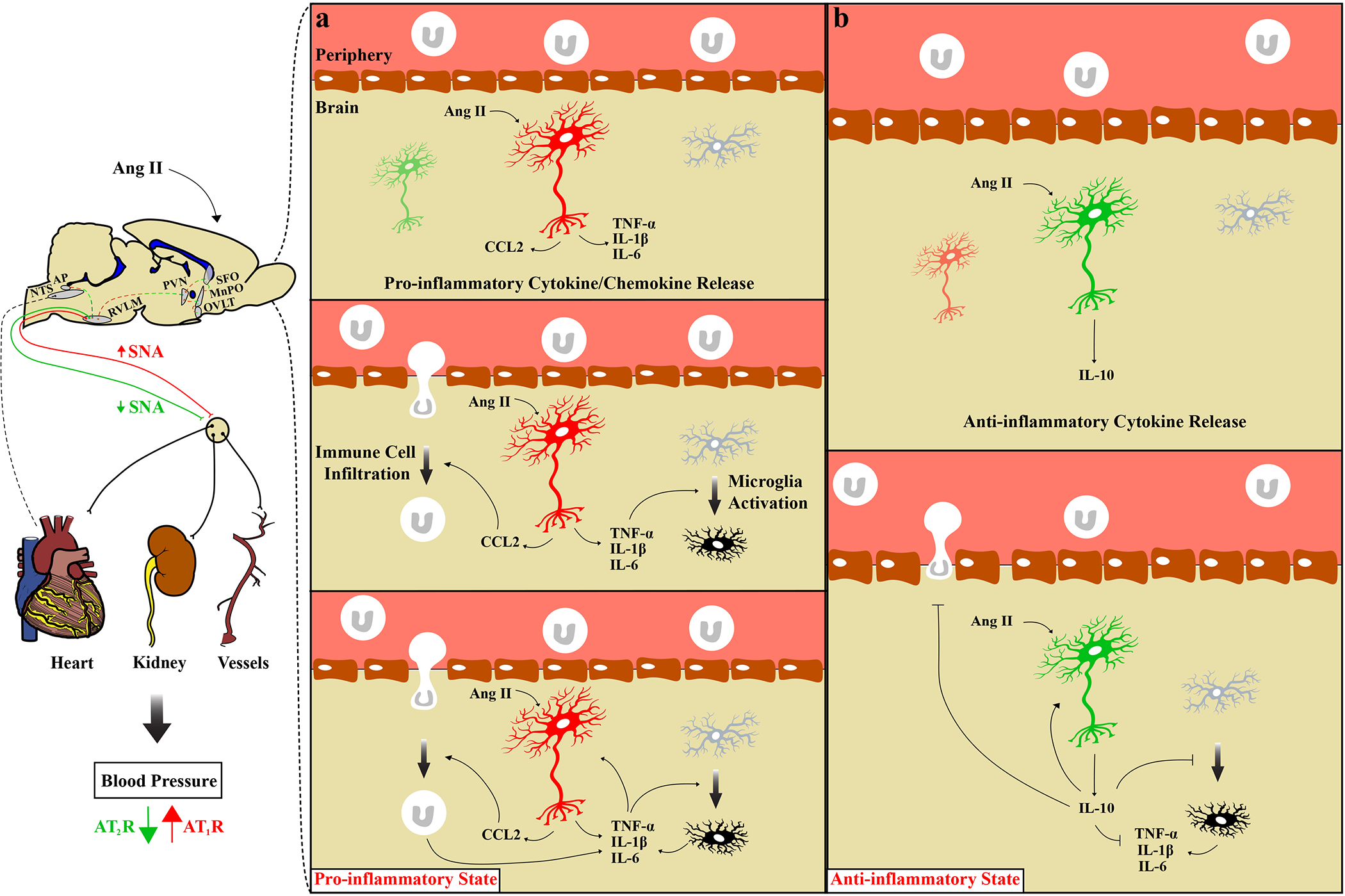
Purpose of review: To review recent data that suggest opposing effects of brain angiotensin type-1 (AT1R) and type-2 (AT2R) receptors on blood pressure (BP). Here, we discuss recent studies that suggest pro-hypertensive and pro-inflammatory actions of AT1R and anti-hypertensive and anti-inflammatory actions of AT2R. Further, we propose mechanisms for the interplay between brain angiotensin receptors and neuroinflammation in hypertension.
Recent findings: The renin-angiotensin system (RAS) plays an important role in regulating cardiovascular physiology. This includes brain AT1R and AT2R, both of which are expressed in or adjacent to brain regions that control BP. Activation of AT1R within those brain regions mediate increases in BP and cause neuroinflammation, which augments the BP increase in hypertension. The fact that AT1R and AT2R have opposing actions on BP suggests that AT1R and AT2R may have similar opposing actions on neuroinflammation. However, the mechanisms by which brain AT1R and AT2R mediate neuroinflammatory responses remain unclear. The interplay between brain angiotensin receptor subtypes and neuroinflammation exacerbates or protects against hypertension.
Keywords: AT1R; AT2R; Brain angiotensin receptors; Hypertension; Microglia; Neuroinflammation.
Conflict of interest statement
Conflict of Interest
The authors declare no conflicts of interest relevant to this manuscript.
Figures
References
-
- Dzau VJ. Circulating versus local renin-angiotensin system in cardiovascular homeostasis. Circulation. 1988;77(6 Pt 2):I4–13. - PubMed
-
- Nunes FC, Braga VA. Chronic angiotensin II infusion modulates angiotensin II type I receptor expression in the subfornical organ and the rostral ventrolateral medulla in hypertensive rats. Journal of the Renin-Angiotensin-Aldosterone System. 2011;12(4):440–5. doi:10.1177/1470320310394891. - DOI - PubMed
Publication types
MeSH terms
Substances
Grants and funding
LinkOut - more resources
Full Text Sources
Medical
Research Materials
