


Needs and Requirements in the Designing of Mobile Interventions for Patients With Peripheral Arterial Disease: Questionnaire Study
- PMID: 32663154
- PMCID: PMC7435621
- DOI: 10.2196/15669
Needs and Requirements in the Designing of Mobile Interventions for Patients With Peripheral Arterial Disease: Questionnaire Study
Abstract
Background: The development of mobile interventions for noncommunicable diseases has increased in recent years. However, there is a dearth of apps for patients with peripheral arterial disease (PAD), who frequently have an impaired ability to walk.
Objective: Using a patient-centered approach for the development of mobile interventions, we aim to describe the needs and requirements of patients with PAD regarding the overall care situation and the use of mobile interventions to perform supervised exercise therapy (SET).
Methods: A questionnaire survey was conducted in addition to a clinical examination at the vascular outpatient clinic of the West-German Heart and Vascular Center of the University Clinic Essen in Germany. Patients with diagnosed PAD were asked to answer questions on sociodemographic characteristics, PAD-related need for support, satisfaction with their health care situation, smartphone and app use, and requirements for the design of mobile interventions to support SET.
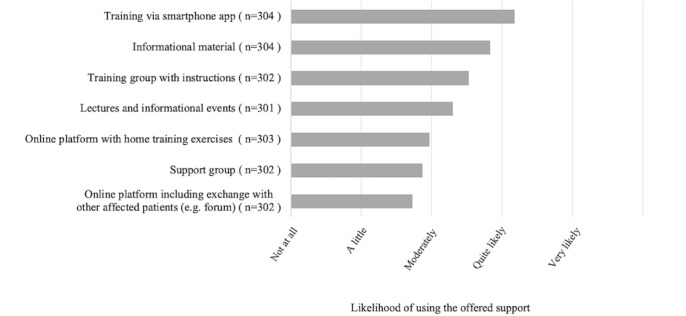
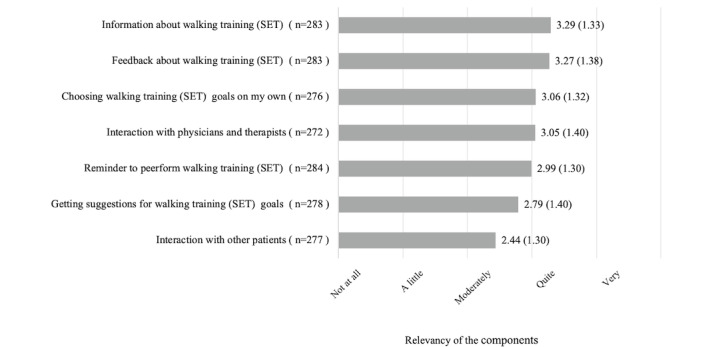
Results: Overall, a need for better support of patients with diagnosed PAD was identified. In total, 59.2% (n=180) expressed their desire for more support for their disease. Patients (n=304) had a mean age of 67 years and half of them (n=157, 51.6%) were smartphone users. We noted an interest in smartphone-supported SET, even for people who did not currently use a smartphone. "Information," "feedback," "choosing goals," and "interaction with physicians and therapists" were rated the most relevant components of a potential app.
Conclusions: A need for the support of patients with PAD was determined. This was particularly evident with regard to disease literacy and the performance of SET. Based on a detailed description of patient characteristics, proposals for the design of mobile interventions adapted to the needs and requirements of patients can be derived.
Keywords: digital intervention; mHealth; peripheral arterial disease; smartphone usage; supervised exercise therapy.
©Julia Lortz, Jan Simanovski, Tabea Kuether, Ilonka Kreitschmann-Andermahr, Greta Ullrich, Martin Steinmetz, Christos Rammos, Rolf Alexander Jánosi, Susanne Moebus, Tienush Rassaf, Katrin Paldán. Originally published in JMIR Formative Research (http://formative.jmir.org), 04.08.2020.
Conflict of interest statement
Conflicts of Interest: None declared.
Figures
References
-
- Fowkes FGR, Rudan D, Rudan I, Aboyans V, Denenberg JO, McDermott MM, Norman PE, Sampson UKA, Williams LJ, Mensah GA, Criqui MH. Comparison of global estimates of prevalence and risk factors for peripheral artery disease in 2000 and 2010: a systematic review and analysis. Lancet. 2013 Oct 19;382(9901):1329–40. doi: 10.1016/S0140-6736(13)61249-0. - DOI - PubMed
-
- Smolderen KG, Wang K, de Pouvourville G, Brüggenjürgen B, Röther J, Zeymer U, Parhofer KG, Steg PG, Bhatt DL, Magnuson EA, REACH Registry Investigators Two-year vascular hospitalisation rates and associated costs in patients at risk of atherothrombosis in France and Germany: highest burden for peripheral arterial disease. Eur J Vasc Endovasc Surg. 2012 Feb;43(2):198–207. doi: 10.1016/j.ejvs.2011.09.016. https://linkinghub.elsevier.com/retrieve/pii/S1078-5884(11)00590-9 - DOI - PubMed
-
- Pande RL, Perlstein TS, Beckman JA, Creager MA. Secondary prevention and mortality in peripheral artery disease: National Health and Nutrition Examination Study, 1999 to 2004. Circulation. 2011 Jul 05;124(1):17–23. doi: 10.1161/CIRCULATIONAHA.110.003954. http://europepmc.org/abstract/MED/21690489 - DOI - PMC - PubMed
-
- Letterstål A, Forsberg C, Olofsson P, Wahlberg E. Risk attitudes to treatment among patients with severe intermittent claudication. J Vasc Surg. 2008 May;47(5):988–94. doi: 10.1016/j.jvs.2007.12.055. https://linkinghub.elsevier.com/retrieve/pii/S0741-5214(08)00011-6 - DOI - PubMed
LinkOut - more resources
Full Text Sources
