


Allosterism of Nicotinic Acetylcholine Receptors: Therapeutic Potential for Neuroinflammation Underlying Brain Trauma and Degenerative Disorders
- PMID: 32664647
- PMCID: PMC7404387
- DOI: 10.3390/ijms21144918
Allosterism of Nicotinic Acetylcholine Receptors: Therapeutic Potential for Neuroinflammation Underlying Brain Trauma and Degenerative Disorders
Abstract
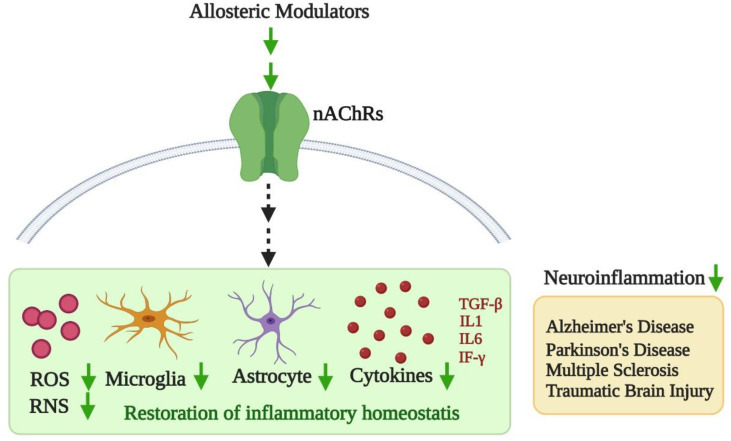
Inflammation is a key physiological phenomenon that can be pervasive when dysregulated. Persistent chronic inflammation precedes several pathophysiological conditions forming one of the critical cellular homeostatic checkpoints. With a steady global surge in inflammatory diseases, it is imperative to delineate underlying mechanisms and design suitable drug molecules targeting the cellular partners that mediate and regulate inflammation. Nicotinic acetylcholine receptors have a confirmed role in influencing inflammatory pathways and have been a subject of scientific scrutiny underlying drug development in recent years. Drugs designed to target allosteric sites on the nicotinic acetylcholine receptors present a unique opportunity to unravel the role of the cholinergic system in regulating and restoring inflammatory homeostasis. Such a therapeutic approach holds promise in treating several inflammatory conditions and diseases with inflammation as an underlying pathology. Here, we briefly describe the potential of cholinergic allosterism and some allosteric modulators as a promising therapeutic option for the treatment of neuroinflammation.
Keywords: allosteric modulators; neuroinflammation; nicotinic acetylcholine receptors.
Conflict of interest statement
The authors declare no conflict of interest. The funders had no role in the design of the study; in the collection, analyses, or interpretation of data; in the writing of the manuscript, or in the decision to publish the results.
Figures
References
-
- Bencherif M., Lovette M.E., Fowler K.W., Arrington S., Reeves L., Caldwell W.S., Lippiello P.M. RJR-2403: A nicotinic agonist with CNS selectivity I. In vitro characterization. J. Pharmacol. Exp. Ther. 1996;279:1413–1421. - PubMed
-
- Vigano P., Rabellotti E., Pagliardini L., Somigliana E., Candiani M., Vercellini P. Progesterone Resistance, Aromatase, and Inflammation: The Important Relationships Between Hormones and Inflammation. Curr. Obstet. Gynecol. Rep. 2012;1:146–152. doi: 10.1007/s13669-012-0013-8. - DOI
Publication types
MeSH terms
Substances
LinkOut - more resources
Full Text Sources
Medical
