


Current and projected future economic burden of Parkinson's disease in the U.S
- PMID: 32665974
- PMCID: PMC7347582
- DOI: 10.1038/s41531-020-0117-1
Current and projected future economic burden of Parkinson's disease in the U.S
Abstract
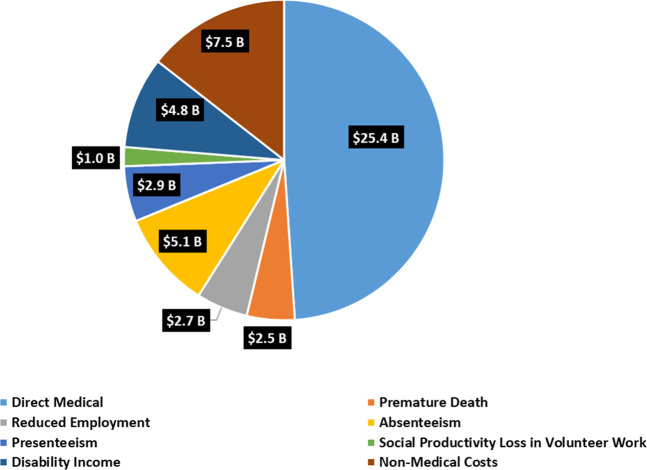
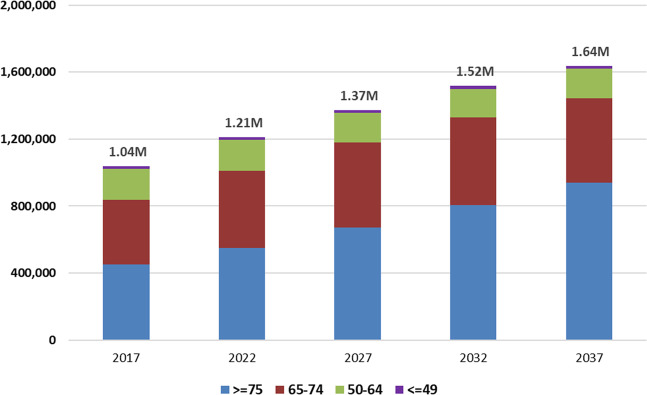
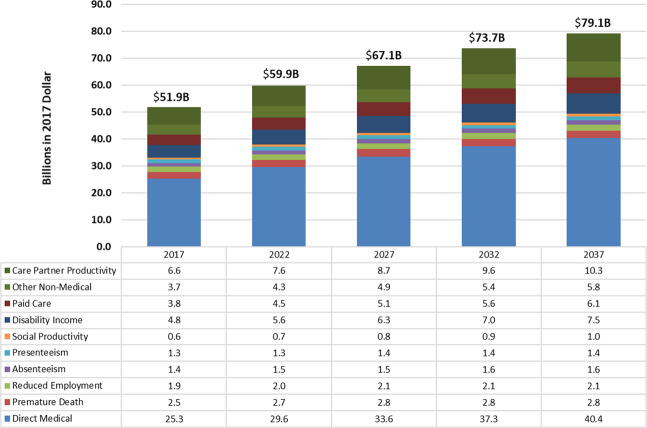
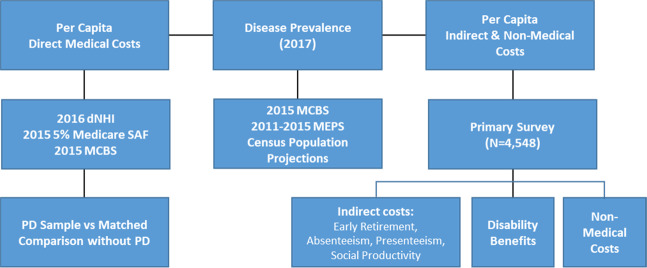
Parkinson's disease (PD) is one of the world's fastest growing neurological disorders. Much is unknown about PD-associated economic burdens in the United States (U.S.) and other high-income nations. This study provides a comprehensive analysis of the economic burdens of PD in the U.S. (2017) and projections for the next two decades. Multiple data sources were used to estimate the costs of PD, including public and private administrative claims data, Medicare Current Beneficiary Survey, Medical Expenditure Panel Survey, and a primary survey (n = 4,548) designed for this study. We estimated a U.S. prevalence of approximately one million individuals with diagnosed Parkinson's disease in 2017 and a total economic burden of $51.9 billion. The total burden of PD includes direct medical costs of $25.4 billion and $26.5 billion in indirect and non-medical costs, including an indirect cost of $14.2 billion (PWP and caregiver burden combined), non-medical costs of $7.5 billion, and $4.8 billion due to disability income received by PWPs. The Medicare program bears the largest share of excess medical costs, as most PD patients are over age 65. Projected PD prevalence will be more than 1.6 million with projected total economic burden surpassing $79 billion by 2037. The economic burden of PD was previously underestimated. Our findings underscore the substantial burden of PD to society, payers, patients, and caregivers. Interventions to reduce PD incidence, delay disease progression, and alleviate symptom burden may reduce the future economic burden of PD.
Keywords: Health care economics; Neurological disorders.
© The Author(s) 2020.
Conflict of interest statement
Competing interestsW.Y., I.C., and P.H. provide paid consulting services to federal and state governments, non-profit entities, and for-profit entities and have no other potential conflict of interest relevant to this article. Other co-authors do not have potential conflict of interest relevant to this article.
Figures
References
-
- Ayano G. Parkinson’s disease: a concise overview of etiology, epidemiology, diagnosis, comorbidity and management. J. Neurol. Disord. 2016;4:4–6. doi: 10.4172/2329-6895.1000298. - DOI
Grants and funding
LinkOut - more resources
Full Text Sources
Other Literature Sources
Medical
