


Molecular diversity of Alphacoronavirus 1 in dogs and cats in Colombia
- PMID: 32665984
- PMCID: PMC7340079
- DOI: 10.1016/j.heliyon.2020.e04381
Molecular diversity of Alphacoronavirus 1 in dogs and cats in Colombia
Abstract
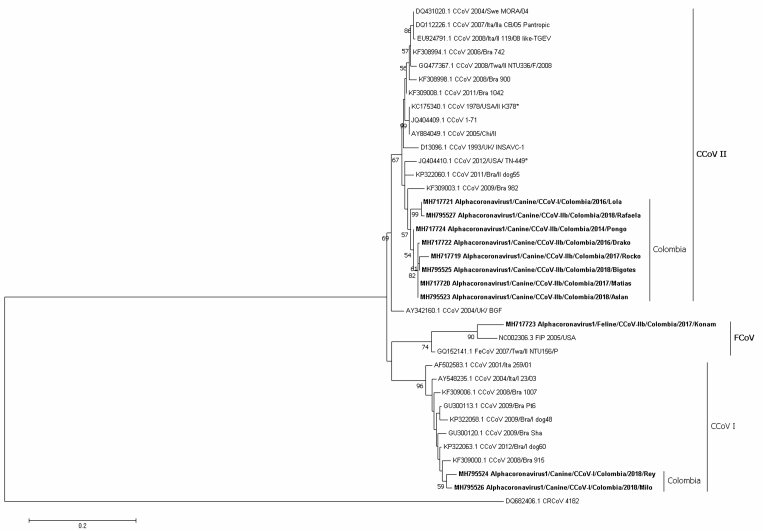
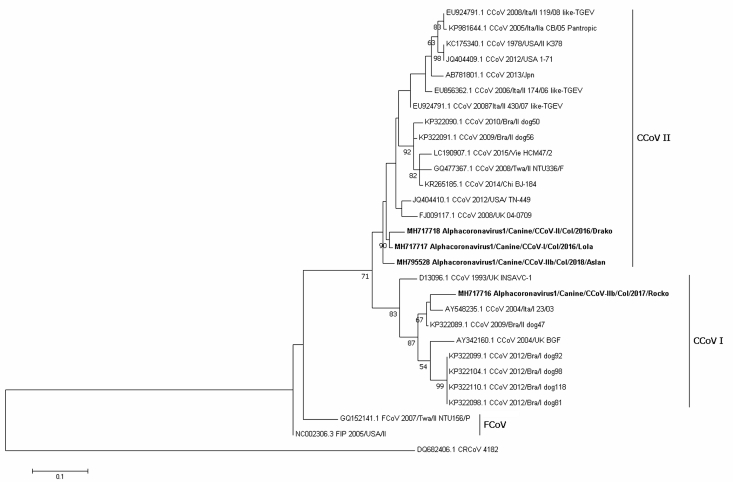
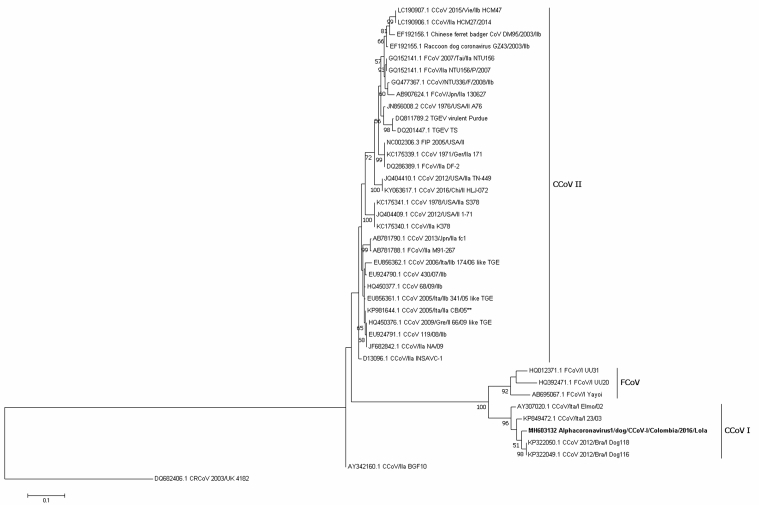
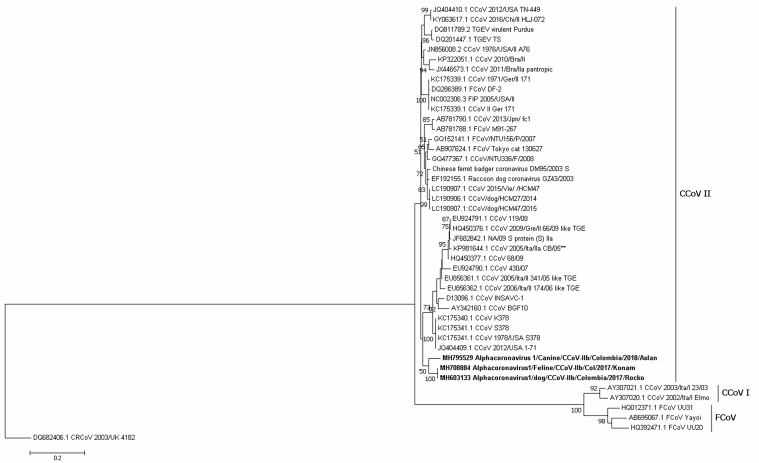
Alphacoronavirus 1 (subgenus Tegacovirus, genus Alphacoronavirus, family Coronaviridae), which encompasses transmissible gastroenteritis virus (TGEV), feline coronavirus (FCoV) and canine coronavirus (CCoV), is an important pathogen that can cause severe gastroenteritis and is distributed worldwide. CCoV has two different genotypes: CCoV type I, which has a high identity with FCoV-I, and CCoV type II, which is divided into two subtypes, CCoV IIa (pantropic) and CCoV IIb, which is related to FCoV-II and has been involved in multiple recombination events. Between 2014 and 2018, 43 fecal samples from puppies and young dogs under 1 year of age with hemorrhagic enteritis and from 5 cats under 2 years of age with ascites or thoracic effusion were collected by a private veterinary practice in Bogotá, Colombia. A screening for Coronavirus via RT-PCR (nsp12) and PCR amplification of Canine protoparvovirus (VP1) revealed 27.1% (13/49) and 72.9% (35/49) positive samples, respectively. Positive samples for coronavirus were tested for M, N, S and the sequences grouped in the FCoV, CCoV-I and CCoV-IIb clusters that were distant from the pantropic type (IIa). The N gene formed two clusters, one exclusively with samples from this study in subtype II and another with strains in subtype I. For gene S (subtype I), the samples clustered with the Brazilian samples, while samples positive for S subtype IIb grouped into a cluster distinct from the other reference sequences. The prevalence of coronaviruses identified in this study is within the range reported by different countries worldwide.
Keywords: Alphacoronavirus 1; Biocomputational method; Cats; Colombia; Coronavirus; Dogs; Epidemiology; Genetics; Microbiology; Phylogenetic relationship; Phylogeny; Viral disease; Viral genetics; Virology.
© 2020 Published by Elsevier Ltd.
Figures
References
-
- Chomczynski P.A. A reagent for the single-step simultaneous isolation of RNA, DNA and proteins from cell and tissue samples. Biotechniques. 1993;15(532–4):536–537. - PubMed
-
- De Barros I.N., Pinto L.D., Oliveira S., Silva D.S. Canine coronavirus (CCoV), a neglected pathogen: molecular diversity of S, M, N and 3b genes. Host Viruses. 2018;5:1–6.
LinkOut - more resources
Full Text Sources
Miscellaneous
