. 2020 Jul 15;11(1):3530.
doi: 10.1038/s41467-020-17301-6.

A high performance wearable strain sensor with advanced thermal management for motion monitoring

Affiliations

A high performance wearable strain sensor with advanced thermal management for motion monitoring

Cenxiao Tan et al. Nat Commun. .

Abstract

Resistance change under mechanical stimuli arouses mass operational heat, damaging the performance, lifetime, and reliability of stretchable electronic devices, therefore rapid thermal heat dissipating is necessary. Here we report a stretchable strain sensor with outstanding thermal management. Besides a high stretchability and sensitivity testified by human motion monitoring, as well as long-term durability, an enhanced thermal conductivity from the casted thermoplastic polyurethane-boron nitride nanosheets layer helps rapid heat transmission to the environments, while the porous electrospun fibrous thermoplastic polyurethane membrane leads to thermal insulation. A 32% drop of the real time saturated temperature is achieved. For the first time we in-situ investigated the dynamic operational temperature fluctuation of stretchable electronics under repeating stretching-releasing processes. Finally, cytotoxicity test confirms that the nanofillers are tightly restricted in the nanocomposites, making it harmless to human health. All the results prove it an excellent candidate for the next-generation of wearable devices.


Conflict of interest statement

The authors declare no competing interests.

Figures
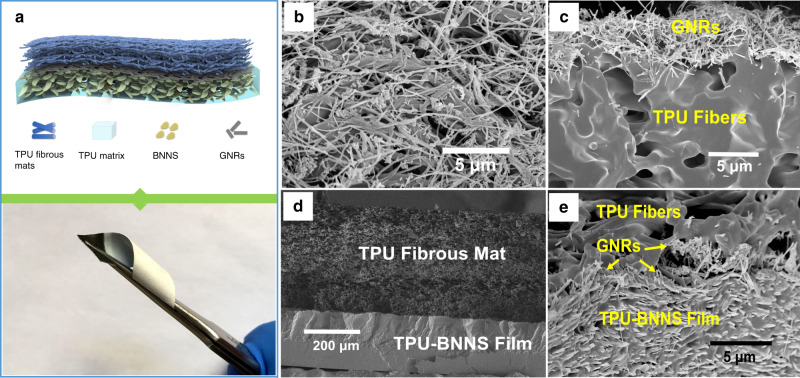
Fig. 1
Fig. 1. Structure schematic.
a Sketch map and photograph of the stretchable sensor. b Top-view and (c) cross-sectional view of the GNRs deposited on the electrospun fibrous mats. d Cross-sectional view of the strain sensors. e Enlarged cross-sectional view of the interlayer between as-spun TPU fibrous mats and the TPU-BNNS film.
Fig. 2
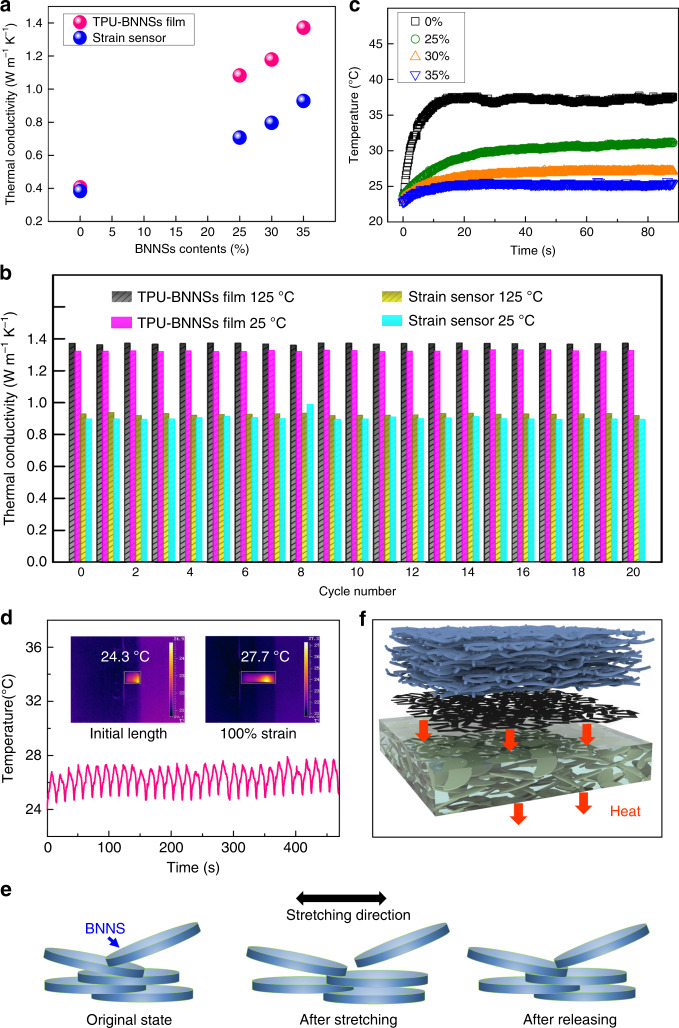
Fig. 2. Thermal properties of the stretchable strain sensor.
a Thermal conductivity of the TPU-BNNS film and the strain sensor. b Thermal conductivity of the TPU-BNNS film with 35 wt% BNNSs and the strain sensor with 35 wt% BNNSs and 50 μg cm−2 GNRs upon multiple heating and cooling cycles alternating between 25 and 125 °C, respectively. c Saturated temperatures of the samples with different BNNS loading. d Fluctuation range of the saturated temperature of the strain sensor under more than 30-times cycling between initial length and 100% strain to demonstrate good stability. e Schematic diagram of the change in thermal conductive pathways during stretching–releasing process. f Schematic diagram of the heat flux of the strain sensor. (*Note that the temperature of initial length in (d) is a little lower than the saturated temperatures in (c), because the clamps of the tensile platform are made from stainless steel, facilitating the thermal dissipation).
Fig. 3
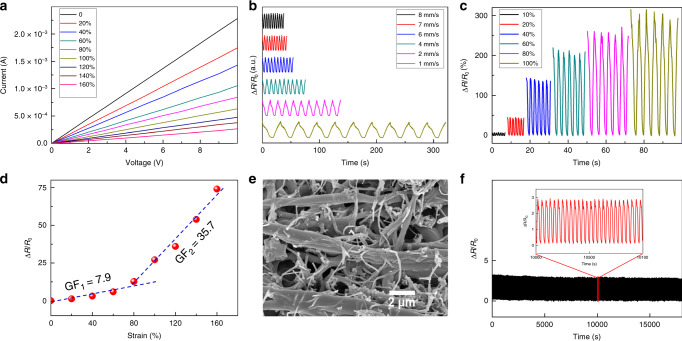
Fig. 3. Electromechanical properties of the stretchable strain sensor.
a IV curves of the stretchable strain sensor under various strains. b Relative change in resistance versus time under strain of 100% at a strain frequency of 1, 2, 4, 6, 7, and 8 mm s−1, respectively. c Sensor response under various external strains, including 10%, 20%, 40%, 60%, 80%, and 100%. d Relative resistance change of the stretchable strain sensor under different applied strains. e SEM image to illustrate the GNRs on the surface of TPU fibers during stretching. f Cyclic test of the sensor at 100% for more than 5000 cycles, and the enlarged view of the marked region, showing excellent stability and repeatability.
Fig. 4
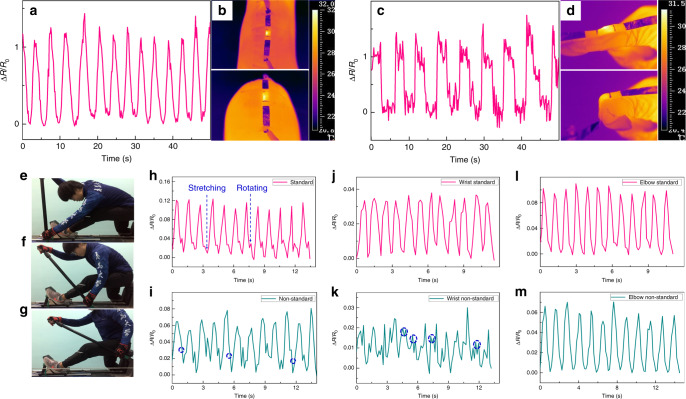
Fig. 4. Human motion monitoring tests.
Resistance change of the strain sensor by fixing the sensor (a) on the knee and c on the index finger, and (b) and (d) illustrate the stability of the strain sensor even when the joints were flexed or extended. eg Three key places when the blade of the paddle was dug into the water and pulled it back. Resistance change of the strain sensor for dragon boat paddler training: standard states when fixed on the (h) shoulder, (j) wrist, and (l) elbow, and their nonstandard counterparts are shown in (i), (k), and (m), respectively.
Fig. 5
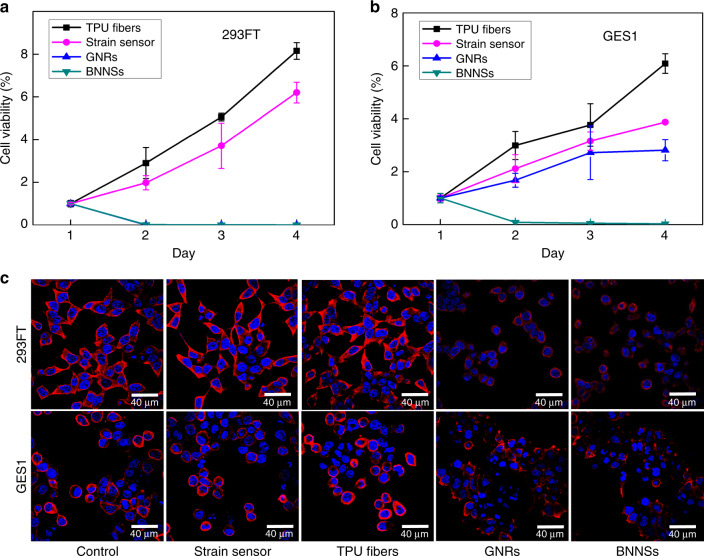
Fig. 5. Biocompatibility of the strain sensor.
Cell-proliferation assay shows that (a) 293FT and (b) GES1 cells exposed to DMEM extracts of the electrospun TPU fibers, and strain sensor, have significantly increased viability compared with those exposed to GNRs and BNNSs. Data are normalized with day 1 and represented as means ± SD. Error bar: S.D. (n ≥ 3). Experiments were repeated three times. Unpaired t tests were used to compare the difference between the two groups. *Significant relative to the control or the wild-type group, p < 0.05, **p < 0.01, ***p < 0.001. n.s., no statistical significance. c Confocal microscope image of 293FT and GES1 cells after exposure to the original DMEM (control) or DMEM extracts of the electrospun TPU fibers, strain sensor, GNRs, and BNNSs for 24 h. Cells exposed to GNRs and BNNS extracts show injured actin cytoskeleton (red) and DNA (blue).

References

    1. Lou Z, Wang L, Jiang K, Shen G. Programmable three-dimensional advanced materials based on nanostructures as building blocks for flexible sensors. Nano Today. 2019;26:176–198.
    1. Stadlober B, Zirkl M, Irimia-Vladu M. Route towards sustainable smart sensors: ferroelectric polyvinylidene fluoride-based materials and their integration in flexible electronics. Chem. Soc. Rev. 2019;48:1787–1825. - PubMed
    1. Viry L, et al. Flexible three-axial force sensor for soft and highly sensitive artificial touch. Adv. Mater. 2014;26:2659–2664. - PMC - PubMed
    1. Yeo JC, et al. Flexible and stretchable strain sensing actuator for wearable soft robotic applications. Adv. Mater. Technol. 2016;1:1600018.
    1. Roh E, Hwang B-U, Kim D, Kim B-Y, Lee N-E. Stretchable, transparent, ultrasensitive, and patchable strain sensor for human–machine interfaces comprising a nanohybrid of carbon nanotubes and conductive elastomers. ACS Nano. 2015;9:6252–6261. - PubMed

Publication types