


Effects of Drugs of Abuse on the Blood-Brain Barrier: A Brief Overview
- PMID: 32670001
- PMCID: PMC7326150
- DOI: 10.3389/fnins.2020.00513
Effects of Drugs of Abuse on the Blood-Brain Barrier: A Brief Overview
Abstract
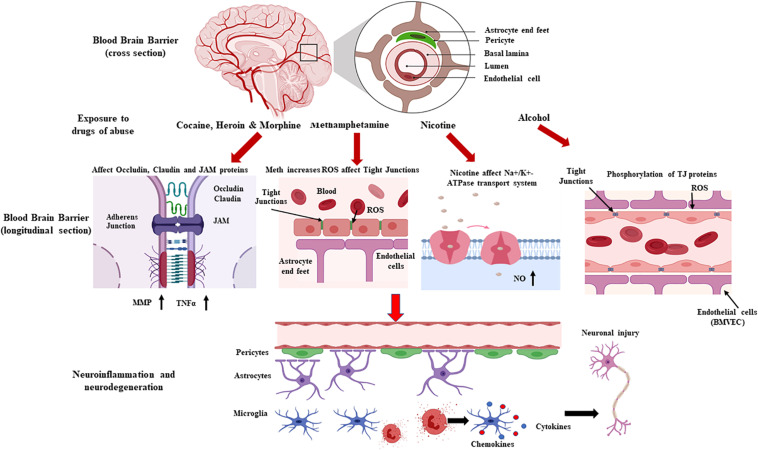
The use of psychostimulants and alcohol disrupts blood-brain barrier (BBB) integrity, resulting in alterations to cellular function, and contributes to neurotoxicity. The BBB is the critical boundary of the central nervous system (CNS) where it maintains intracellular homeostasis and facilitates communication with the peripheral circulation. The BBB is regulated by tight junction (TJ) proteins that closely interact with endothelial cells (EC). The complex TJ protein network consists of transmembrane proteins, including claudins, occludins, and junction adhesion molecules (JAM), as well as cytoskeleton connected scaffolding proteins, zonula occludentes (ZO-1, 2, and 3). The use of psychostimulants and alcohol is known to affect the CNS and is implicated in various neurological disorders through neurotoxicity that partly results from increased BBB permeability. The present mini review primarily focuses on BBB structure and permeability. Moreover, we assess TJ protein and cytoskeletal changes induced by cocaine, methamphetamine, morphine, heroin, nicotine, and alcohol. These changes promote glial activation, enzyme potentiation, and BBB remodeling, which affect neuroinflammatory pathways. Although the effect of drugs of abuse on BBB integrity and the underlying mechanisms are well studied, the present review enhances the understanding of the underlying mechanisms through which substance abuse disorders cause BBB dysfunction.
Keywords: blood-brain barrier; cocaine; heroin; methamphetamine; morphine; nicotine.
Copyright © 2020 Pimentel, Sivalingam, Doke and Samikkannu.
Figures
References
Publication types
Grants and funding
LinkOut - more resources
Full Text Sources
