. 2020 Jun 24:11:633.
doi: 10.3389/fphys.2020.00633. eCollection 2020.

Molecular Phenotyping of White Striping and Wooden Breast Myopathies in Chicken

Affiliations

Molecular Phenotyping of White Striping and Wooden Breast Myopathies in Chicken

Christophe Praud et al. Front Physiol. .

Abstract

The White Striping (WS) and Wooden Breast (WB) defects are two myopathic syndromes whose occurrence has recently increased in modern fast-growing broilers. The impact of these defects on the quality of breast meat is very important, as they greatly affect its visual aspect, nutritional value, and processing yields. The research conducted to date has improved our knowledge of the biological processes involved in their occurrence, but no solution has been identified so far to significantly reduce their incidence without affecting growing performance of broilers. This study aims to follow the evolution of molecular phenotypes in relation to both fast-growing rate and the occurrence of defects in order to identify potential biomarkers for diagnostic purposes, but also to improve our understanding of physiological dysregulation involved in the occurrence of WS and WB. This has been achieved through enzymatic, histological, and transcriptional approaches by considering breast muscles from a slow- and a fast-growing line, affected or not by WS and WB. Fast-growing muscles produced more reactive oxygen species (ROS) than slow-growing ones, independently of WS and WB occurrence. Within fast-growing muscles, despite higher mitochondria density, muscles affected by WS or WB defects did not show higher cytochrome oxidase activity (COX) activity, suggesting altered mitochondrial function. Among the markers related to muscle remodeling and regeneration, immunohistochemical staining of FN1, NCAM, and MYH15 was higher in fast- compared to slow-growing muscles, and their amount also increased linearly with the presence and severity of WS and WB defects, making them potential biomarkers to assess accurately their presence and severity. Thanks to an innovative histological technique based on fluorescence intensity measurement, they can be rapidly quantified to estimate the injuries induced in case of WS and WB. The muscular expression of several other genes correlates also positively to the presence and severity of the defects like TGFB1 and CTGF, both involved in the development of connective tissue, or Twist1, known as an inhibitor of myogenesis. Finally, our results suggested that a balance between TGFB1 and PPARG would be essential for fibrosis or adiposis induction and therefore for determining WS and WB phenotypes.

Keywords: White Striping; Wooden Breast; mitochondria; molecular phenotype; muscle remodeling.


Figures

FIGURE 1
FIGURE 1
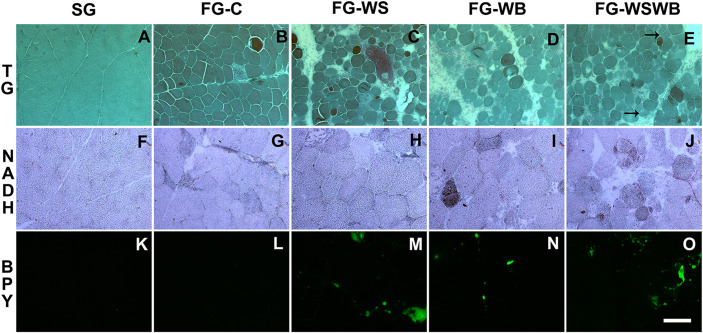
Histological characterization of pectoralis major muscle using Gomori’s Trichrome (TG, A–E), NADH-TR (NADH, F–J) and BODIPY493 (BPY, K–O) staining. Stainings were performed on pectoralis major muscles from a slow-growing genotype (A,F,K) and a fast-growing genotype macroscopically free of defects (B,G,L) or affected by White Striping (C,H,M), Wooden Breast (D,I,N), or both White Striping and Wooden Breast (E,J,O). Bar represents 98 μm (A–E) and 200 μm (F–O). Black arrows indicate regenerative fibers consecutive to segmental fiber necrosis.
FIGURE 2
FIGURE 2
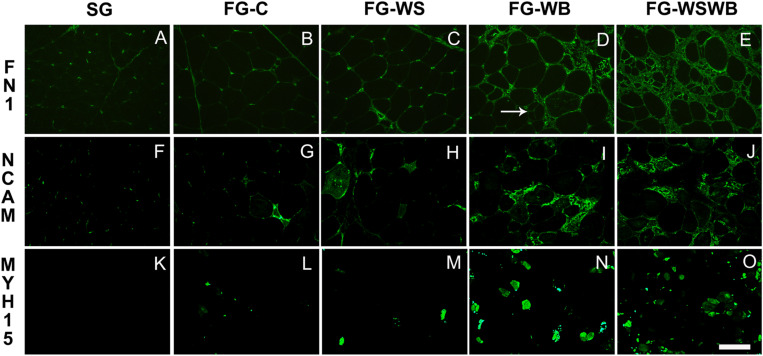
Immunoreactivity for fibronectin (FN1, A–E), NCAM (F–J) and MYH15 (K–O). It was assessed on pectoralis major muscles from a slow-growing genotype (A,F,K) and a fast-growing genotype macroscopically free of defects (B,G,L) or affected by White Striping (C,H,M), Wooden Breast (D,I,N), or both White Striping and Wooden Breast (E,J,O). Bar represents 200 μm (A–J) and 98 μm (K–O). White arrow indicates regenerative fiber consecutive to segmental fiber necrosis.
FIGURE 3
FIGURE 3
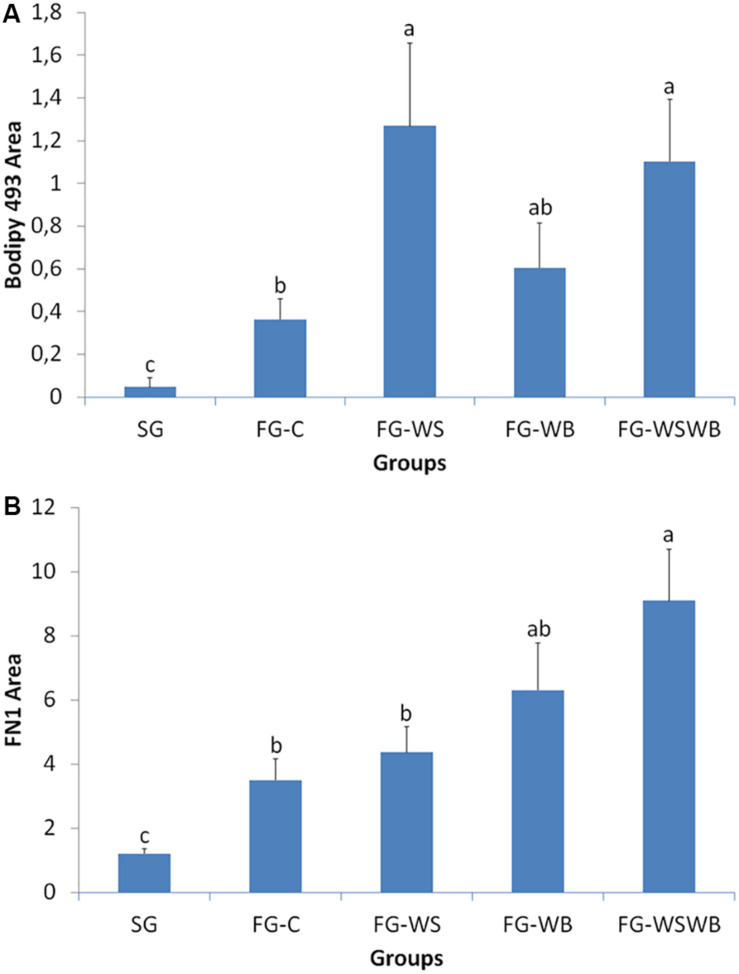
Quantification of the percentage area labeled by Bodipy493 (A) and fibronectin (FN1, B) on pectoralis major muscle cross-sections using classical microscopy. Labeled areas were assessed in a slow-growing genotype (SG) and a fast-growing genotype macroscopically free of defects (FG-C) or affected by White Striping (FG-WS), Wooden Breast (FG-WB), or both White Striping and Wooden Breast (FG-WSWB). Bodipy-493-labeled area increased mostly in muscles affected by White Striping (FG-WS and FG-WSWB). FN1-labeled area increased linearly with the occurrence and severity of both White Striping and Wooden Breast defects. For each labeling, different letters indicate significant differences between muscle groups (P ≤ 0.05).
FIGURE 4
FIGURE 4
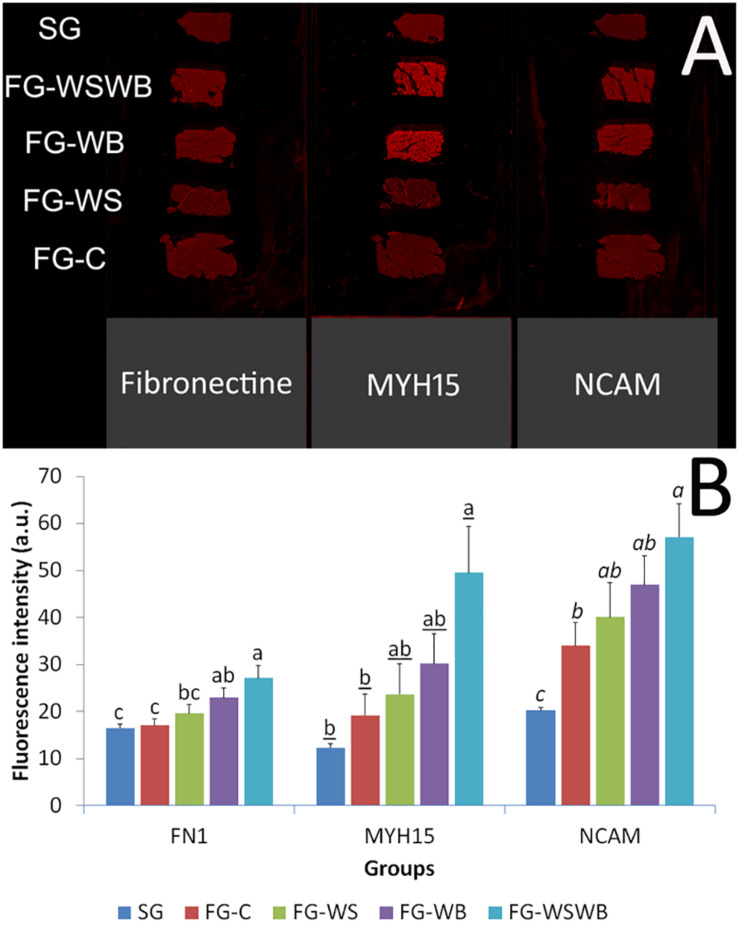
Quantification of the fluorescence intensity following fibronectin, myosin heavy chain 15 (MYH15), and Neural Cell Adhesion Molecule (NCAM) immunostaining using an infrared scanner Odyssey CLX. Labeling were performed on pectoralis major muscles from a slow-growing genotype (SG) and a fast-growing genotype macroscopically free of defects (FG-C) or affected by White Striping (FG-WS), Wooden Breast (FG-WB), or both White Striping and Wooden Breast (FG-WSWB) (A). The fluorescence intensity increased linearly with the occurrence and severity of both White Striping and Wooden Breast defects for Fibronectin, MYH15, and NCAM (B). For each marker, different letters indicate significant differences between muscle groups (P ≤ 0.05).
FIGURE 5
FIGURE 5
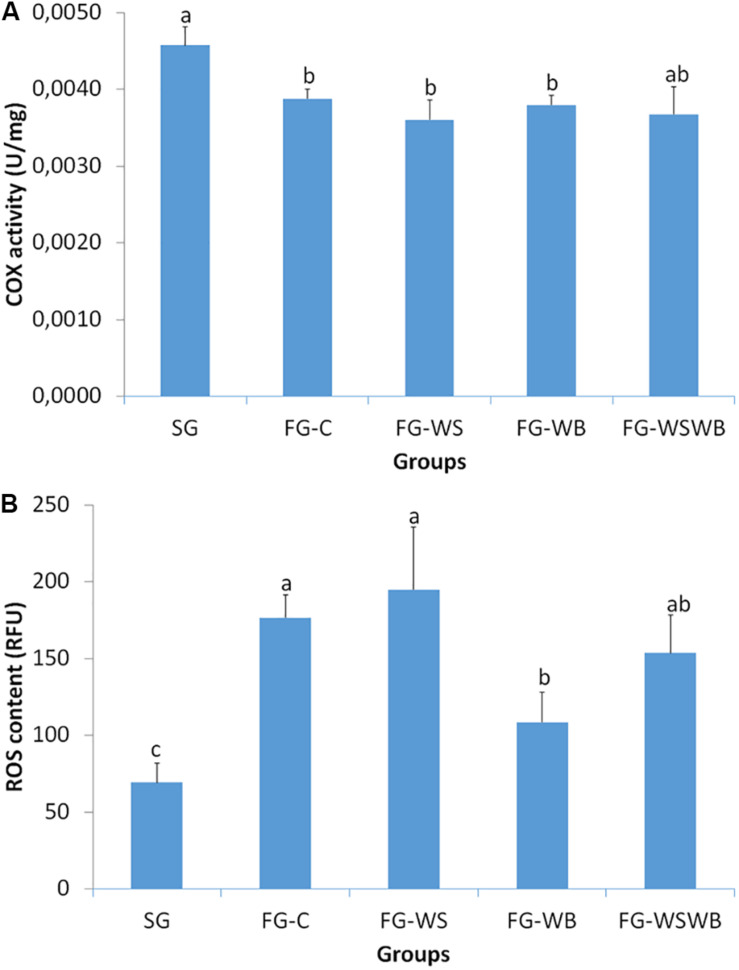
Quantification of the cytochrome oxidase (COX) activity and the production of reactive oxygen species (ROS). These parameters were assessed in pectoralis major muscles from a slow-growing genotype (SG) and a fast-growing genotype macroscopically free of defects (FG-C), or affected by White Striping (FG-WS), Wooden Breast (FG-WB), or both White Striping and Wooden Breast (FG-WSWB). Fast-growing muscles exhibited lower COX activity than slow-growing muscles, independently of the defect occurrence and severity (A). ROS content was higher in fast- than in slow-growing muscles, especially those affected by White Striping (B). For each parameter, different letters indicate significant differences between groups (P ≤ 0.05).
FIGURE 6
FIGURE 6
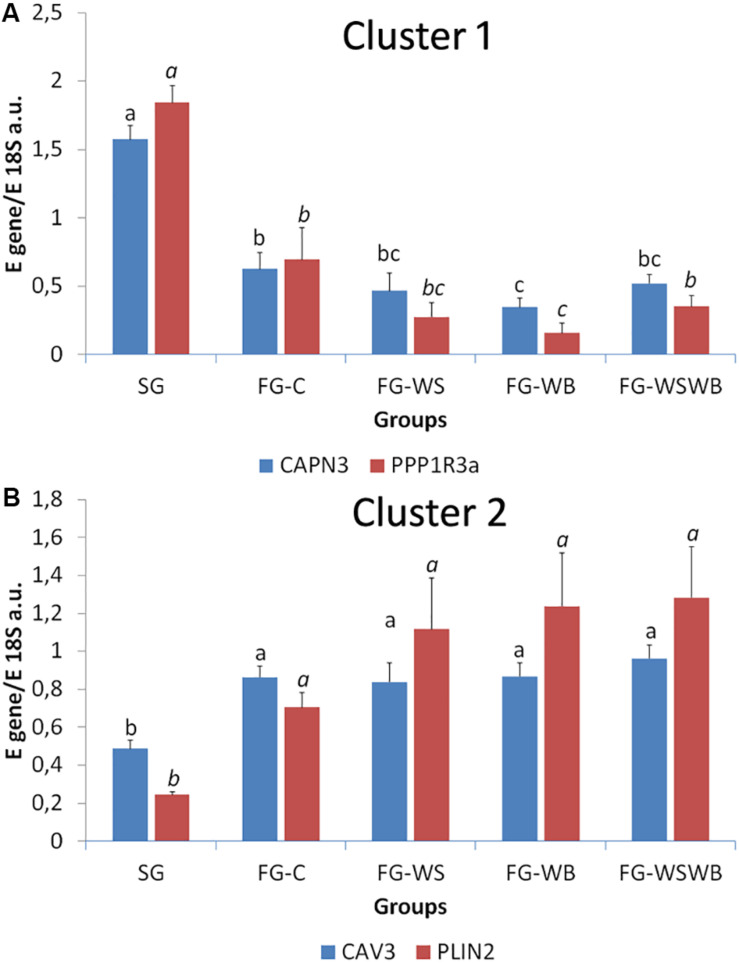
Relative mRNA expression of genes coding for calpain 3 (CAPN3), protein phosphatase 1 regulatory subunit 3A (PPP1R3A), caveolin 3 (CAV3), and perilipin 2 (PLIN2). mRNA expression was assessed in Pectoralis major muscles from a slow-growing genotype (SG) and a fast-growing genotype macroscopically free of defects (FG-C) or affected by White Striping (FG-WS), Wooden Breast (FG-WB), or both White Striping and Wooden Breast (FG-WSWB). Expression of CAPN3 and PPP1R3A was higher in slow-compared to fast-growing muscles (A). CAV3 and PLIN2 expressed more in fast- than in slow-growing muscles (B). Absolute mRNA levels of targeted genes were corrected for 18S ribosomal RNA levels to give a relative mRNA level. For each gene, different letters indicate significant differences between groups (P ≤ 0.05).
FIGURE 7
FIGURE 7
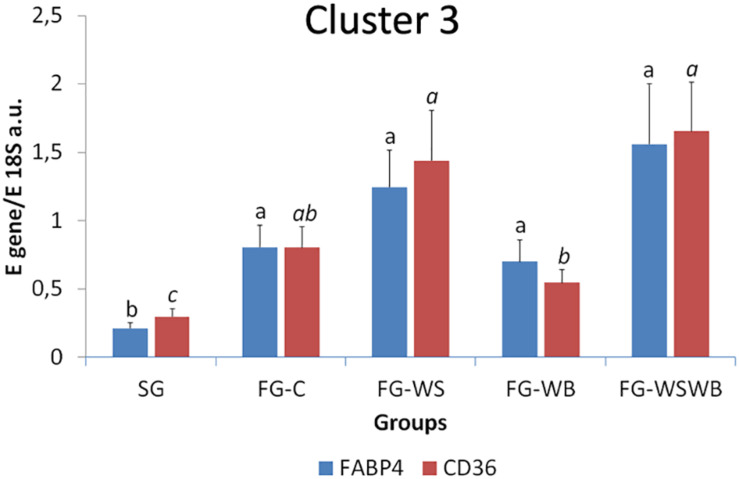
Relative mRNA expression of genes coding for fatty acid binding protein 4 (FABP4) and cluster of differentiation 36 (CD36). mRNA expressions were assessed in pectoralis major muscles from a slow-growing genotype (SG) and a fast-growing genotype macroscopically free of defects (FG-C) or affected by White Striping (FG-WS), Wooden Breast (FG-WB), or both White Striping and Wooden Breast (FG-WSWB). FABP4 and CD36 expressed also more in fast- than in slow-growing muscles, especially in muscles affected by White Striping. Absolute mRNA levels of targeted genes were corrected for 18S ribosomal RNA levels to give a relative mRNA level. For each gene, different letters indicate significant differences between groups (P ≤ 0.05).
FIGURE 8
FIGURE 8
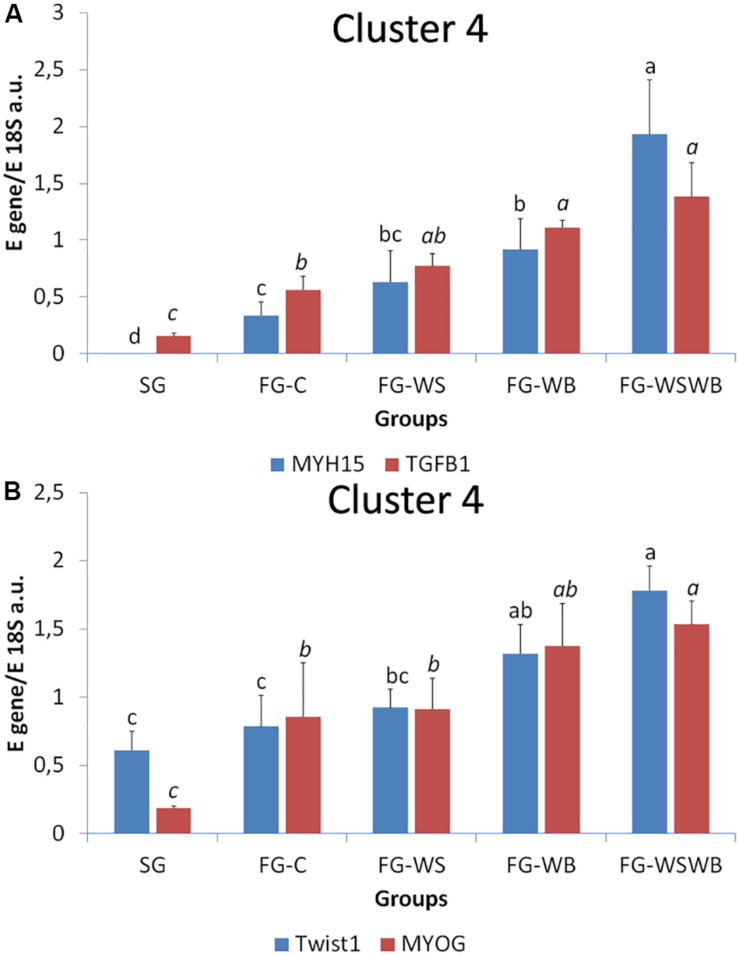
Relative mRNA expression of genes coding for myosin heavy chain 15 (MYH15), transforming growth factor beta 1 (TGFB1), Twist basic helix-loop-helix transcription factor 1 (Twist1), and myogenin (MYOG). mRNA expressions were assessed in pectoralis major muscles from a slow-growing genotype (SG) and a fast-growing genotype macroscopically free of defects (FG-C) or affected by White Striping (FG-WS), Wooden Breast (FG-WB), or both White Striping and Wooden Breast (FG-WSWB). Expression of MYH15, TGFB1 (A), Twist1, and MYOG (B) increased linearly with the occurrence of White Striping and Wooden Breast defects. Absolute mRNA levels of targeted genes were corrected for 18S ribosomal RNA levels to give a relative mRNA level. For each gene, different letters indicate significant differences between groups (P ≤ 0.05).
FIGURE 9
FIGURE 9
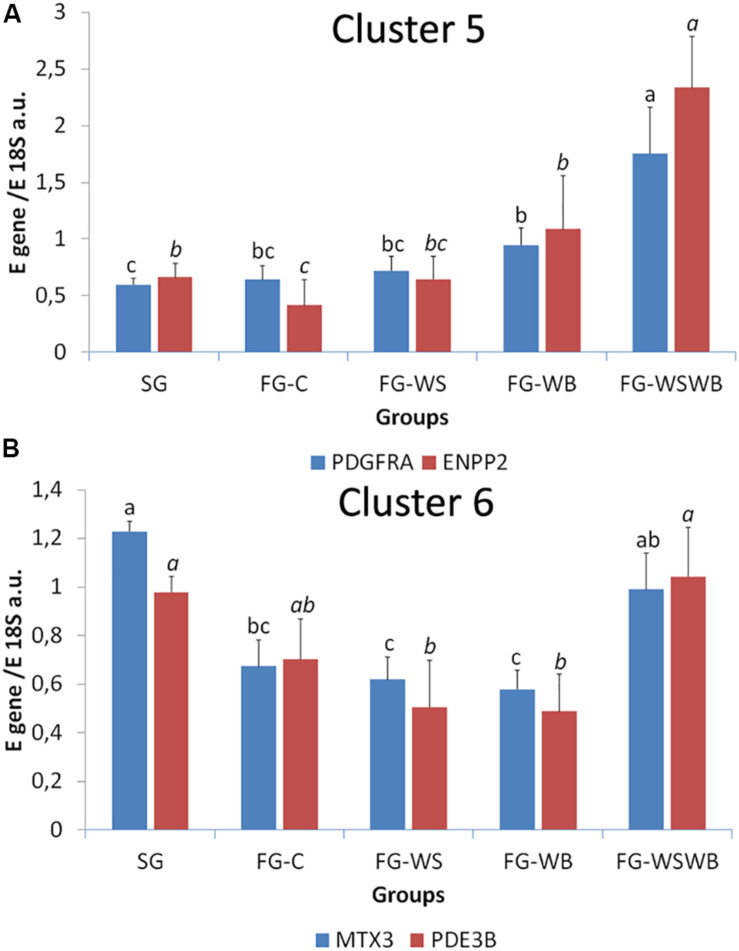
Relative mRNA expression of genes coding for platelet derived growth factor receptor alpha (PDGFRA), Ectonucleotide Pyrophosphatase/Phosphodiesterase 2 (ENPP2), metaxin 3 (MTX3), and phosphodiesterase 3B (PDE3B). mRNA expressions were assessed in pectoralis major muscles from a slow-growing genotype (SG) and a fast-growing genotype macroscopically free of defects (FG-C) or affected by White Striping (FG-WS), Wooden Breast (FG-WB), or both White Striping and Wooden Breast (FG-WSWB). Expression of PDGFRA and ENPP2 increased specifically in FG-WSWB muscles (A). Expression of MTX3 and PDE3B was high in both SG and FG-WSWB muscles (B). Absolute mRNA levels of targeted genes were corrected for 18S ribosomal RNA levels to give a relative mRNA level. For each gene, different letters indicate significant differences between groups (P ≤ 0.05).
FIGURE 10
FIGURE 10
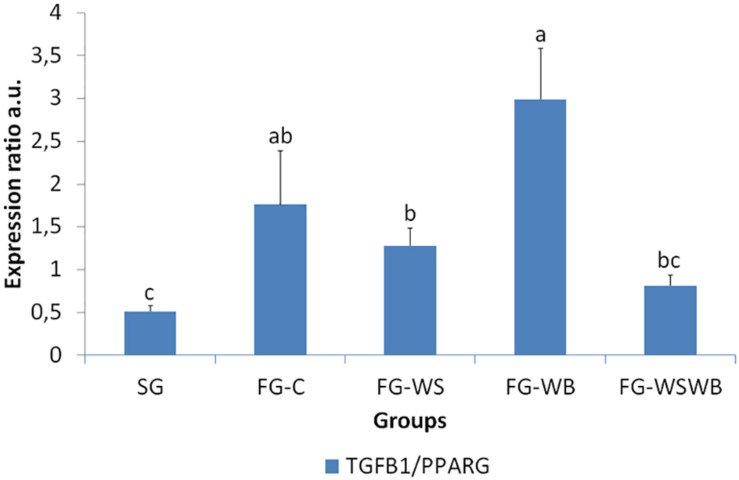
Ratio TGFB1 on PPARG relative mRNA expression. It was assessed in pectoralis major from a slow-growing genotype (SG) and a fast-growing genotype macroscopically free of defects (FG-C) or affected by White Striping (FG-WS), Wooden Breast (FG-WB), or both White Striping and Wooden Breast (FG-WSWB). TGFB1/PPARG ratio was the lowest in SG and the highest in FG-WB muscles, suggesting that a high ratio would favor the development of a fibrotic rather than adipogenic phenotype. Absolute mRNA levels of targeted genes were corrected for 18S ribosomal RNA levels to give a relative mRNA level. Different letters indicate significant differences between groups (P ≤ 0.05).

References

    1. Abasht B., Mutryn M. F., Michalek R. D., Lee W. R. (2016). Oxidative stress and metabolic perturbations in wooden breast disorder in chickens. PLoS One 11:e0153750. 10.1371/journal.pone.0153750 - DOI - PMC - PubMed
    1. Abasht B., Zhou N., Lee W. R., Zhuo Z., Peripolli E. (2019). The metabolic characteristics of susceptibility to wooden breast disease in chickens with high feed efficiency. Poult. Sci. 98 3246–3256. 10.3382/ps/pez183 - DOI - PubMed
    1. Adolph K. W. (2004). The zebrafish metaxin 3 gene (mtx3): cDNA and protein structure, and comparison to zebrafish metaxins 1 and 2. Gene 330 67–73. 10.1016/j.gene.2004.01.005 - DOI - PubMed
    1. Arrighi N., Moratal C., Clement N., Giorgetti-Peraldi S., Peraldi P., Loubat A., et al. (2015). Characterization of adipocytes derived from fibro/adipogenic progenitors resident in human skeletal muscle. Cell Death Dis. 6:e1733. 10.1038/cddis.2015.79 - DOI - PMC - PubMed
    1. Bader D., Masaki T., Fischman D. A. (1982). Immunochemical analysis of myosin heavy chain during avian myogenesis in vivo and in vitro. J. Cell Biol. 95 763–770. 10.1083/jcb.95.3.763 - DOI - PMC - PubMed