


Effects of green tea consumption on glycemic control: a systematic review and meta-analysis of randomized controlled trials
- PMID: 32670385
- PMCID: PMC7350188
- DOI: 10.1186/s12986-020-00469-5
Effects of green tea consumption on glycemic control: a systematic review and meta-analysis of randomized controlled trials
Abstract
Background: The results of human clinical trials investigating the effects of green tea on glycemic control are inconsistent.
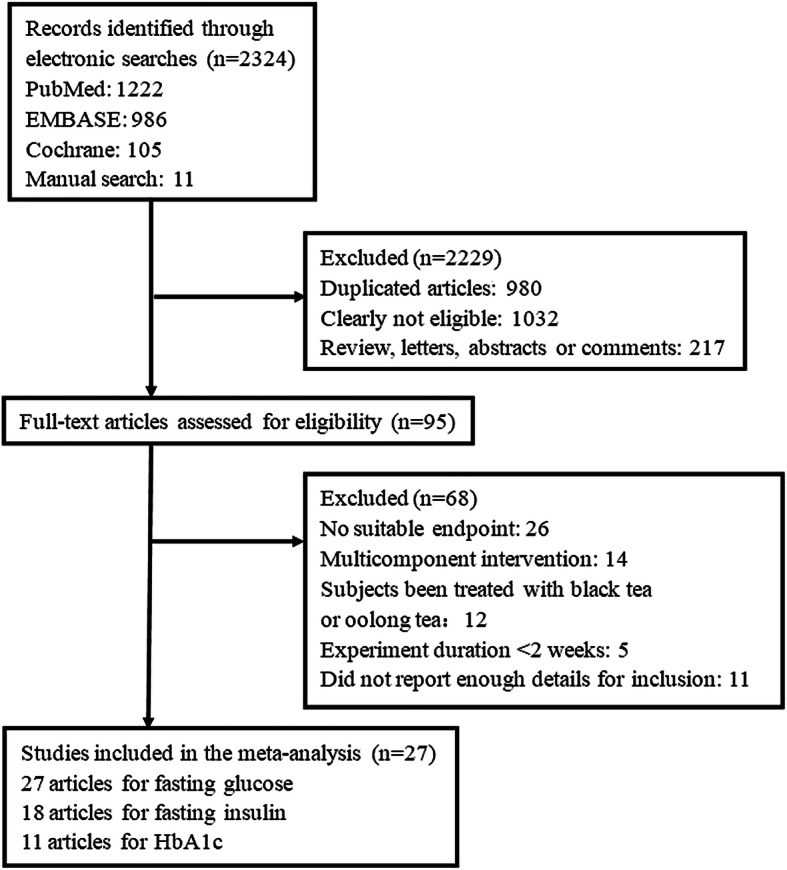
Methods: We conducted a systematic review and meta-analysis of RCTs that examined the effects of green tea supplementation on glycemic control. A literature search in PubMed, Embase, and Cochrane Library databases for RCTs that investigated the effect of green tea consumption on glycemic control was performed up to February 2020. A random-effects model was used to estimate weighted mean difference (WMD) with 95% confidence intervals (CIs).
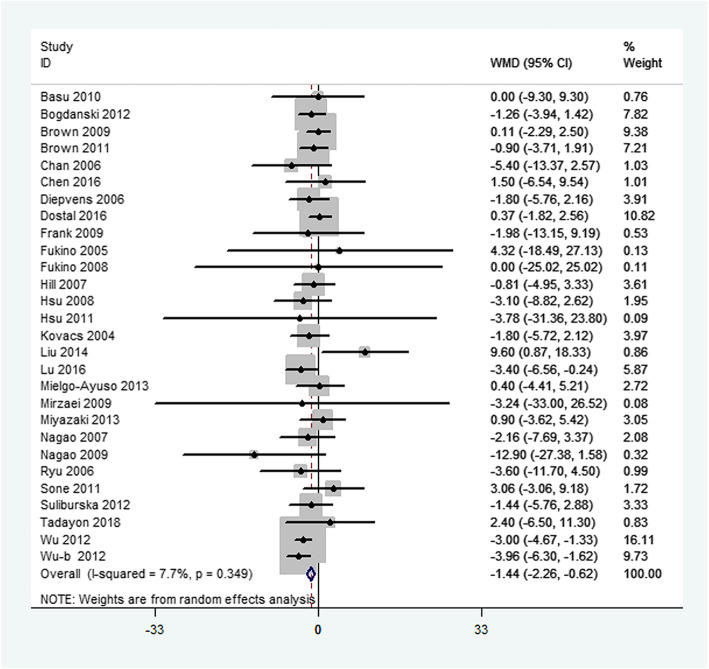
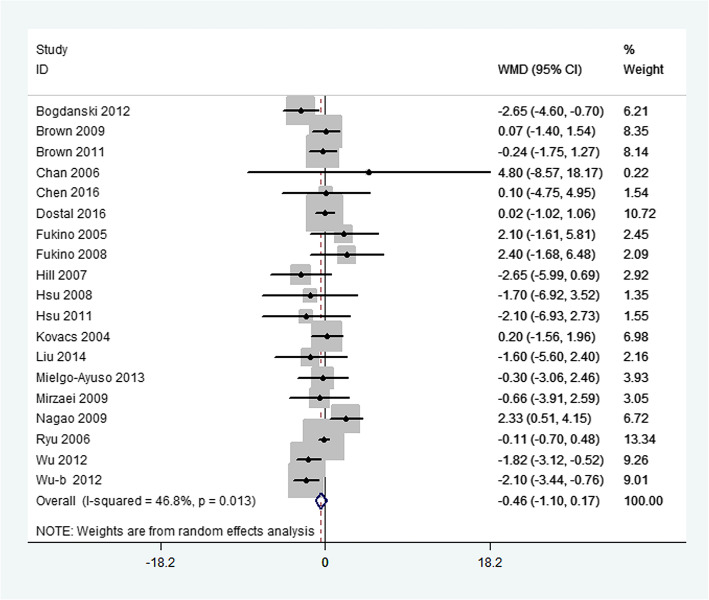
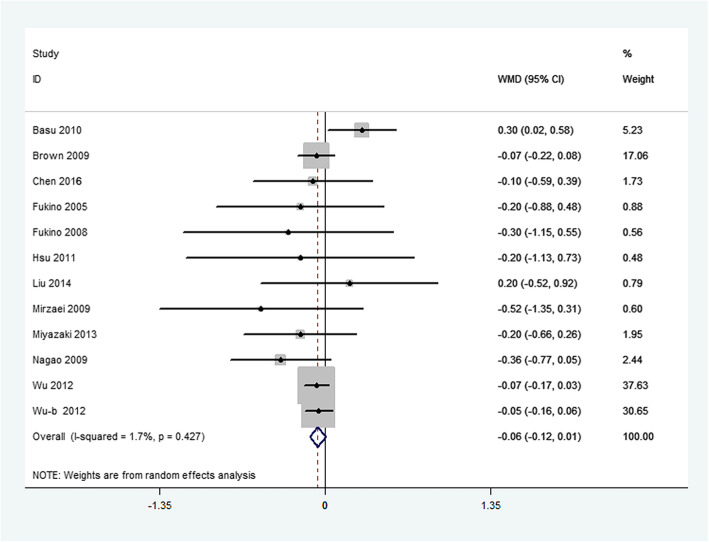
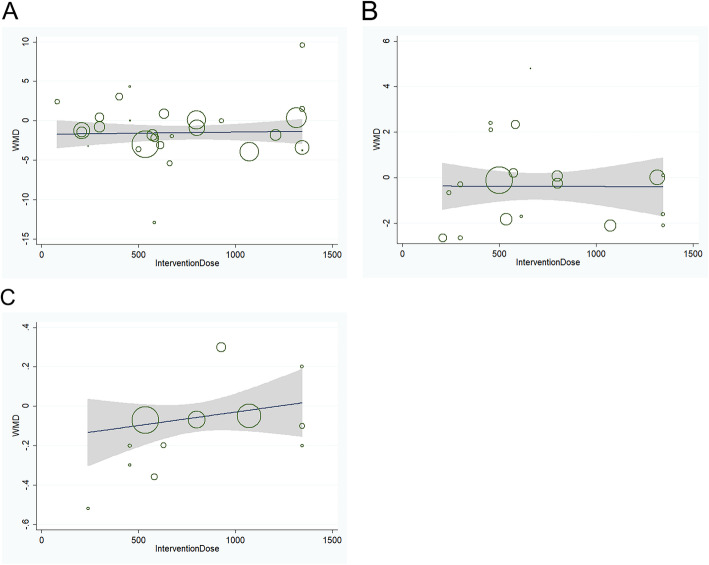
Results: Twenty-seven trials involving 2194 subjects were included in the meta-analysis. The pooled results showed that green tea significantly lowered fasting blood glucose by - 1.44 mg/dL (95%CI:-2.26, - 0.62 mg/dL; P < 0.001) with no obvious heterogeneity (I 2 = 7.7%). However, green tea consumption did not significantly affect fasting insulin and HbA1c values. The mean differences were - 0.46μIU/mL (95% CI: - 1.10, 0.17μIU/mL; P = 0.21) for fasting insulin and - 0.06%; (95% CI: - 0.12, 0.01%; P = 0.07) for HbA1c concentrations. Heterogeneity was significant in fasting insulin (I 2 = 46.8%) and mild in HbA1c (I 2 = 1.7%).
Conclusions: In short-term trials, green tea supplementation significantly reduced fasting glucose, but had no significant effect on fasting insulin and HbA1c. Long-term trials assessing the effects of green tea supplementation on glycemic control are needed.
Keywords: Catechin; Glycemic control; Green tea; Meta-analysis.
© The Author(s) 2020.
Conflict of interest statement
Competing interestsThe authors declare that they have no competing interests.
Figures
References
-
- Pittas AG, Dawson-Hughes B, Sheehan P, Ware JH, Knowler WC, Aroda VR, Brodsky I, Ceglia L, Chadha C, Chatterjee R, Desouza C, Dolor R, Foreyt J, Fuss P, Ghazi A, Hsia DS, Johnson KC, Kashyap SR, Kim S, LeBlanc ES, Lewis MR, Liao E, Neff LM, Nelson J, O'Neil P, Park J, Peters A, Phillips LS, Pratley R, Raskin P, Rasouli N, Robbins D, Rosen C, Vickery EM, Staten M, Group DdR Vitamin D supplementation and prevention of type 2 diabetes. N Engl J Med. 2019;381:520–530. - PMC - PubMed
-
- Cho NH, Shaw JE, Karuranga S, Huang Y, da Rocha Fernandes JD, Ohlrogge AW, Malanda B. IDF diabetes atlas: global estimates of diabetes prevalence for 2017 and projections for 2045. Diabetes Res Clin Pract. 2018;138:271–281. - PubMed
-
- Lotfy M, Adeghate J, Kalasz H, Singh J, Adeghate E. Chronic complications of diabetes mellitus: a mini review. Curr Diabetes Rev. 2017;13:3–10. - PubMed
-
- Hou LQ, Liu YH, Zhang YY. Garlic intake lowers fasting blood glucose: meta-analysis of randomized controlled trials. Asia Pac J Clin Nutr. 2015;24:575–582. - PubMed
Publication types
LinkOut - more resources
Full Text Sources
Miscellaneous
