


Cardiovascular Complications of COVID-19: Pharmacotherapy Perspective
- PMID: 32671601
- PMCID: PMC7360896
- DOI: 10.1007/s10557-020-07037-2
Cardiovascular Complications of COVID-19: Pharmacotherapy Perspective
Abstract
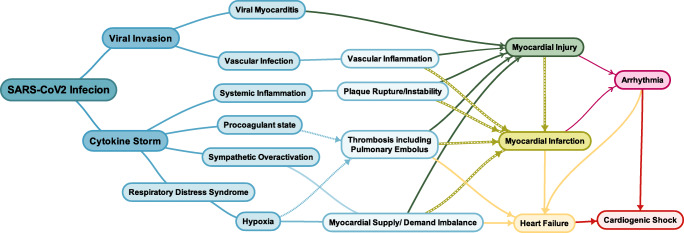
Coronavirus disease of 2019 (COVID-19), which is caused by severe acute respiratory syndrome coronavirus 2 (SARS-CoV-2), is spreading rapidly the world over. The disease was declared "pandemic" by the World Health Organization. An approved therapy for patients with COVID-19 has yet to emerge; however, there are some medications used in the treatment of SARS-CoV-2 infection globally including hydroxychloroquine, remdesivir, dexamethasone, protease inhibitors, and anti-inflammatory agents. Patients with underlying cardiovascular disease are at increased risk of mortality and morbidity from COVID-19. Moreover, patients with chronic stable states and even otherwise healthy individuals might sustain acute cardiovascular problems due to COVID-19 infection. This article seeks to review the latest evidence with a view to explaining possible pharmacotherapies for the cardiovascular complications of COVID-19 including acute coronary syndrome, heart failure, myocarditis, arrhythmias, and venous thromboembolism, as well as possible interactions between these medications and those currently administered (or under evaluation) in the treatment of COVID-19.
Keywords: COVID-19; Cardiovascular; Drug–drug interactions; Pharmacotherapy; SARS-Cov2; Venous thromboembolism.
Conflict of interest statement
None declared.
Figures
References
-
- https://www.who.int/dg/speeches/detail/whodirector-general-s-opening-rem.... Accessed 12 March 2020.
Publication types
MeSH terms
Substances
LinkOut - more resources
Full Text Sources
Miscellaneous
