


Hyperthermia treatment advances for brain tumors
- PMID: 32672123
- PMCID: PMC7756245
- DOI: 10.1080/02656736.2020.1772512
Hyperthermia treatment advances for brain tumors
Abstract
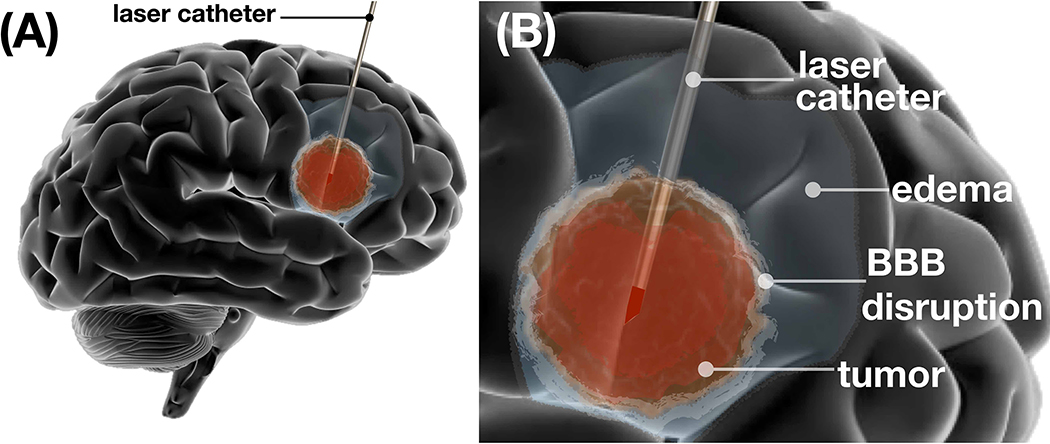
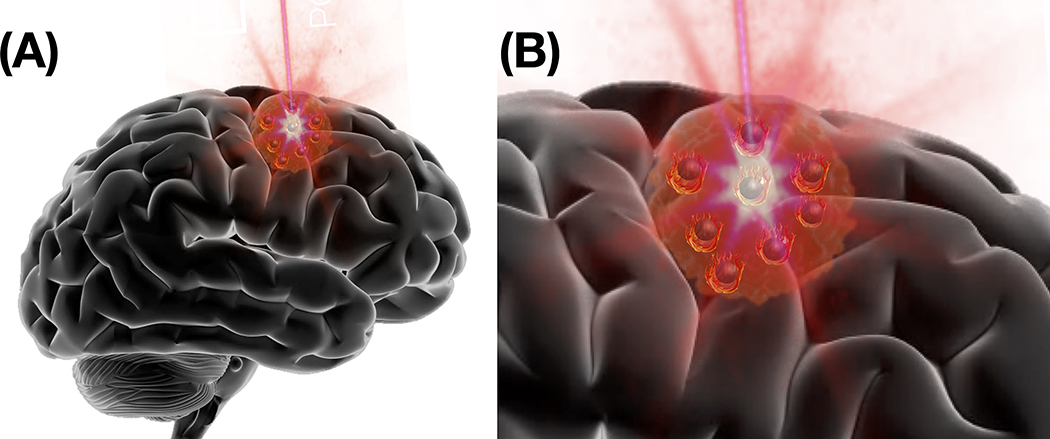
Hyperthermia therapy (HT) of cancer is a well-known treatment approach. With the advent of new technologies, HT approaches are now important for the treatment of brain tumors. We review current clinical applications of HT in neuro-oncology and ongoing preclinical research aiming to advance HT approaches to clinical practice. Laser interstitial thermal therapy (LITT) is currently the most widely utilized thermal ablation approach in clinical practice mainly for the treatment of recurrent or deep-seated tumors in the brain. Magnetic hyperthermia therapy (MHT), which relies on the use of magnetic nanoparticles (MNPs) and alternating magnetic fields (AMFs), is a new quite promising HT treatment approach for brain tumors. Initial MHT clinical studies in combination with fractionated radiation therapy (RT) in patients have been completed in Europe with encouraging results. Another combination treatment with HT that warrants further investigation is immunotherapy. HT approaches for brain tumors will continue to a play an important role in neuro-oncology.
Keywords: Brain tumor; hyperthermia therapy; laser interstitial thermal therapy; magnetic hyperthermia therapy; photothermal therapy.
Figures


References
-
- Falk M, Issels R. Hyperthermia in oncology. International Journal of Hyperthermia. 2001;17(1):1–18. - PubMed
-
- Hildebrandt B, Wust P, Ahlers O, et al. The cellular and molecular basis of hyperthermia. Crit Rev Oncol Hematol. 2002. July;43(1):33–56. - PubMed
-
- Chu KF, Dupuy DE. Thermal ablation of tumours: biological mechanisms and advances in therapy. Nature Reviews Cancer. 2014;14(3):199. - PubMed
-
- Wust P, Hildebrandt B, Sreenivasa G, et al. Hyperthermia in combined treatment of cancer. The lancet oncology. 2002;3(8):487–497. - PubMed
-
- Bull JM, Lees DE, Schuette WH, et al. Immunological and physiological responses to whole-body hyperthermia. Natl Cancer Inst Monogr. 1982;61:177–181. - PubMed
Publication types
MeSH terms
Grants and funding
LinkOut - more resources
Full Text Sources
Medical
