


Lysosomal Storage Disorders Shed Light on Lysosomal Dysfunction in Parkinson's Disease
- PMID: 32674335
- PMCID: PMC7404170
- DOI: 10.3390/ijms21144966
Lysosomal Storage Disorders Shed Light on Lysosomal Dysfunction in Parkinson's Disease
Abstract
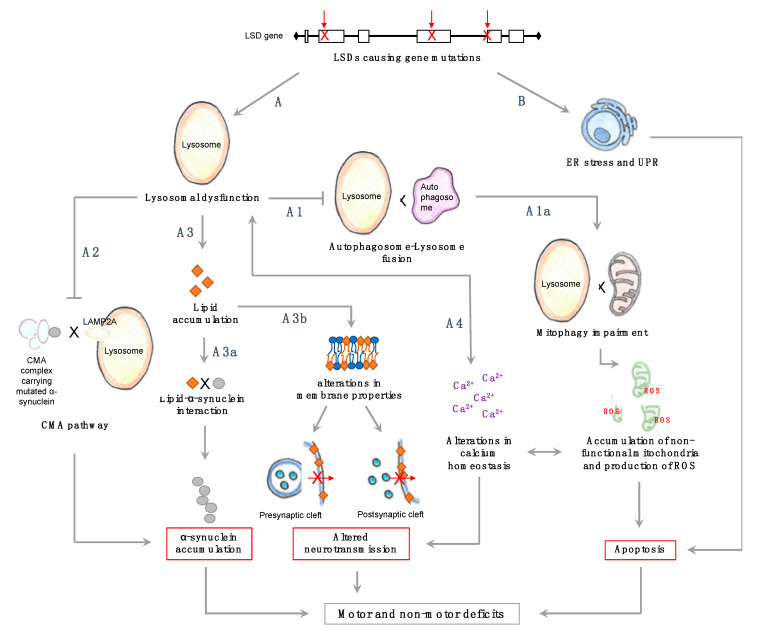
The lysosome is a central player in the cell, acting as a clearing house for macromolecular degradation, but also plays a critical role in a variety of additional metabolic and regulatory processes. The lysosome has recently attracted the attention of neurobiologists and neurologists since a number of neurological diseases involve a lysosomal component. Among these is Parkinson's disease (PD). While heterozygous and homozygous mutations in GBA1 are the highest genetic risk factor for PD, studies performed over the past decade have suggested that lysosomal loss of function is likely involved in PD pathology, since a significant percent of PD patients have a mutation in one or more genes that cause a lysosomal storage disease (LSD). Although the mechanistic connection between the lysosome and PD remains somewhat enigmatic, significant evidence is accumulating that lysosomal dysfunction plays a central role in PD pathophysiology. Thus, lysosomal dysfunction, resulting from mutations in lysosomal genes, may enhance the accumulation of α-synuclein in the brain, which may result in the earlier development of PD.
Keywords: Gaucher disease; Parkinson’s disease; lysosomal storage diseases; α-synuclein.
Conflict of interest statement
The authors declare no conflicts of interest. The funders had no role in the design of the study; in the collection, analyses, or interpretation of data; in the writing of the manuscript, or in the decision to publish the results.
Figures
References
Publication types
MeSH terms
Substances
LinkOut - more resources
Full Text Sources
Medical
Miscellaneous
