


Phenomenal Bombardment of Antibiotic in Poultry: Contemplating the Environmental Repercussions
- PMID: 32674337
- PMCID: PMC7400182
- DOI: 10.3390/ijerph17145053
Phenomenal Bombardment of Antibiotic in Poultry: Contemplating the Environmental Repercussions
Abstract
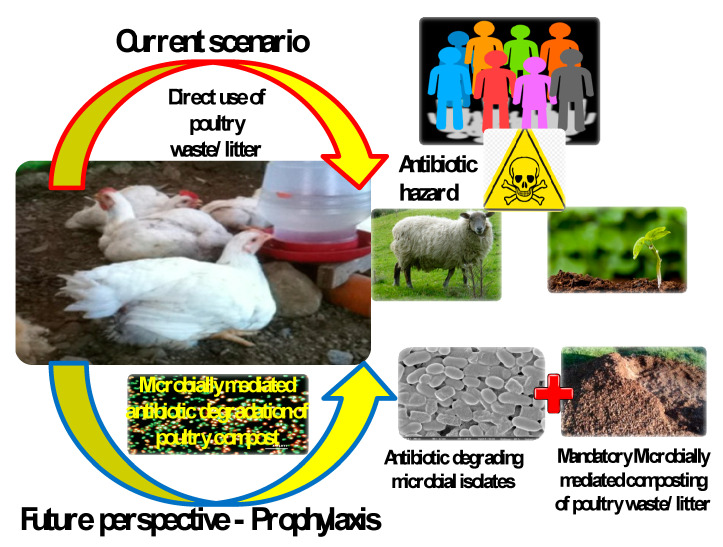
Antibiotics have constantly been added at an unprecedented rate in order to enhance poultry meat production. Such antibiotics impose a negative impact on human health directly through meat and egg consumption. On the other hand, they also affect humans indirectly by affecting the normal key microbial processes in the agricultural environments, when used as poultry compost. For many years, farmers have been turning poultry litter into compost for agricultural use. Very few studies have addressed the fate of the unmetabolized antibiotic residues in poultry litter that could potentially affect microbial communities when used as poultry compost. We have also questioned the fate of residual antibiotic in poultry waste which may create possible negative environmental pressure on microbial communities that are involved in microbial mediated poultry litter composting processes. The incorporation of antibiotic degrading environmental isolates in poultry litter at the initial stage of composting in order to accelerate the process is addressed in this review as a future perspective.
Keywords: antibiotics; composting; degradation; environment; microorganisms; poultry; toxicity.
Conflict of interest statement
The authors declare no conflict of interest.
Figures
References
-
- Upali Wickramasinghe G.A. Food Outlook, Food and Agricultural Organization. United Nations FAO Investment Centre Division; Rome, Italy: 2018. Meat and Meat products; pp. 48–53.
-
- Jones B.E.H., Haynes R.J., Phillips I.R. Effect of amendment of bauxite processing sand with organic materials on its chemical, physical and microbial properties. J. Environ. Manag. 2010;91:2281–2288. - PubMed
-
- Castanon J.I.R. History of the use of antibiotic as growth promoters in European poultry feeds. Poult. Sci. 2007;86:2466–2471. - PubMed
-
- Collins E.R., Barker J.C., Carr L.E., Brodie H.L., Martin J.H. Poultry Waste Management Handbook. Cornell University; Ithaca, NY, USA: 1999. National Resource, Agriculture, and Engineering Service.
-
- Williams C.M., Barker J.C., Sims J.T. Management and utilization of poultry wastes. Rev. Environ. Contam. Toxicol. 1999;162:105–157. - PubMed
Publication types
MeSH terms
Substances
LinkOut - more resources
Full Text Sources
Medical
