


Life expectancy estimates for patients diagnosed with prostate cancer in the Veterans Health Administration
- PMID: 32674954
- PMCID: PMC7438257
- DOI: 10.1016/j.urolonc.2020.05.015
Life expectancy estimates for patients diagnosed with prostate cancer in the Veterans Health Administration
Abstract
Purpose: Accurate life expectancy estimates are required to inform prostate cancer treatment decisions. However, few models are specific to the population served or easily implemented in a clinical setting. We sought to create life expectancy estimates specific to Veterans diagnosed with prostate cancer.
Materials and methods: Using national Veterans Health Administration electronic health records, we identified Veterans diagnosed with prostate cancer between 2000 and 2015. We abstracted demographics, comorbidities, oncologic staging, and treatment information. We fit Cox Proportional Hazards models to determine the impact of age, comorbidity, cancer risk, and race on survival. We stratified life expectancy estimates by age, comorbidity and cancer stage.
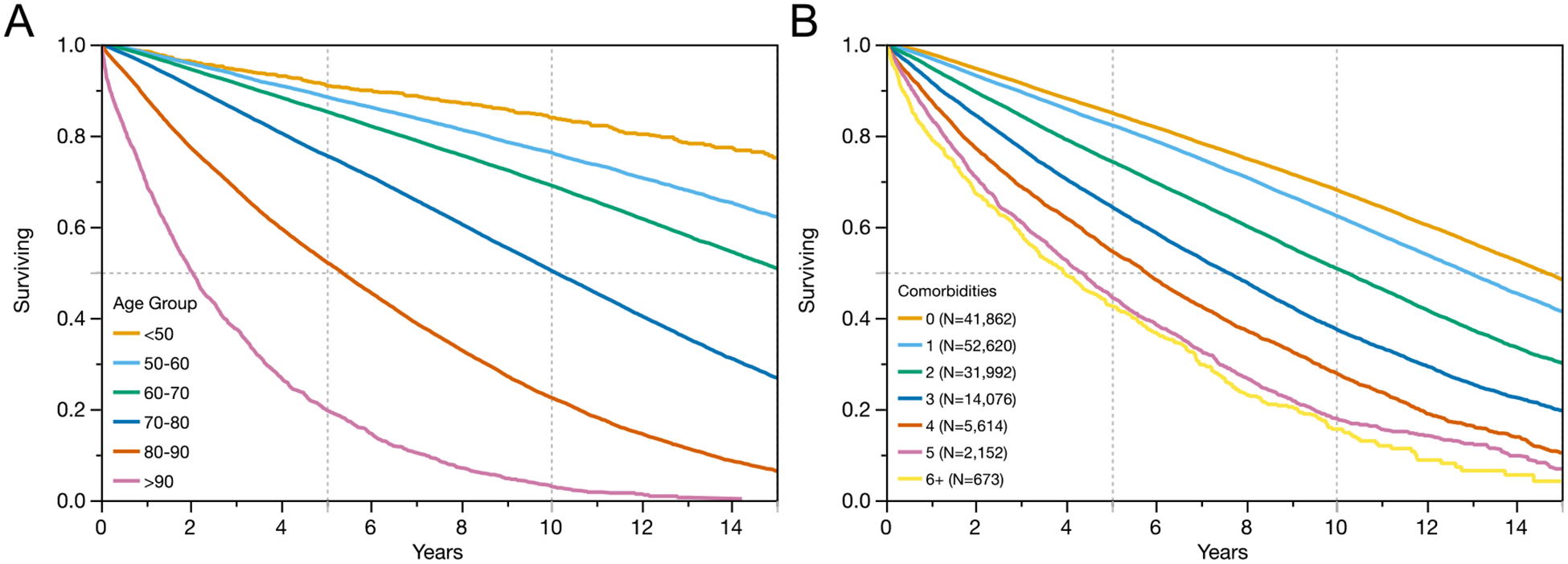
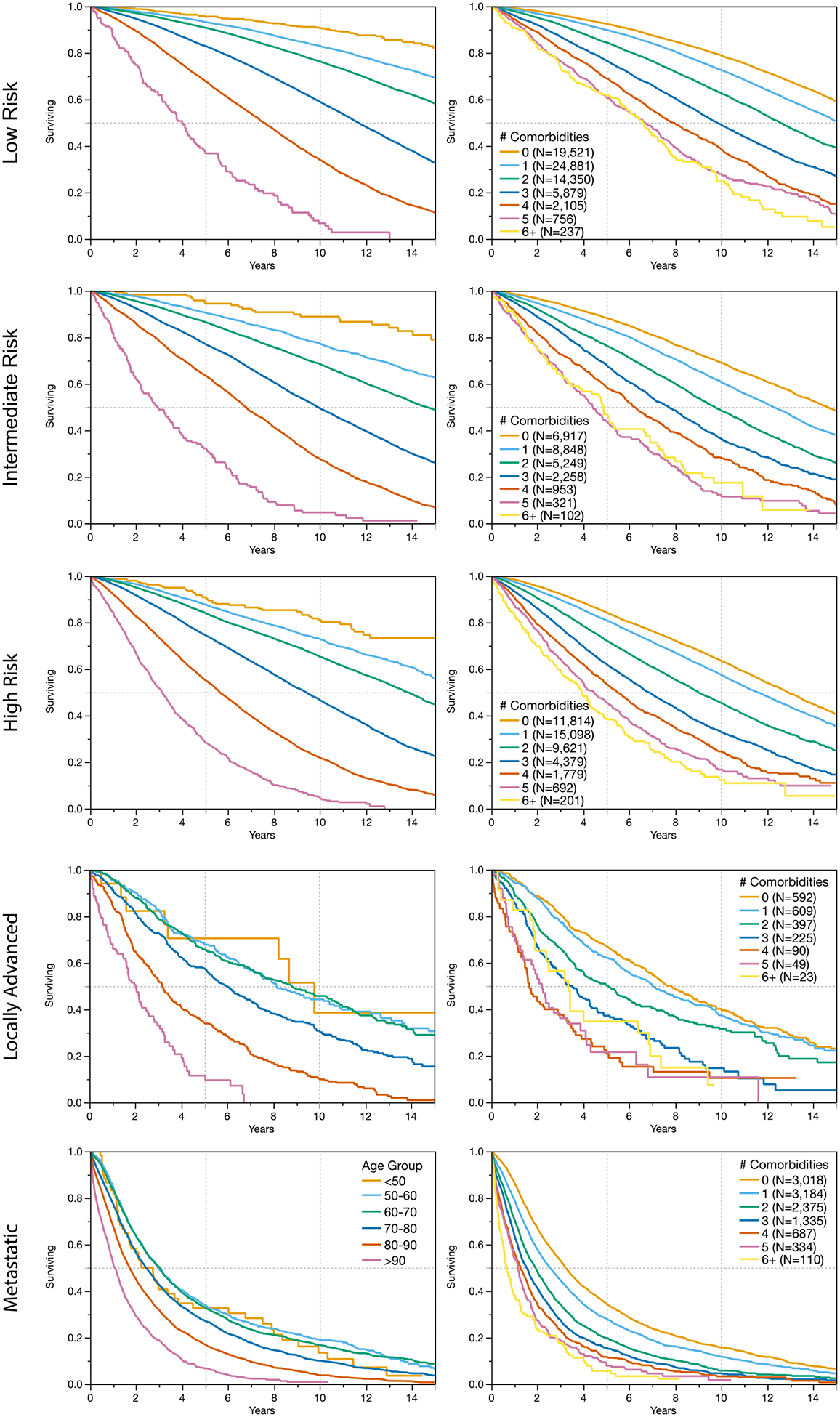
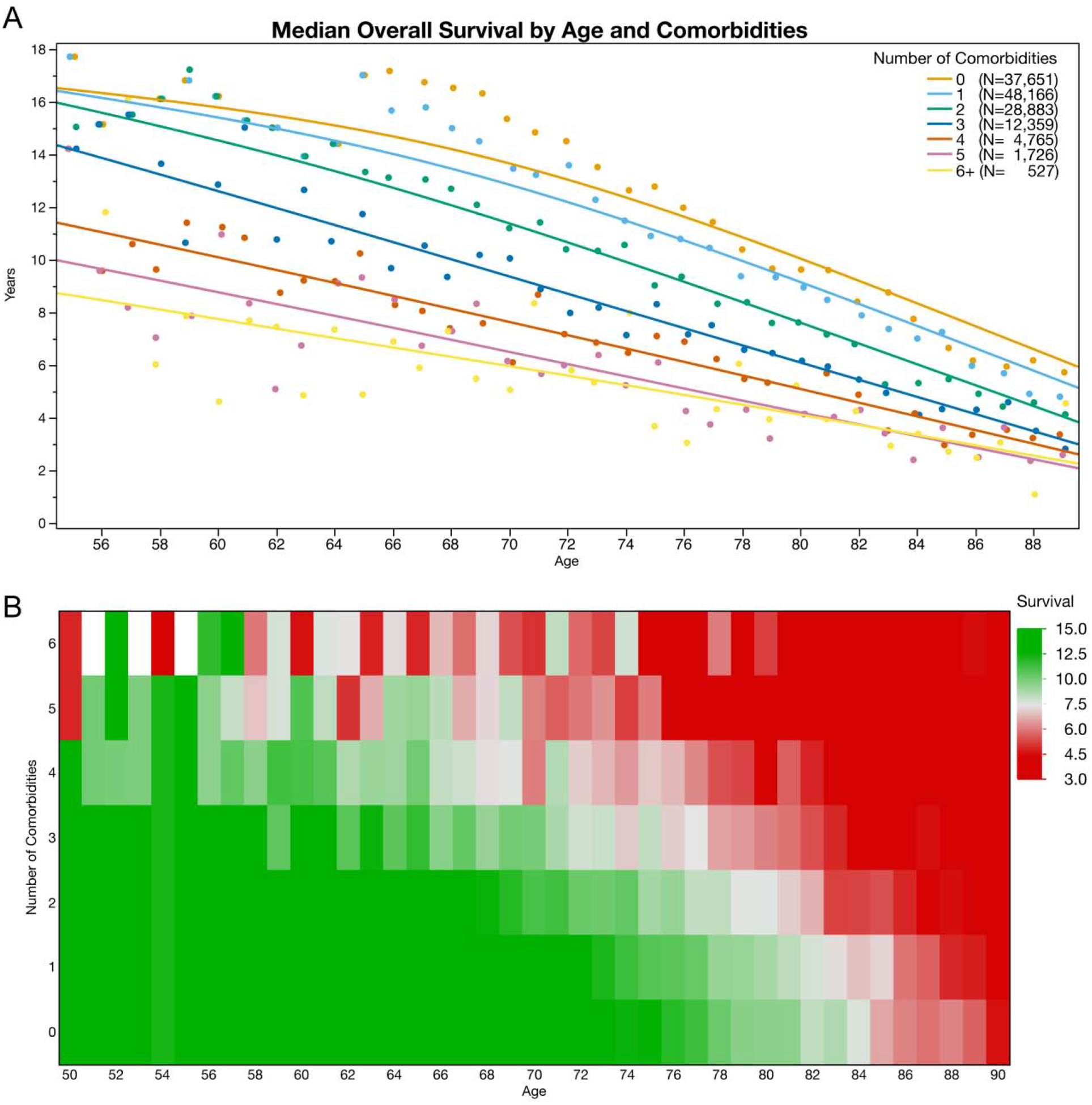
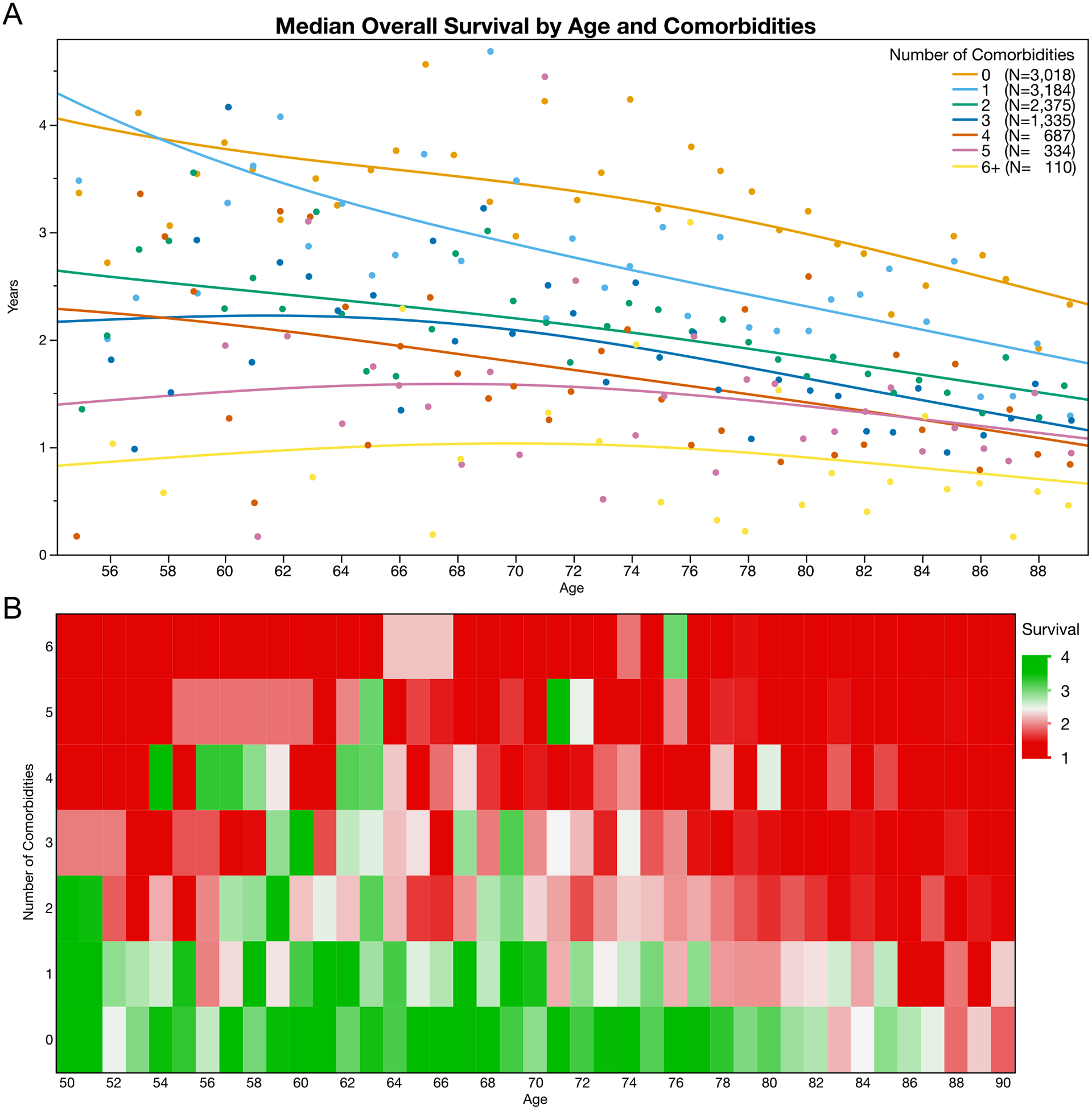
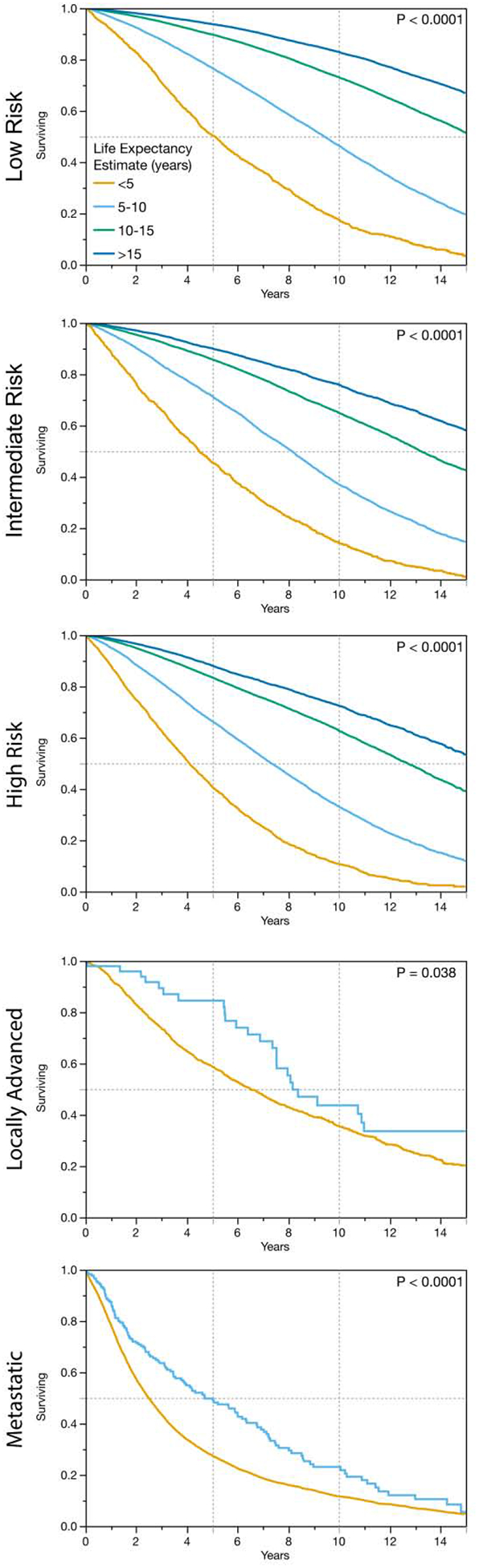
Results: Our analytic cohort included 145,678 patients. Survival modeling demonstrated the importance of age and comorbidity across all cancer risk categories. Life expectancy estimates generated from age and comorbidity data were predictive of overall survival (C-index 0.676, 95% CI 0.674-0.679) and visualized using Kaplan-Meier plots and heatmaps stratified by age and comorbidity. Separate life expectancy estimates were generated for patients with localized or advanced disease. These life expectancy estimates calibrate well across prostate cancer risk categories.
Conclusions: Life expectancy estimates are essential to providing patient-centered prostate cancer care. We developed accessible life expectancy estimation tools for Veterans diagnosed with prostate cancer that can be used in routine clinical practice to inform medical-decision making.
Keywords: Comorbidity; Life expectancy; Prostatic neoplasms; Veterans Health.
Published by Elsevier Inc.
Figures
References
-
- Daskivich TJ, Chamie K, Kwan L, Labo J, Palvolgyi R, Dash A, et al. Overtreatment of men with low-risk prostate cancer and significant comorbidity. Cancer. 2011;117:2058–66. - PubMed
-
- Walz J, Gallina A, Perrotte P, Jeldres C, Trinh QD, Hutterer GC, et al. Clinicians are poor raters of life-expectancy before radical prostatectomy or definitive radiotherapy for localized prostate cancer. BJU Int. 2007;100:1254–8. - PubMed
-
- Wilson JR, Clarke MG, Ewings P, Graham JD, MacDonagh R. The assessment of patient life-expectancy: how accurate are urologists and oncologists? BJU Int. 2005;95:794–8. - PubMed
Publication types
MeSH terms
Grants and funding
LinkOut - more resources
Full Text Sources
Medical
