Safety decision-making and planning mobile app for intimate partner violence prevention and response: randomised controlled trial in Kenya
- PMID: 32675229
- PMCID: PMC7368487
- DOI: 10.1136/bmjgh-2019-002091
Safety decision-making and planning mobile app for intimate partner violence prevention and response: randomised controlled trial in Kenya
Abstract
Introduction: Intimate partner violence (IPV) threatens women's health and safety globally, yet services remain underdeveloped and inaccessible. Technology-based resources exist, however, few have been adapted and tested in low-resource settings. We evaluate the efficacy of a community-partnered technology solution: culturally and linguistically adapted version of the myPlan app, a tailored safety decision-making and planning intervention, administrated by trained lay professionals.
Methods: This randomised, controlled, participant-blinded superiority trial compares safety-related outcomes at baseline, immediate post intervention and 3-month follow-up among women at risk of and experiencing IPV in Nairobi, Kenya. Women were randomised (1:1 ratio) to: (1) myPlan Kenya (intervention); or (2) standard IPV referrals (control). Primary outcomes were safety preparedness, safety behaviour and IPV; secondary outcomes include resilience, mental health, service utilisation and self-blame.
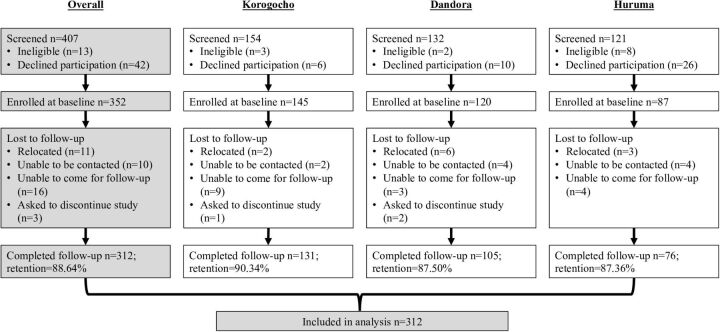
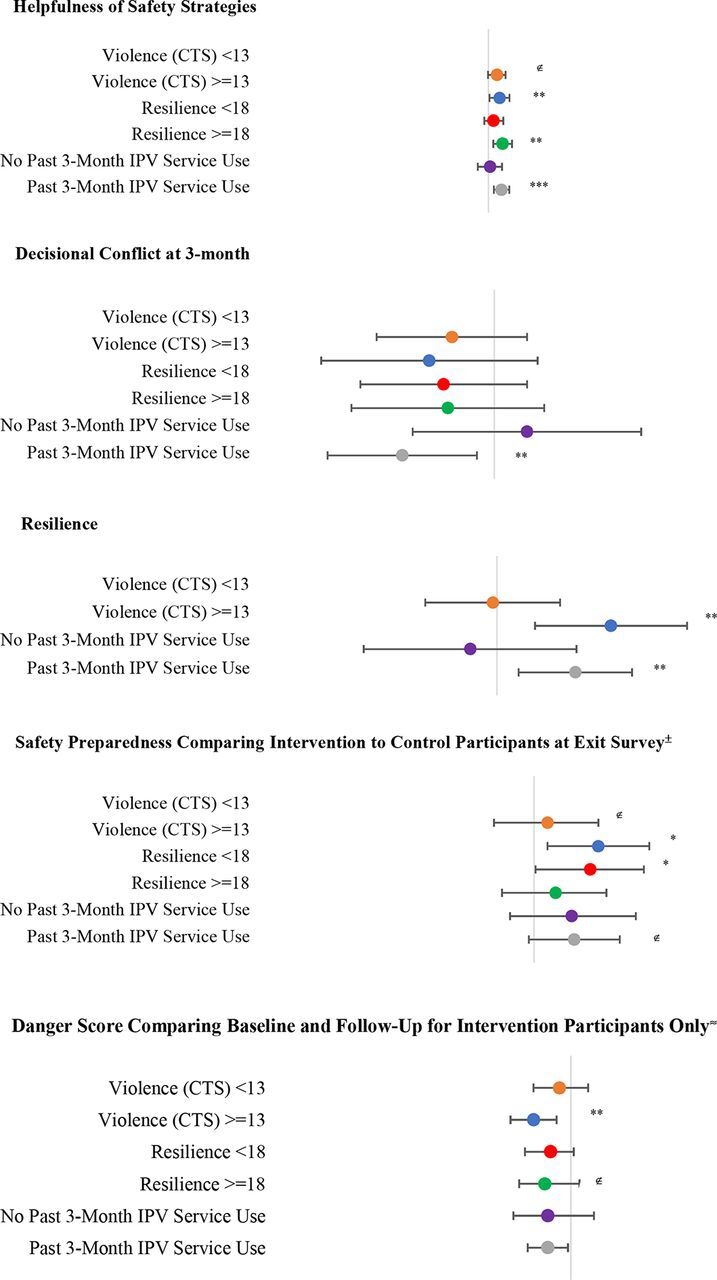
Results: Between April 2018 and October 2018, 352 participants (n=177 intervention, n=175 control) were enrolled and randomly assigned; 312 (88.6%, n=157 intervention, n=155 control) were retained at 3 months. Intervention participants demonstrated immediate postintervention improvement in safety preparedness relative to control participants (p=0.001). At 3 months, intervention participants reported increased helpfulness of safety strategies used relative to control participants (p=0.004); IPV reduced in both groups. Among women reporting the highest level of IPV severity, intervention participants had significant increase in resilience (p<0.01) compared with controls, and significantly decreased risk for lethal violence (p<0.01).
Conclusions: Facilitated delivery of a technology-based safety intervention appropriately adapted to the context demonstrates promise in improving women's IPV-related health and safety in a low-resource, urban setting.
Trial registration number: Pan African Clinical Trial Registry (PACTR201804003321122).
Keywords: public health; randomised control trial.
© Author(s) (or their employer(s)) 2020. Re-use permitted under CC BY-NC. No commercial re-use. See rights and permissions. Published by BMJ.
Conflict of interest statement
Competing interests: None declared.
Figures
References
-
- UN Sustainable development goal 5: achieve gender equality and empower all women and girls, 2016. Available: https://www.un.org/sustainabledevelopment/gender-equality/
-
- Kenya national Bureau of statistics, Ministry of Health/Kenya, National AIDS control Council/Kenya, Kenya medical research Institute, population NCf, Development/Kenya Kenya demographic and health survey. Rockville, MD, USA, 2014.
Publication types
MeSH terms
Associated data
LinkOut - more resources
Full Text Sources
Medical
Research Materials
Miscellaneous