


Advanced organ support (ADVOS) in the critically ill: first clinical experience in patients with multiple organ failure
- PMID: 32676849
- PMCID: PMC7364697
- DOI: 10.1186/s13613-020-00714-3
Advanced organ support (ADVOS) in the critically ill: first clinical experience in patients with multiple organ failure
Abstract
Background: Prevalence of multiple organ failure (MOF) in critically ill patients is increasing and associated mortality remains high. Extracorporeal organ support is a cornerstone in the management of MOF. We report data of an advanced hemodialysis system based on albumin dialysis (ADVOS multi device) that can regulate acid-base balance in addition to the established properties of renal replacement therapy and albumin dialysis systems in critically ill patients with MOF.
Methods: 34 critically ill patients with MOF received 102 ADVOS treatment sessions in the Department of Intensive Care Medicine of the University Medical Center Hamburg-Eppendorf. Markers of metabolic detoxification and acid-base regulation were collected and blood gas analyses were performed. A subgroup analyses were performed in patients with severe acidemia (pH < 7.2).
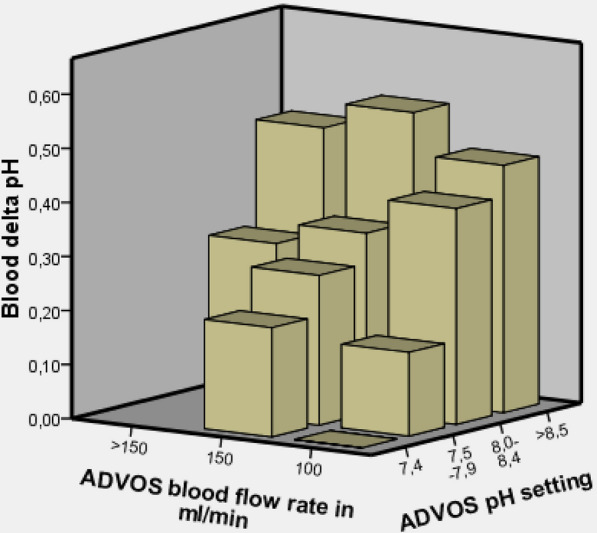
Results: Median number of treatment sessions was 2 (range 1-9) per patient. Median duration of treatment was 17.5 (IQR 11-23) hours per session. Treatment with the ADVOS multi-albumin dialysis device caused a significant decrease in bilirubin levels, serum creatinine, BUN and ammonia levels. The relative elimination rate of bilirubin was concentration dependent. Furthermore, a significant improvement in blood pH, HCO3- and PaCO2, was achieved during ADVOS treatment including six patients that suffered from severe metabolic acidosis refractory to continuous renal replacement therapy. Delta pH, HCO3- and PaCO2 were significantly affected by the ADVOS blood flow rate and pH settings. This improvement in the clinical course during ADVOS treatments allowed a reduction in norepinephrine during ADVOS therapy. Treatments were well tolerated. Mortality rates were 50% and 62% for 28 and 90 days, respectively.
Conclusions: In this case series in patients with MOF, ADVOS was able to eliminate water-soluble and albumin-bound substances. Furthermore, the device corrected severe metabolic and respiratory acid-base disequilibrium. No major adverse events associated with the ADVOS treatments were observed.
Keywords: ARDS; Acidosis; Acute liver failure; Albumin dialysis; Extracorporeal organ support; Multiple organ failure; Septic shock.
Conflict of interest statement
VF receives speaker fees from Advitos, OB receives speaker fees from Advitos, others have nothing to declare.
Figures

References
LinkOut - more resources
Full Text Sources
