


Trajectories of co-occurring psychopathology symptoms in autism from late childhood to adulthood
- PMID: 32677592
- PMCID: PMC7655668
- DOI: 10.1017/S0954579420000826
Trajectories of co-occurring psychopathology symptoms in autism from late childhood to adulthood
Abstract
Given high rates of co-occurring conditions in youth and adults with autism spectrum disorder (ASD), it is critical to examine the developmental trajectories of these symptoms of psychopathology. Using data from a cohort of participants (n = 194), most of whom were first assessed for ASD in very early childhood, we investigated the trajectories of co-occurring depressive, anxiety, and attention-deficit hyperactivity disorder (ADHD) symptoms from late childhood to adulthood. Additionally, childhood predictors and adult outcomes associated with these symptom trajectories were examined. Using group-based trajectory modeling, we found two distinct classes of individuals exhibiting each of these co-occurring symptom patterns: one class exhibited fairly low symptoms across time, and one class with elevated symptoms with varied fluctuation across time (ADHD symptoms starting high but decreasing, anxiety symptoms high and stable, and depressive symptoms fluctuating but peaking at clinically significant levels in young adulthood). All high trajectory classes were associated with age 9 adaptive skills; verbal IQ predicted higher anxiety and depressive symptom classes. After accounting for verbal IQ, all high symptom trajectory classes were negative predictors of objective adult outcomes. These findings call for wide-ranging considerations of the needs of individuals across ability levels, autism symptoms, and behavioral and emotional challenges.
Keywords: autism; co-occurring symptoms; development; longitudinal data; outcomes; trajectories.
Figures
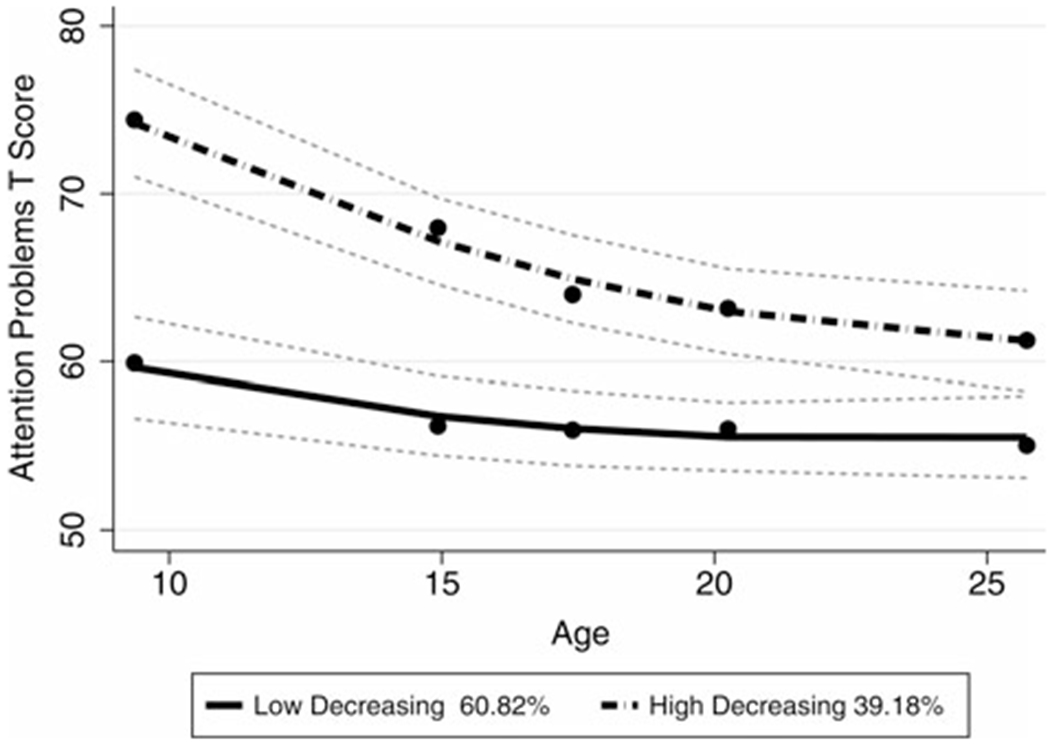
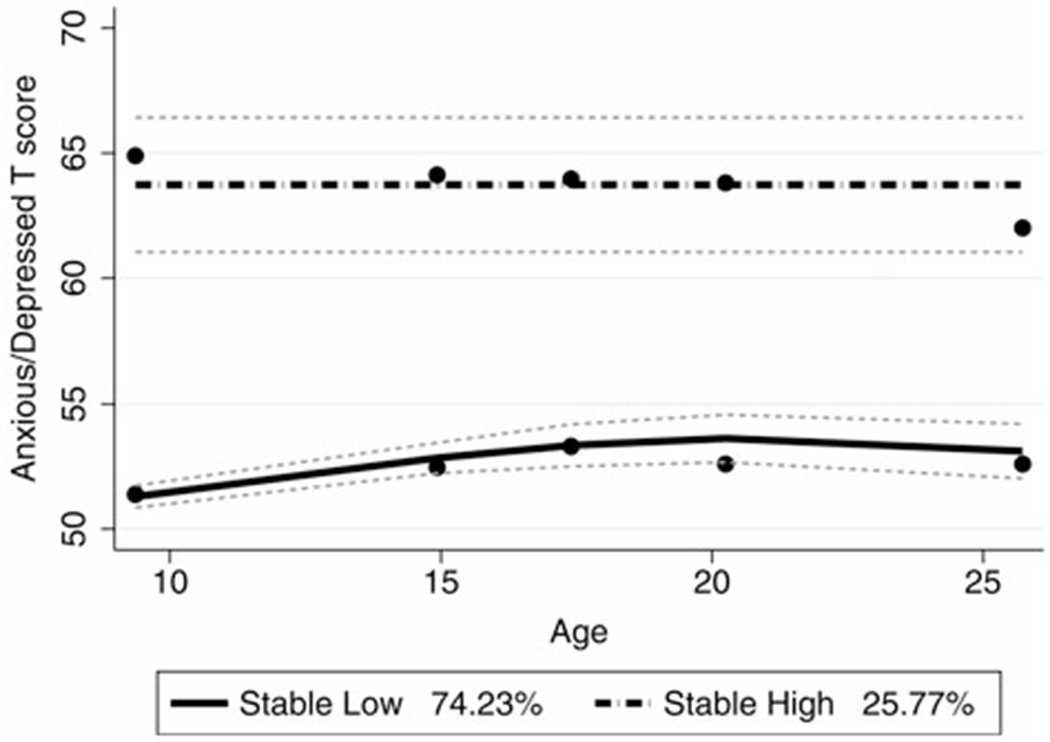
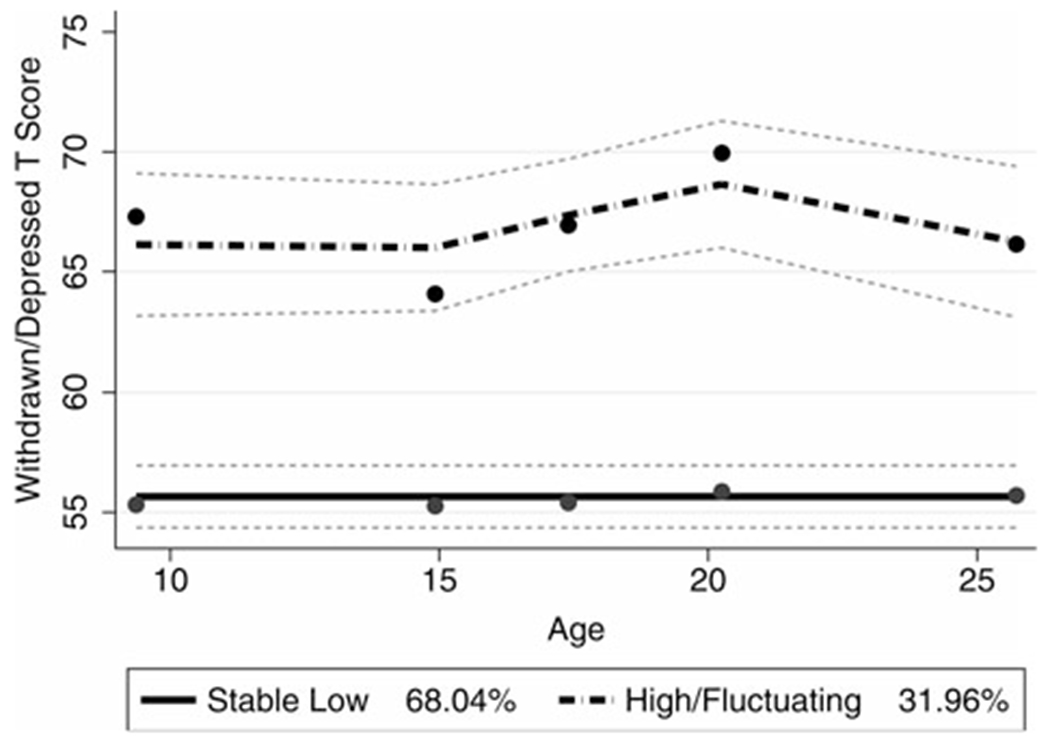
References
-
- Achenbach T, & Rescorla L (2001). Manual for the ASEBA school-age forms & profiles. Burlington: University of Vermont, Research Center for Children, Youth, & Families.
-
- Achenbach T, & Rescorla L (2003). Manual for the ASEBA adult forms & profiles. Burlington: University of Vermont, Research Center for Children, Youth, & Families.
-
- Alvares GA, Bebbington K, Cleary D, Evans K, Glasson EJ, Maybery MT, … Whitehouse AJ. (2020). The misnomer of ‘high functioning autism’: Intelligence is an imprecise predictor of functional abilities at diagnosis. Autism, 24, 221–232. - PubMed
-
- Aman MG, Singh NN, Stewart AW, & Field CJ (1985). The aberrant behavior checklist: a behavior rating scale for the assessment of treatment effects. American Journal of Mental Deficiency, 89, 485–491. - PubMed
-
- American Psychiatric Association. (2013). Diagnostic and statistical manual of mental disorders (DSM-5*). American Psychiatric Pub.
Publication types
MeSH terms
Grants and funding
LinkOut - more resources
Full Text Sources
Medical
Miscellaneous
