


Pattern of inpatient care for depression: an analysis of 232,289 admissions
- PMID: 32677945
- PMCID: PMC7364660
- DOI: 10.1186/s12888-020-02781-z
Pattern of inpatient care for depression: an analysis of 232,289 admissions
Abstract
Background: The prevalence of major depressive disorder (MDD) in women is up to 50% higher as compared to men. However, little is known about discrepancies in health care utilization between depressed female and male patients. Consequently, the aim of the present study was to elucidate gender differences regarding the frequency of hospital admissions and the length of inpatient treatment for MDD across the lifespan.
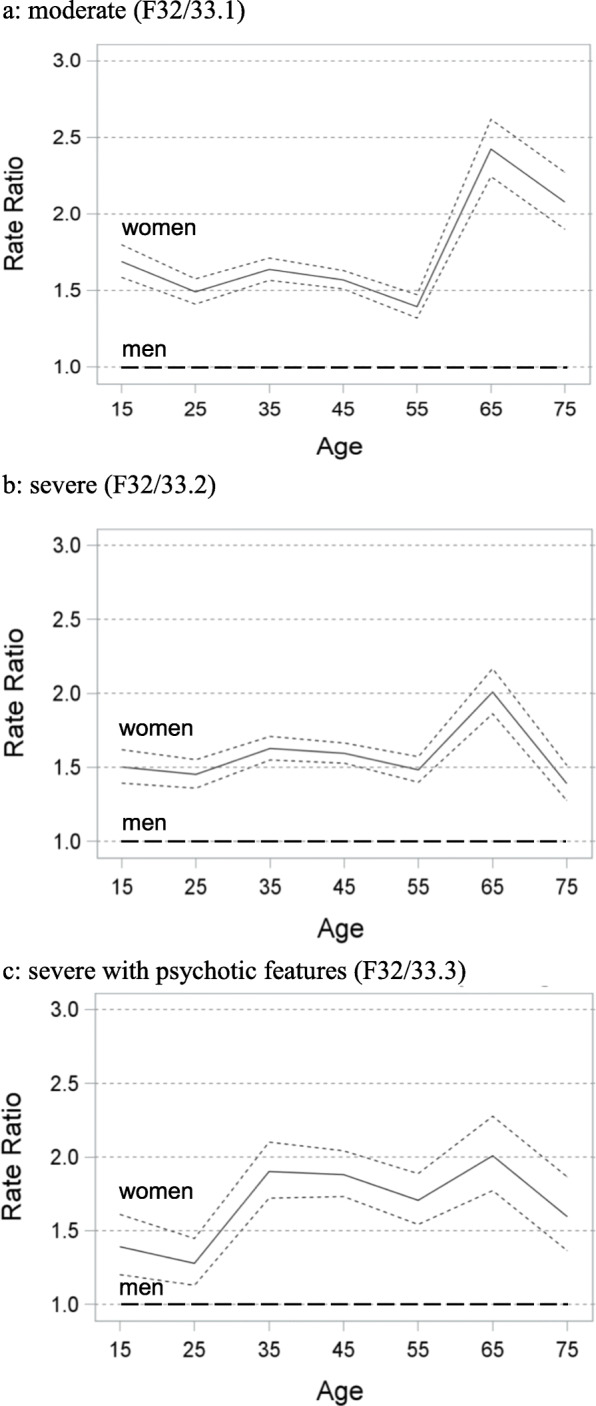
Methods: This nationwide, registry-based study analyzed all inpatient admissions in psychiatric hospitals due to recurrent/non-recurrent MDD episodes according to ICD-10 (moderate (F32/33.1), severe (F32/33.2), severe with psychotic features (F32/33.3)) in Austria across 14 years. We calculated weekly admission rates per 100,000 patients by directly age-standardized rates.
Results: Across 232,289 admissions (63.2% female) the population based admission rates in MDD were significantly higher in women (p < 0.001). Female to male ratios across subgroups were 1.65 (F32/33.1), 1.58 (F32/33.2), 1.73 (F32/33.3), and peaked around 65 years (ratio ≥ 2 for all subgroups). Length of hospital stay for women was significantly longer in all depression subtypes (p < 0.001).
Conclusions: Elevated rates of inpatient treatment in women cannot solely be explained by a higher MDD prevalence and are dependent on age and type of depressive episode. Irrespective of the type and severity of the mood episode, women exhibit longer hospitalisation times.
Keywords: Age; Depression; Gender; Hospitalization; Length of stay; Sex.
Conflict of interest statement
BV is a member of the editorial board of the journal. All authors declare that no competing financial interests exist.
Figures
References
-
- Bauer M, Severus E, Möller HJ, et al. Pharmacological treatment of unipolar depressive disorders: summary of WFSBP guidelines. Int J Psychiatry Clin Pract. 2017;21(3):166–76. - PubMed
-
- Vos T, Barber RM, Bell B, et al. Global, regional, and national incidence, prevalence, and years lived with disability for 301 acute and chronic diseases and injuries in 188 countries, 1990-2013: a systematic analysis for the global burden of disease study 2013. Lancet. 2015;386(9995):743–800. - PMC - PubMed
-
- Alonso J, Angermeyer MC, Bernert S, Bruffaerts R, Brugha TS, Bryson H, de Girolamo G, Graaf R, Demyttenaere K, Gasquet I, et al. Prevalence of mental disorders in Europe: results from the European study of the epidemiology of mental disorders (ESEMeD) project. Acta Psychiatr Scand Suppl. 2004;420:21–27. - PubMed
-
- Kuehner C. Gender differences in unipolar depression: an update of epidemiological findings and possible explanations. Acta Psychiatr Scand. 2003;108(3):163–174. - PubMed
MeSH terms
LinkOut - more resources
Full Text Sources
