


Transcriptome analysis reveals ethylene-mediated defense responses to Fusarium oxysporum f. sp. cucumerinum infection in Cucumis sativus L
- PMID: 32678006
- PMCID: PMC7364617
- DOI: 10.1186/s12870-020-02537-7
Transcriptome analysis reveals ethylene-mediated defense responses to Fusarium oxysporum f. sp. cucumerinum infection in Cucumis sativus L
Abstract
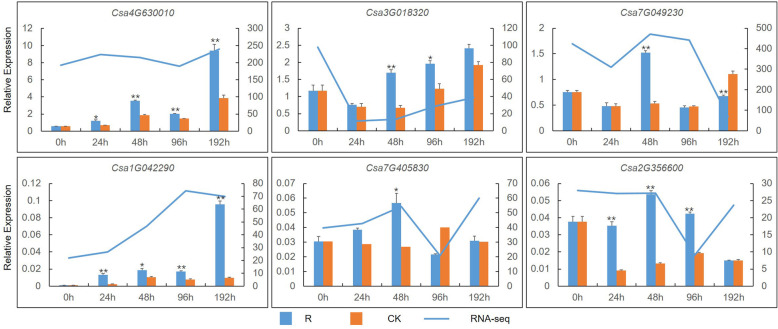
Background: Fusarium wilt, caused by Fusarium oxysporum f. sp. cucumerinum (Foc), is a severe disease affecting cucumber (Cucumis sativus L.) production worldwide, but mechanisms underlying Fusarium wilt resistance in cucumber remain unknown. To better understand of the defense mechanisms elicited in response to Foc inoculation, RNA sequencing-based transcriptomic profiling of responses of the Fusarium wilt-resistant cucumber line 'Rijiecheng' at 0, 24, 48, 96, and 192 h after Foc inoculation was performed.
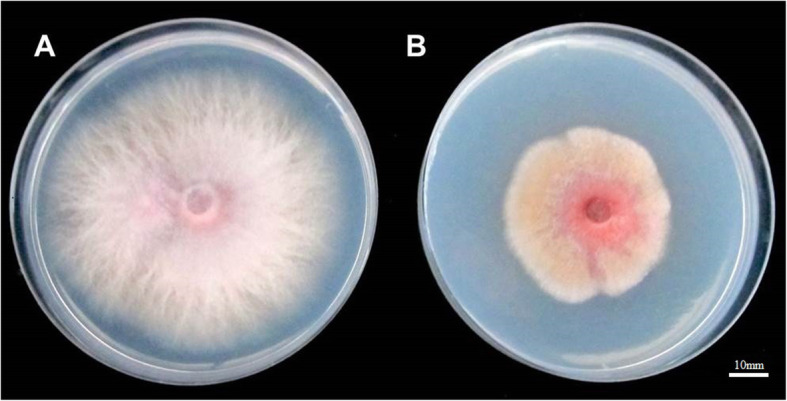
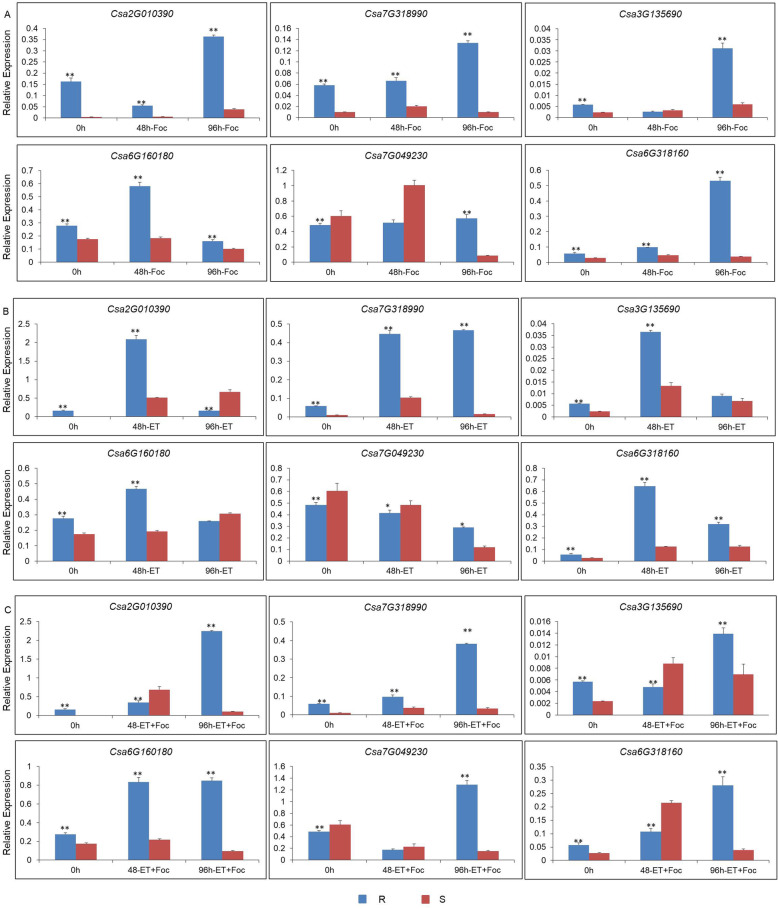
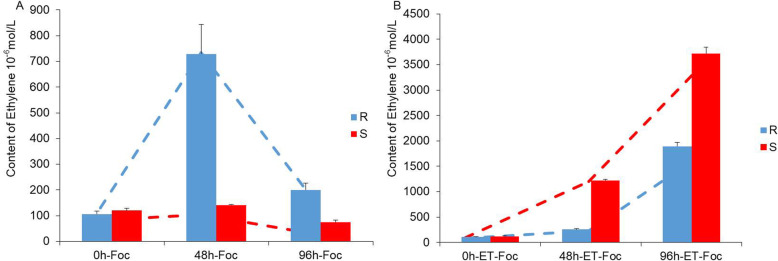
Results: We identified 4116 genes that were differentially expressed between 0 h and other time points after inoculation. All ethylene-related and pathogenesis-related genes from the differentially expressed genes were filtered out. Real-time PCR analysis showed that ethylene-related genes were induced in response to Foc infection. Importantly, after Foc infection and exogenous application of ethephon, a donor of ethylene, the ethylene-related genes were highly expressed. In response to exogenous ethephon treatment in conjunction with Foc inoculation, the infection resistance of cucumber seedlings was enhanced and endogenous ethylene biosynthesis increased dramatically.
Conclusion: Collectively, ethylene signaling pathways play a positive role in regulating the defense response of cucumber to Foc infection. The results provide insight into the cucumber Fusarium wilt defense mechanisms and provide valuable information for breeding new cucumber cultivars with enhanced Fusarium wilt tolerance.
Keywords: Cucumber; Exogenous ethylene; Fusarium wilt; RNA-seq.
Conflict of interest statement
All authors declare that they have no competing interests.
Figures


References
-
- Korolev N, Katan J, Katan T. Vegetative compatibility groups of Verticillium dahliae in Israel: their distribution and association with pathogenicity. Phytopatthology. 2000;90:529–536. - PubMed
-
- Du NS. Effect of vinegar residue compost amendments on cucumber growth and Fusarium wilt. Environ Sci Pollut R. 2015;22:199133–199141. - PubMed
-
- Jenkins JR, Wehner TC. Occurrence of Fusarium oxysporum f. sp. cucumerinum on greenhouse-grown Cucumis sativus seed stocks in North Carolina. Plant Dis. 1983;67:1024–1025.
-
- Mao AJ, Zhang F, Zhang LR. Analysis on the inheritance of resistance to Fusarium wilt race 4 and cucumber scab and their linkage in cucumber WIS2757. Sci Agr Sinica. 2008;41:3382–3388.
-
- Netzer D, Niego S, Galun E. A dominant gene conferring resistance to Fusarium wilt in cucumber. Phytopathology. 1977;67:525–527.
MeSH terms
Substances
Supplementary concepts
Grants and funding
LinkOut - more resources
Full Text Sources
