


Effect of the submandibular push exercise using visual feedback from pressure sensor: an electromyography study
- PMID: 32678239
- PMCID: PMC7366651
- DOI: 10.1038/s41598-020-68738-0
Effect of the submandibular push exercise using visual feedback from pressure sensor: an electromyography study
Abstract
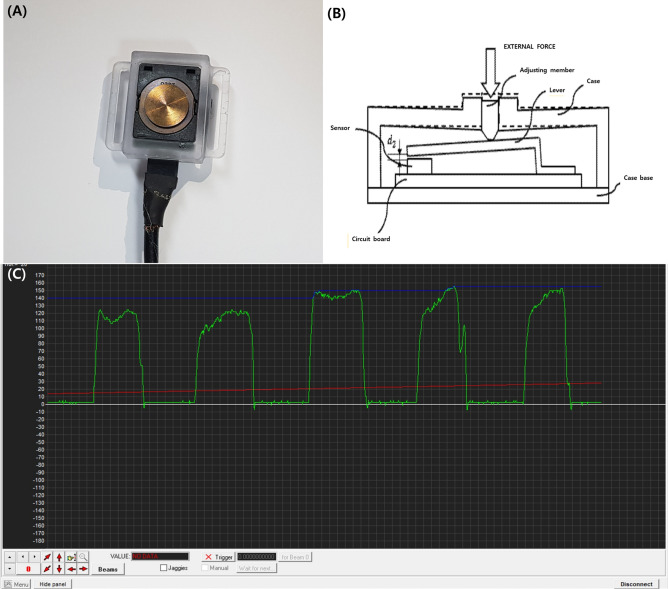
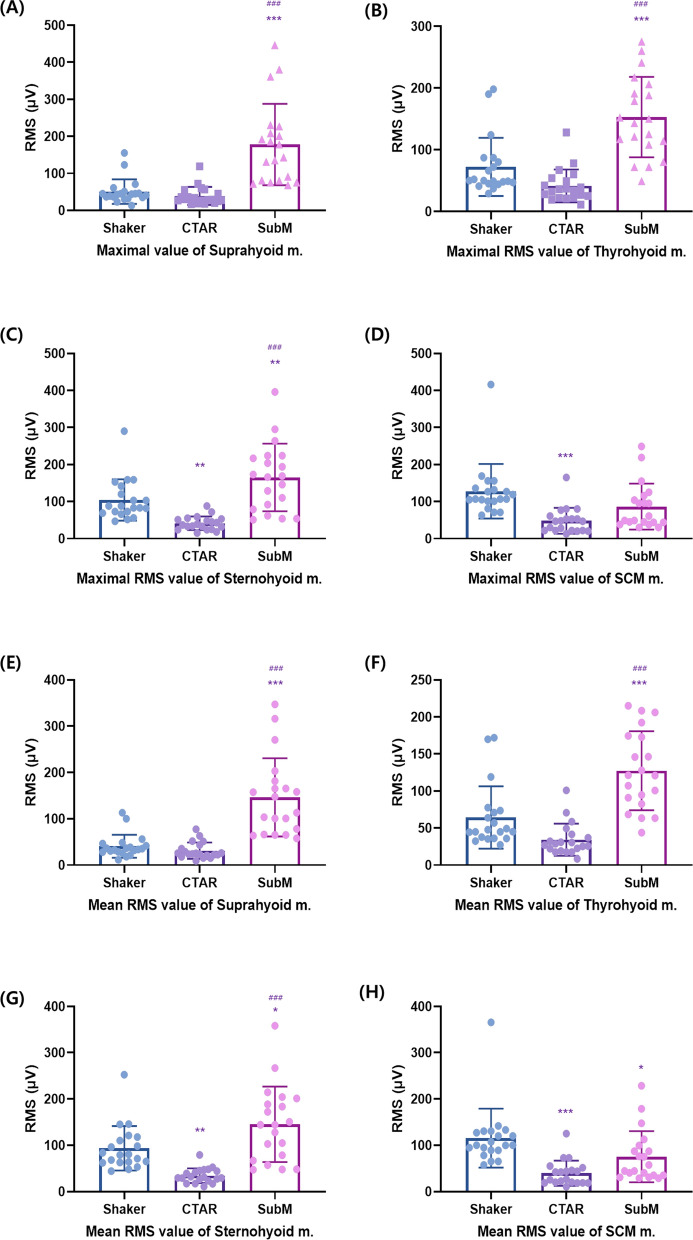
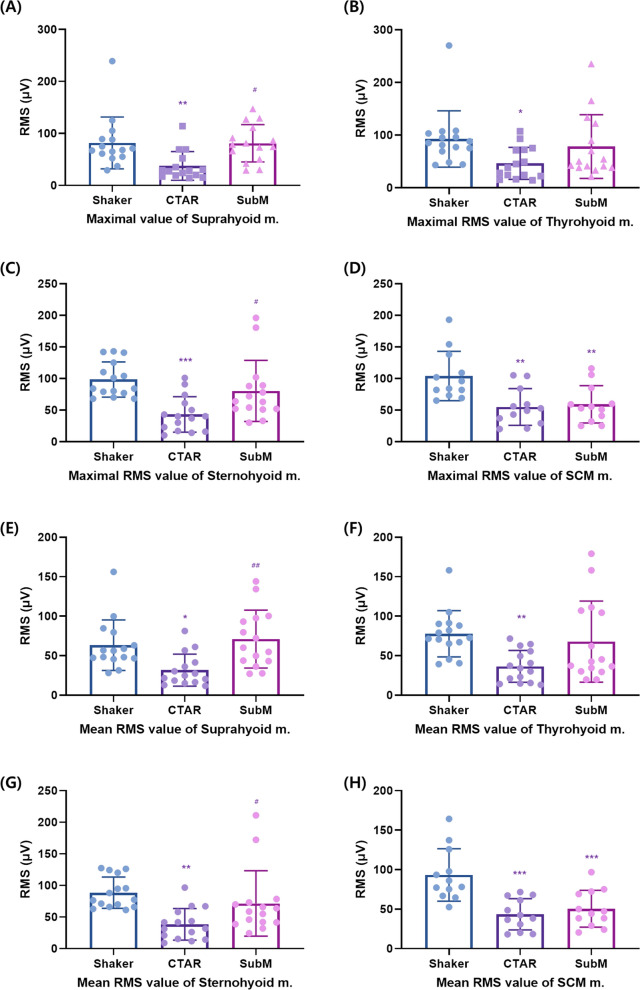
We developed a new exercise method called the submandibular push exercise that can strengthen the suprahyoid muscle by inducing only the motion of the hyoid bone without neck flexion. In this study, we aimed to investigate and compare the muscle activity of the suprahyoid and infrahyoid muscles in the course of performing three different swallowing exercises. Twenty healthy participants and fifteen patients with dysphagia were recruited. Each participant consecutively performed three exercises: Shaker, CTAR, and submandibular push exercises. To investigate muscle activation, surface electromyography was performed on the suprahyoid, infrahyoid, and SCM muscles, during the exercises. Root mean square (RMS) was measured. In healthy participants, the submandibular push exercise showed a significantly higher RMS value in the suprahyoid and infrahyoid muscles than the Shaker and CTAR exercises using repeated ANOVA with Tukey's post hoc test (p < 0.05). In patients with dysphagia, the submandibular push and Shaker exercises showed significantly higher RMS value in the suprahyoid and infrahyoid muscles than the CTAR exercise. However, no significant difference was found between the submandibular push and Shaker exercises. In both healthy and patients with dysphagia, the mean RMS values of the SCM muscles during the submandibular push exercise were significantly lower than those during the Shaker exercise using repeated ANOVA with Tukey's post hoc test (p < 0.05). In conclusion, considering the relatively superior selectiveness in suprahyoid and infrahyoid muscle contraction, the submandibular push exercise using visual feedback from pressure sensor could be an efficient supplementary exercise to the conventional swallowing muscle exercises. However, further studies may be necessary to confirm the improvement in swallowing difficulty.
Conflict of interest statement
The authors declare no competing interests.
Figures
References
-
- Park D, et al. Normal contractile algorithm of swallowing related muscles revealed by needle EMG and its comparison to videofluoroscopic swallowing study and high resolution manometry studies: a preliminary study. J. Electromyogr. Kinesiol. 2017;36:81–89. doi: 10.1016/j.jelekin.2017.07.007. - DOI - PubMed
MeSH terms
LinkOut - more resources
Full Text Sources
