


Adapting Neurosurgery Practice During the COVID-19 Pandemic in the Indian Subcontinent
- PMID: 32679362
- PMCID: PMC7361045
- DOI: 10.1016/j.wneu.2020.07.038
Adapting Neurosurgery Practice During the COVID-19 Pandemic in the Indian Subcontinent
Abstract
Background: The coronavirus 2019 (COVID-19) pandemic has changed the practice of neurosurgery. Significant resources have been dedicated to the disease. The pandemic in the Indian subcontinent, compared with the rest of the world, is relatively delayed. The neurosurgical practice cannot remain unaffected by hugely disruptive measures such as a lockdown. The inevitable increase in COVID infections with the gradual relaxation of lockdown continues to pose a risk for health care providers. Therefore, it is imperative to evaluate whether the pandemic has had a discernible effect on health care providers, especially in terms of practice modifications in private establishments and publicly funded hospitals, the emotional impact on the surgeon, and the influence of social media on the psyche of the surgeon.
Methods: An online questionnaire-based survey was prepared, with questions related to the COVID-specific themes of precautions taken in outpatient services and operating theaters, the influence of social media, the economic loss incurred, and the perceptible impact of telemedicine and webinars. The links to the survey were mailed to neurosurgeons in private and public practice countrywide. The responses were anonymized to ensure free and unbiased answers to the survey questions.
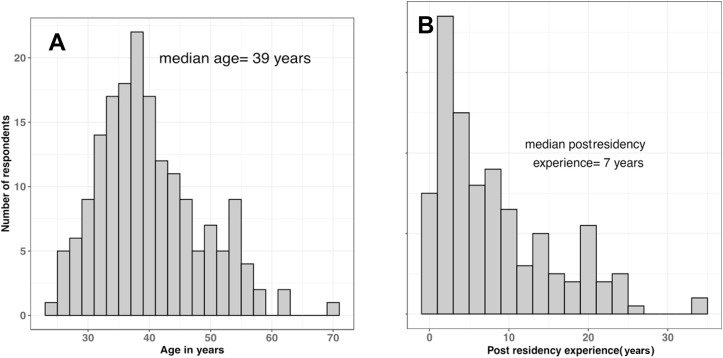
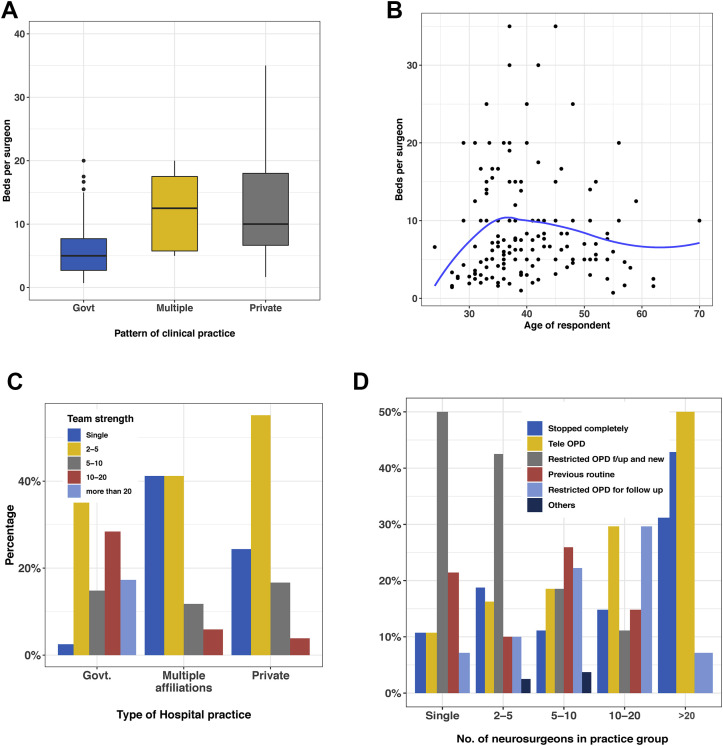
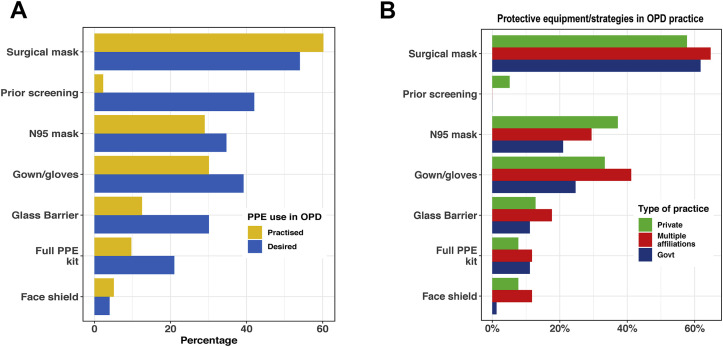
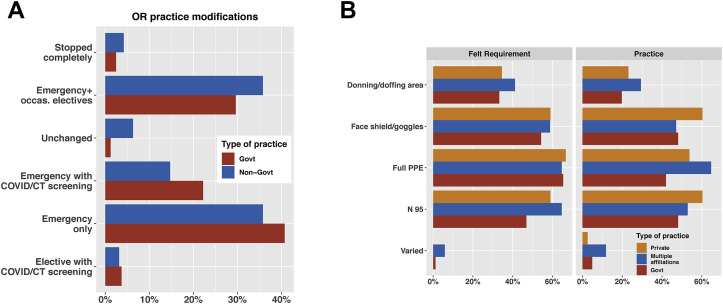
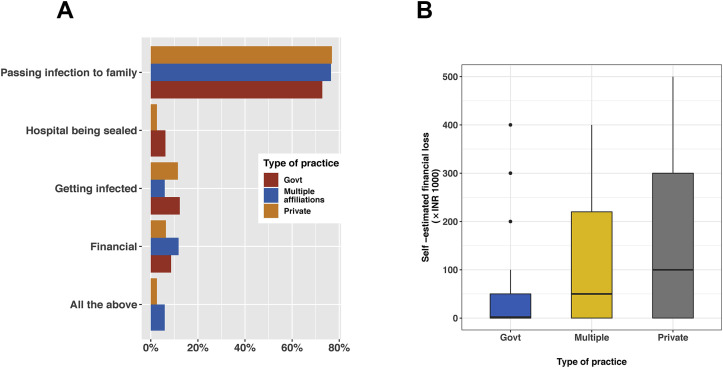
Results: A total of 176 responses were received from across the Indian subcontinent. The median age of respondents was 39 years (range, 32-70 years) and the postresidency experience was 7 years (range, 0-34 years). Respondents were an equitable mix of public and private practitioners. Of respondents, 46% were practicing restricted outpatient services, more in public institutions (P = 0.22) which also had a higher incidence of tele-outpatient services (26% vs. 17%). Wearing surgical masks, N95 masks, and gloves were the most commonly practiced precautionary measures in outpatient services (>60%). Although private practitioners were continuing elective cases (40%), public institutes were more cautious, with only emergency patients being operated on (29%). The greatest fear among all practitioners was passing the infection to their family (75%). Social media were helpful for brainstorming queries and updating practice modifications, but some surgeons admitted to receiving threats on social media platforms (37.5%). Depression and economic losses were palpable for approximately 30% neurosurgeons.
Conclusions: The survey highlights the perception of neurosurgeons toward the pandemic and the difference in public-private practice. Suspension of elective procedures, severe curtailment of regular outpatient appointments, drastic modifications of the normal outpatient department/operating room practices, and apprehensions related to inadequacy of safety provided by personal protective equipment use and financial losses of private establishments were some of the visible themes in our survey results. Although telemedicine has not been as widely adopted as expected, online education has been favorably received.
Keywords: COVID-19; Coronavirus; Neurosurgery; Social media.
Copyright © 2020 Elsevier Inc. All rights reserved.
Figures
References
MeSH terms
LinkOut - more resources
Full Text Sources
Medical
