Review
. 2020 Jul 15;5(3):34.
doi: 10.3390/biomimetics5030034.

Biomimetic Aspects of Restorative Dentistry Biomaterials

Affiliations
Review

Biomimetic Aspects of Restorative Dentistry Biomaterials

Muhammad Sohail Zafar et al. Biomimetics (Basel). .

Abstract

Biomimetic has emerged as a multi-disciplinary science in several biomedical subjects in recent decades, including biomaterials and dentistry. In restorative dentistry, biomimetic approaches have been applied for a range of applications, such as restoring tooth defects using bioinspired peptides to achieve remineralization, bioactive and biomimetic biomaterials, and tissue engineering for regeneration. Advancements in the modern adhesive restorative materials, understanding of biomaterial-tissue interaction at the nano and microscale further enhanced the restorative materials' properties (such as color, morphology, and strength) to mimic natural teeth. In addition, the tissue-engineering approaches resulted in regeneration of lost or damaged dental tissues mimicking their natural counterpart. The aim of the present article is to review various biomimetic approaches used to replace lost or damaged dental tissues using restorative biomaterials and tissue-engineering techniques. In addition, tooth structure, and various biomimetic properties of dental restorative materials and tissue-engineering scaffold materials, are discussed.

Keywords: dental biomaterials; endodontics; regenerative medicine; restorative dentistry; tissue engineering.


Conflict of interest statement

The authors declare no conflict of interest.

Figures
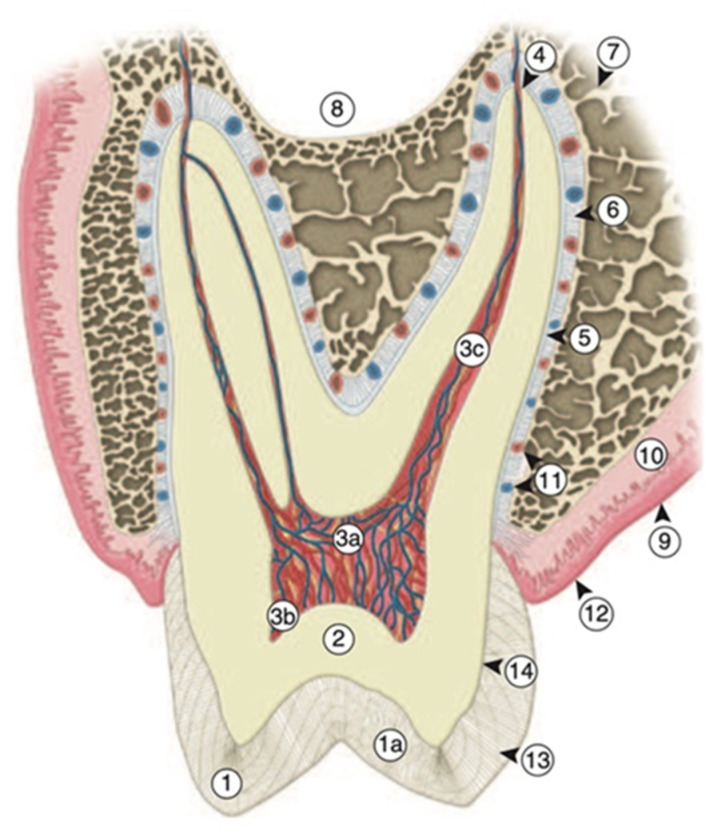
Figure 1
Figure 1
A cross-section of a tooth showing structural features of natural dental tissues; (1) Enamel; (1a), gnarled enamel; (2) dentin; (3a) pulp chamber; (3b) pulp horn; (3c) pulp canal; (4) apical foramen; (5) cementum; (6) periodontal ligament; (7) alveolar bone; (8) maxillary sinus; (9) mucosa; (10) submucosa; (11) blood vessels; (12) gingiva; (13) lines of Retzius; (14) DEJ. (Reproduced from [22] with permission from the publisher).
Figure 2
Figure 2
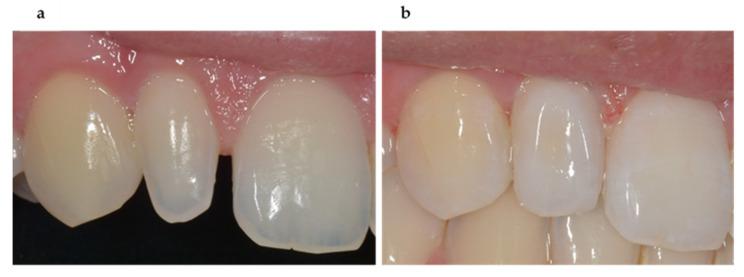
Restoration of peg-shaped lateral incisor using the direct restorative composites; (a), pre-operative image of lateral incisor showing peg shape (b), post-operative image showing the restoration of the defect matching morphology and color similar to the adjacent natural teeth.
Figure 3
Figure 3
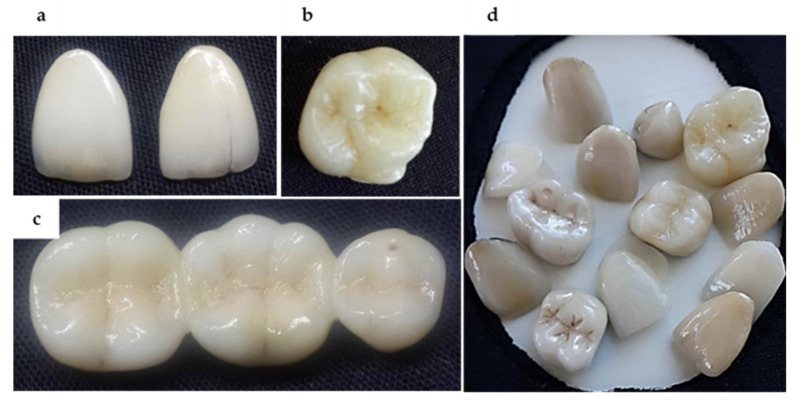
The indirect porcelain restorations demonstrating excellent esthetic properties; (a), anterior crown (b), posterior crown (c), bridge and (d), multiple indirect restorations showing variations in color, translucency and stains to match patients’ natural teeth.
Figure 4
Figure 4
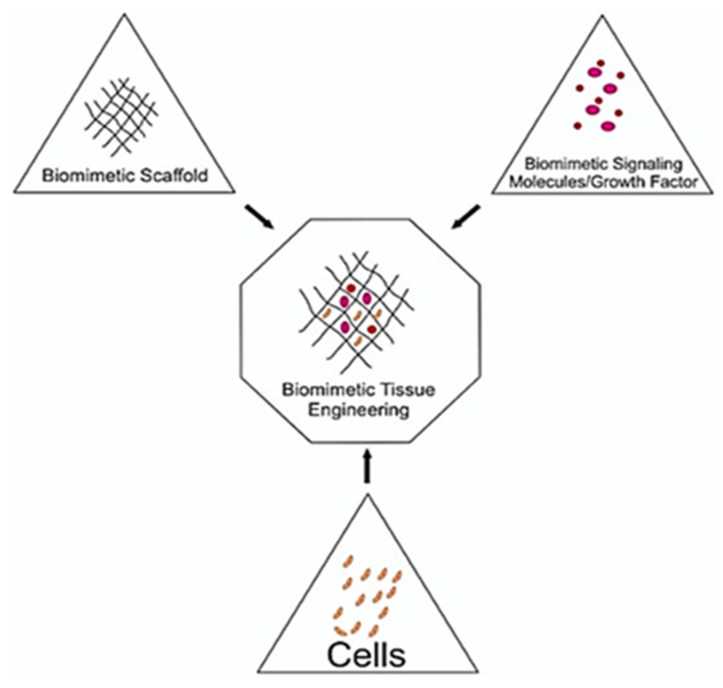
Fundamental components for biomimetic tissue engineering including biomimetic scaffold, signaling molecules and cells.
Figure 5
Figure 5
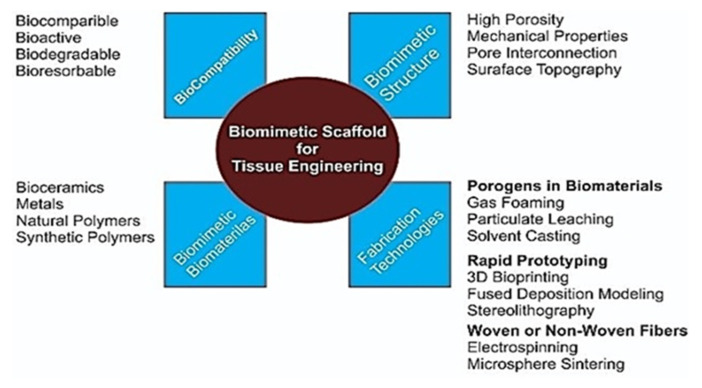
Key properties desired for a biomimetic scaffold for tissue engineering. (Reproduced from [193] with permission from the publisher).
Figure 6
Figure 6
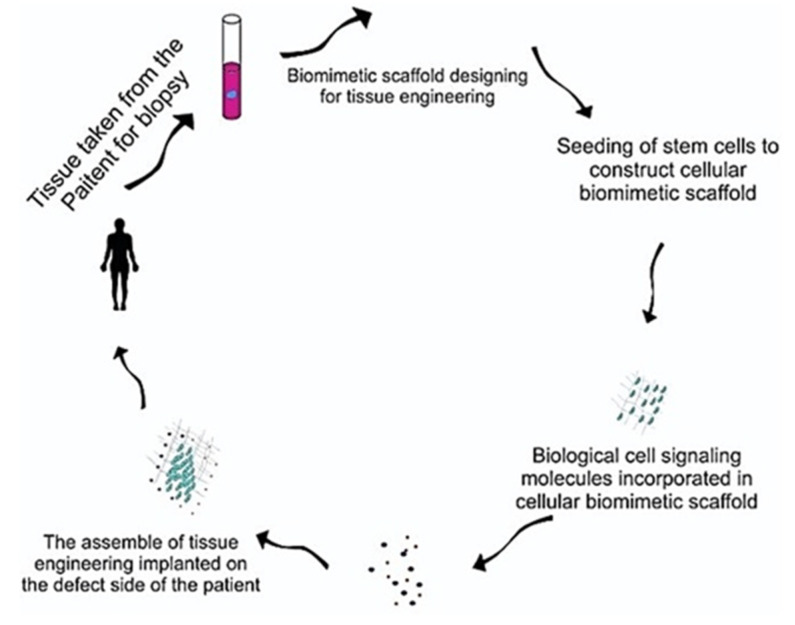
Diagrammatic representation of basic components and steps for the biomimetic tissue-engineering concept for dental tissue regeneration. (Reproduced from [416] with permission from the publisher).

References

    1. Harkness J.M. An idea man (the life of Otto Herbert Schmitt) IEEE Eng. Med. Biol. Mag. 2004;23:20–41. doi: 10.1109/MEMB.2004.1378631. - DOI - PubMed
    1. Bhushan B. Biomimetics. Philos. Trans. R. Soc. Math. Phys. Eng. Sci. 2009;367:1443–1444. doi: 10.1098/rsta.2009.0026. - DOI - PubMed
    1. Kottoor J. Biomimetic endodontics: Barriers and strategies. Health Sci. 2013;2:7–12.
    1. Sharma V., Srinivasan A., Nikolajeff F., Kumar S. Biomineralization process in hard tissues: The interaction complexity within protein and inorganic counterparts. Acta Biomater. 2020 doi: 10.1016/j.actbio.2020.04.049. - DOI - PubMed
    1. Cleymand F., Rousseau M., Mano J.F. Introducing biomimetic approaches to materials development and product design for engineering students. Bioinspired Biomim. Nanobiomaterials. 2015;4:207–212. doi: 10.1680/jbibn.15.00004. - DOI

LinkOut - more resources