


The application of histone deacetylases inhibitors in glioblastoma
- PMID: 32682428
- PMCID: PMC7368699
- DOI: 10.1186/s13046-020-01643-6
The application of histone deacetylases inhibitors in glioblastoma
Abstract
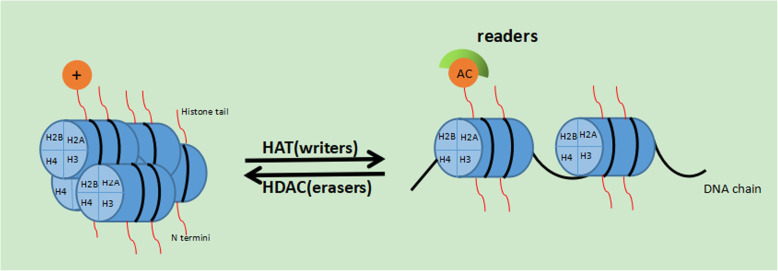
The epigenetic abnormality is generally accepted as the key to cancer initiation. Epigenetics that ensure the somatic inheritance of differentiated state is defined as a crucial factor influencing malignant phenotype without altering genotype. Histone modification is one such alteration playing an essential role in tumor formation, progression, and resistance to treatment. Notably, changes in histone acetylation have been strongly linked to gene expression, cell cycle, and carcinogenesis. The balance of two types of enzyme, histone acetyltransferases (HATs) and histone deacetylases (HDACs), determines the stage of histone acetylation and then the architecture of chromatin. Changes in chromatin structure result in transcriptional dysregulation of genes that are involved in cell-cycle progression, differentiation, apoptosis, and so on. Recently, HDAC inhibitors (HDACis) are identified as novel agents to keep this balance, leading to numerous researches on it for more effective strategies against cancers, including glioblastoma (GBM). This review elaborated influences on gene expression and tumorigenesis by acetylation and the antitumor mechanism of HDACis. Besdes, we outlined the preclinical and clinical advancement of HDACis in GBM as monotherapies and combination therapies.
Keywords: epigenetic; gene expression; glioblastoma; histone acetylation, histone deacetylation; histone deacetylases inhibitors.
Conflict of interest statement
The authors declare that they have no competing interests
Figures
References
-
- Richmond TJ, Davey CA. The structure of DNA in the nucleosome core. Nature. 2003;423:145–150. - PubMed
-
- Luger K. Structure and dynamic behavior of nucleosomes. Curr Opin Genet Dev. 2003;13:127–135. - PubMed
-
- Luger K, Richmond TJ. The histone tails of the nucleosome. Curr Opin Genet Dev. 1998;8:140–146. - PubMed
-
- Strahl BD, Allis CD. The language of covalent histone modifications. Nature. 2000;403:41–45. - PubMed
Publication types
MeSH terms
Substances
LinkOut - more resources
Full Text Sources
Other Literature Sources
