


Biowarfare, bioterrorism and biocrime: A historical overview on microbial harmful applications
- PMID: 32683271
- PMCID: PMC7305902
- DOI: 10.1016/j.forsciint.2020.110366
Biowarfare, bioterrorism and biocrime: A historical overview on microbial harmful applications
Abstract
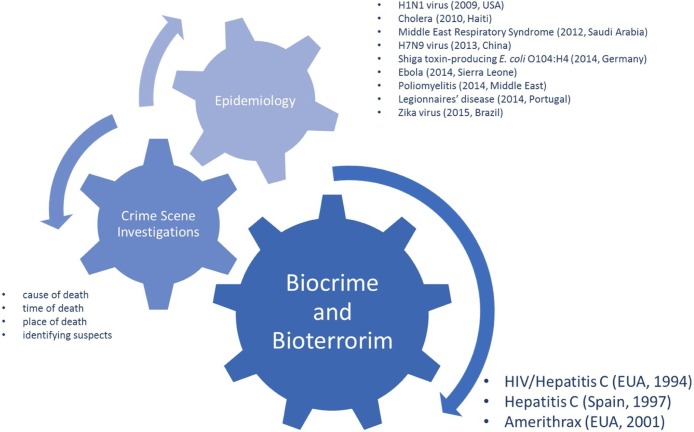
Microbial Forensics is a field that continues to grow in interest and application among the forensic community. This review, divided into two sections, covers several topics associated with this new field. The first section presents a historic overview concerning the use of microorganisms (or its product, i.e. toxins) as harmful biological agents in the context of biological warfare (biowarfare), bioterrorism, and biocrime. Each case is illustrated with the examination of case reports that span from prehistory to the present day. The second part of the manuscript is devoted to the role of MF and highlights the necessity to prepare for the pressing threat of the harmful use of biological agents as weapons. Preventative actions, developments within the field to ensure a timely and effective response and are discussed herein.
Keywords: Biocrime; Bioterrorism; Biowarfare; Genetics; Microbial forensics.
Copyright © 2020 Elsevier B.V. All rights reserved.
Figures
References
-
- Amorim A. Introduction to the special issue on forensic genetics: non-human DNA (Guest editor: Antonio Amorim) Open Forensic Sci. J. 2010:3.
-
- Oliveira M., Arenas M., Pinto N., António A. Genética forense no humana. In: Caballero Barrio., editor. Genética Forense: Del laboratorio a los Tribunales, M.C. Crespillo Márquez and P. 2019. pp. 291–318. (Madrid, Ediciones Díaz de Santos)
-
- Budowle B., Schutzer S.E., Einseln A., Kelley L.C., Walsh A.C., Smith J.A., Marrone B.L., Robertson J., Campos J. American Association for the Advancement of Science; 2003. Building Microbial Forensics as a Response to Bioterrorism. - PubMed
Publication types
MeSH terms
Substances
LinkOut - more resources
Full Text Sources
Medical
Molecular Biology Databases
