


Biomolecular Condensates in the Nucleus
- PMID: 32684431
- PMCID: PMC7572565
- DOI: 10.1016/j.tibs.2020.06.007
Biomolecular Condensates in the Nucleus
Abstract
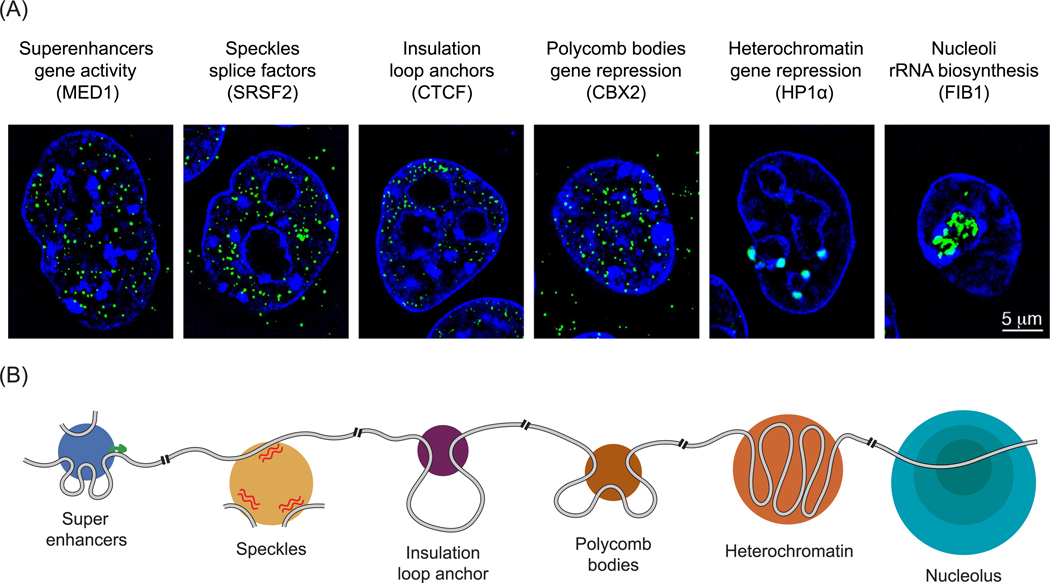
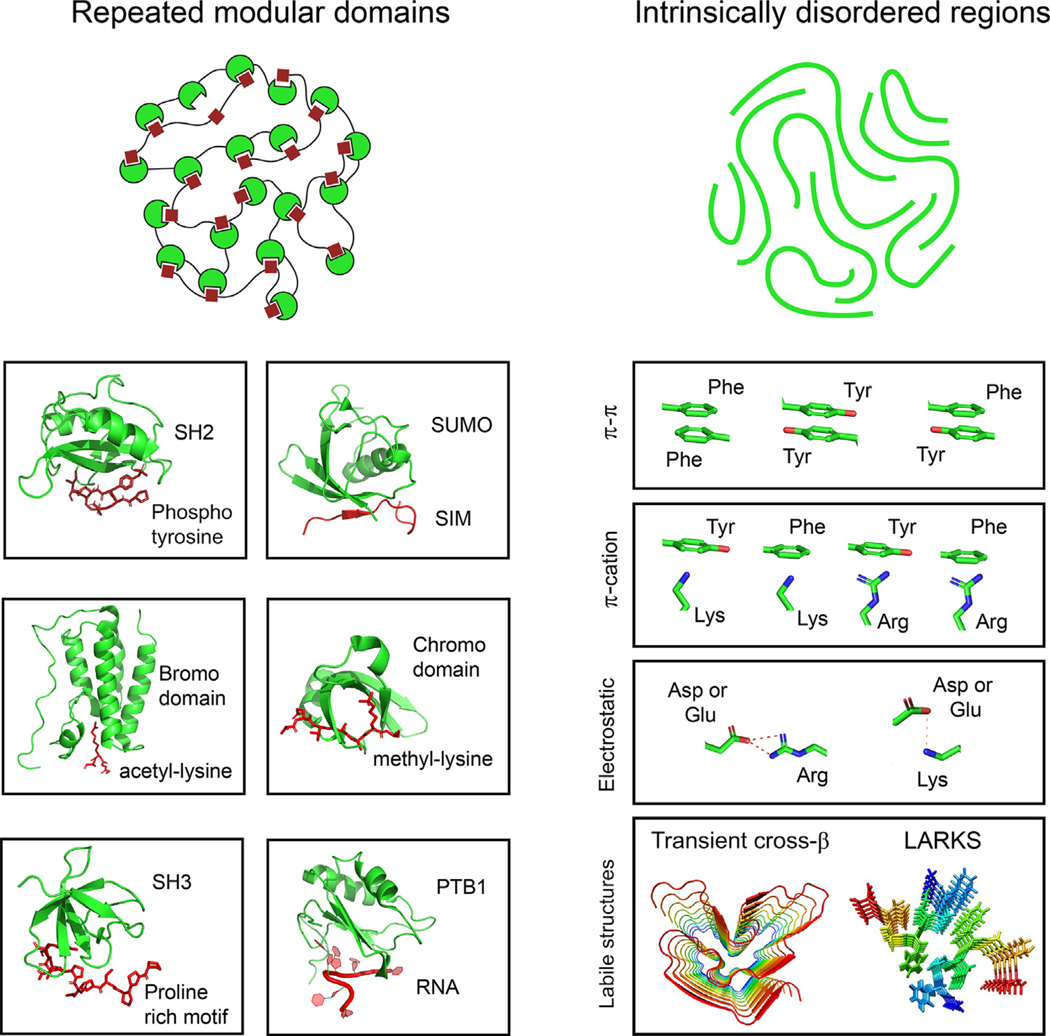
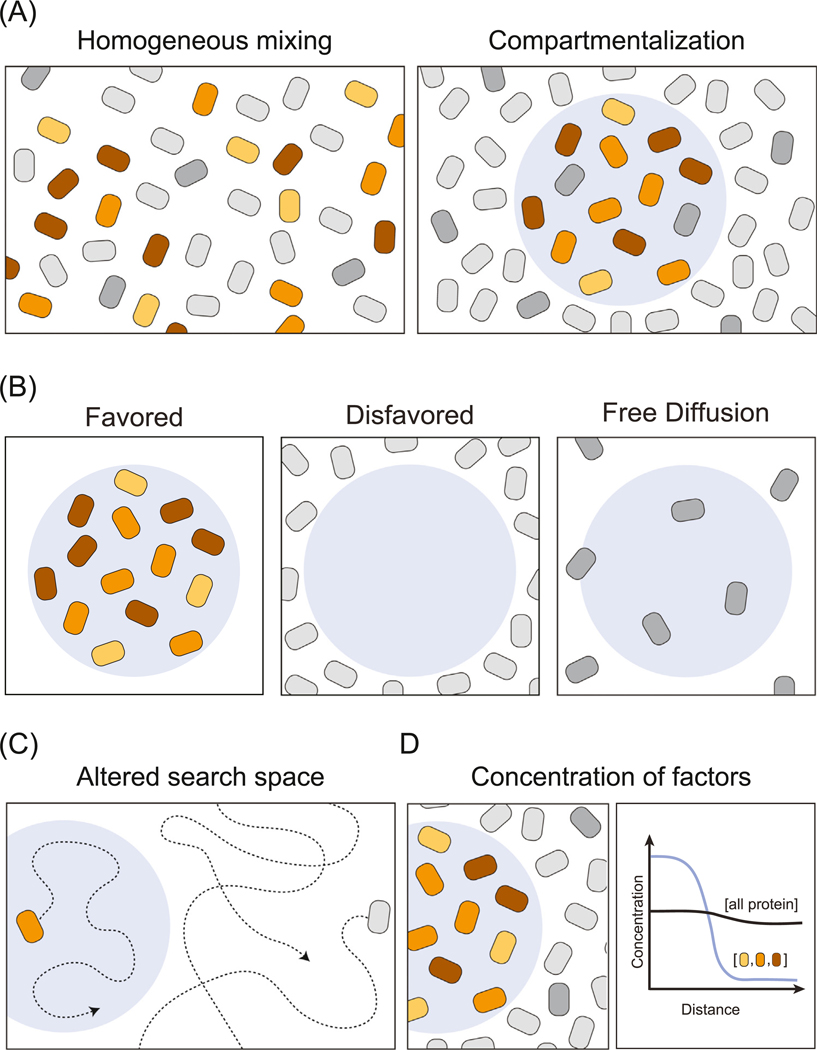
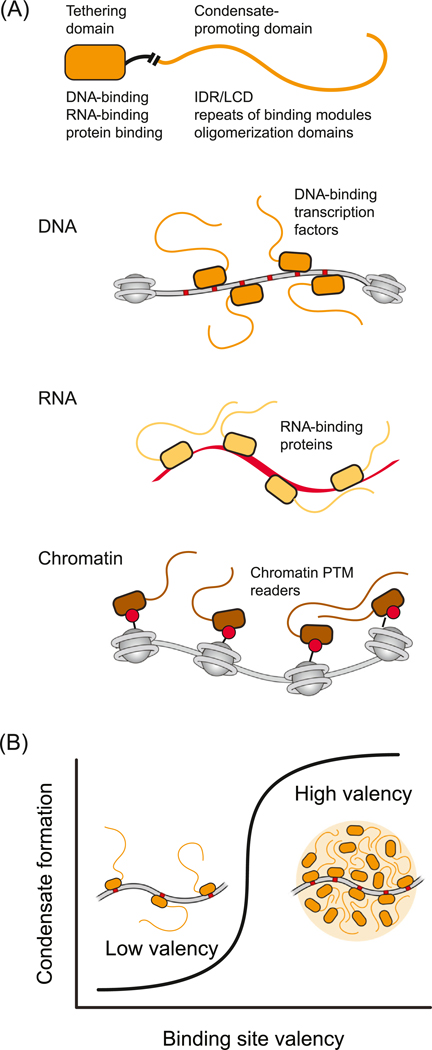
Nuclear processes such as DNA replication, transcription, and RNA processing each depend on the concerted action of many different protein and RNA molecules. How biomolecules with shared functions find their way to specific locations has been assumed to occur largely by diffusion-mediated collisions. Recent studies have shown that many nuclear processes occur within condensates that compartmentalize and concentrate the protein and RNA molecules required for each process, typically at specific genomic loci. These condensates have common features and emergent properties that provide the cell with regulatory capabilities beyond canonical molecular regulatory mechanisms. We describe here the shared features of nuclear condensates, the components that produce locus-specific condensates, elements of specificity, and the emerging understanding of mechanisms regulating these compartments.
Keywords: biomolecular condensates; chromatin regulation; condensate dysregulation; condensate regulation; gene regulation; nuclear organization.
Copyright © 2020 Elsevier Ltd. All rights reserved.
Figures
References
-
- Wagner R. (1835) Einige bemerkungen und fragen über das keimbläschen (vesicular germinativa). Müllers Archiv. Anat. Physiol. Wissenschaft. Med 373–377
-
- Montgomery TH (1898) Comparative cytological studies, with especial regard to the morphology of the nucleolus. J. Morphol 15, 265–582
-
- Cajal SR (1903) Un sencillo metodo de coloracion seletiva del reticulo protoplasmatico y sus efectos en los diversos organos nerviosos de vertebrados e invertebrados. Trab. Lab. Invest. Biol. Madrid 2, 129–221
-
- Shin Y and Brangwynne CP (2017) Liquid phase condensation in cell physiology and disease. Science 357, eaaf4382 - PubMed
Publication types
MeSH terms
Substances
Grants and funding
LinkOut - more resources
Full Text Sources
Other Literature Sources
