


Shared mechanisms for cognitive impairment and physical frailty: A model for complex systems
- PMID: 32685657
- PMCID: PMC7362211
- DOI: 10.1002/trc2.12027
Shared mechanisms for cognitive impairment and physical frailty: A model for complex systems
Abstract
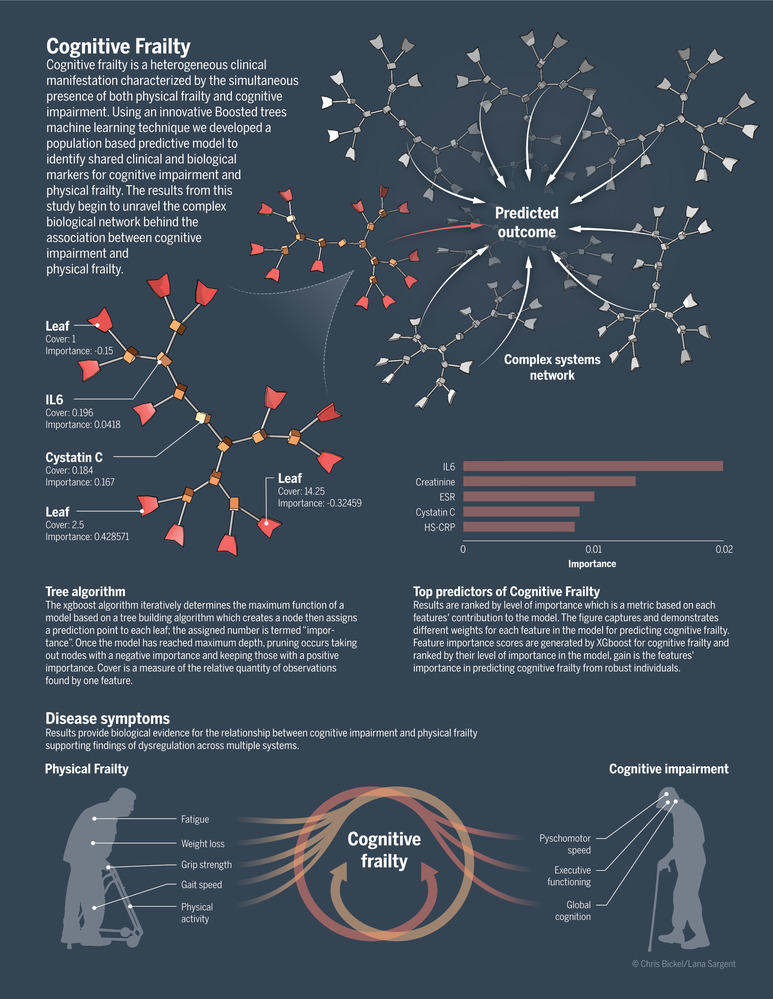
Introduction: We describe findings from a large study that provide empirical support for the emerging construct of cognitive frailty and put forth a theoretical framework that may advance the future study of complex aging conditions. While cognitive impairment and physical frailty have long been studied as separate constructs, recent studies suggest they share common etiologies. We aimed to create a population predictive model to gain an understanding of the underlying biological mechanisms for the relationship between physical frailty and cognitive impairment.
Methods: Data were obtained from the longitudinal "Invecchaiare in Chianti" (Aging in Chianti, InCHIANTI Study) with a representative sample (n = 1453) of older adults from two small towns in Tuscany, Italy. Our previous work informed the candidate 132 single nucleotide polymorphisms (SNPs) and 155 protein biomarkers we tested in association with clinical outcomes using a tree boosting, machine learning (ML) technique for supervised learning analysis.
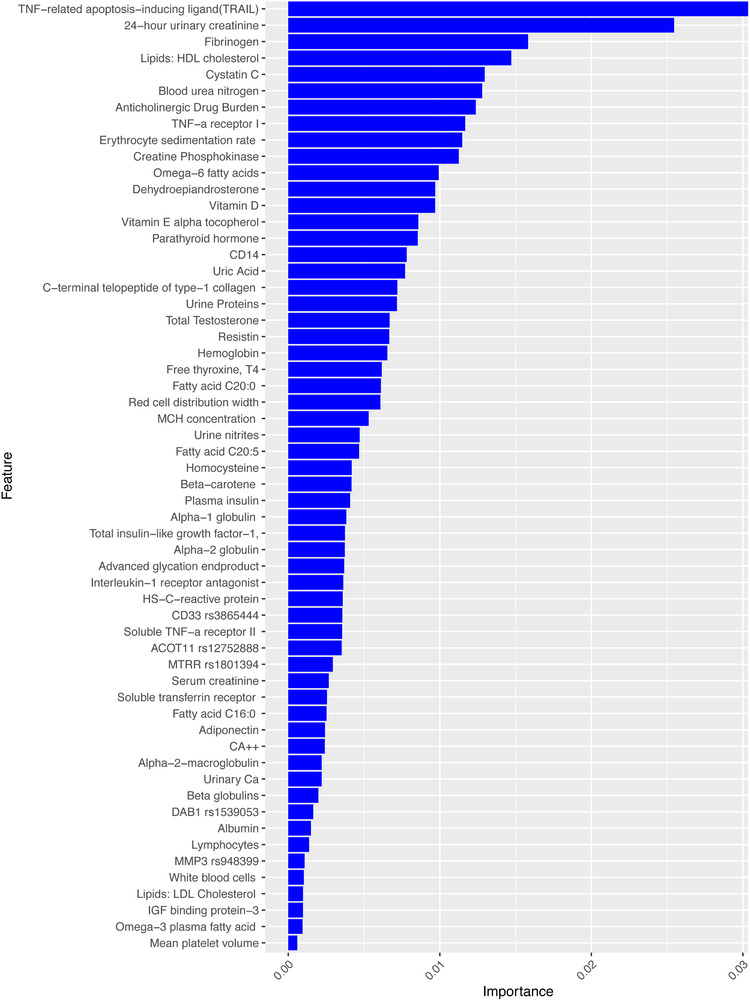
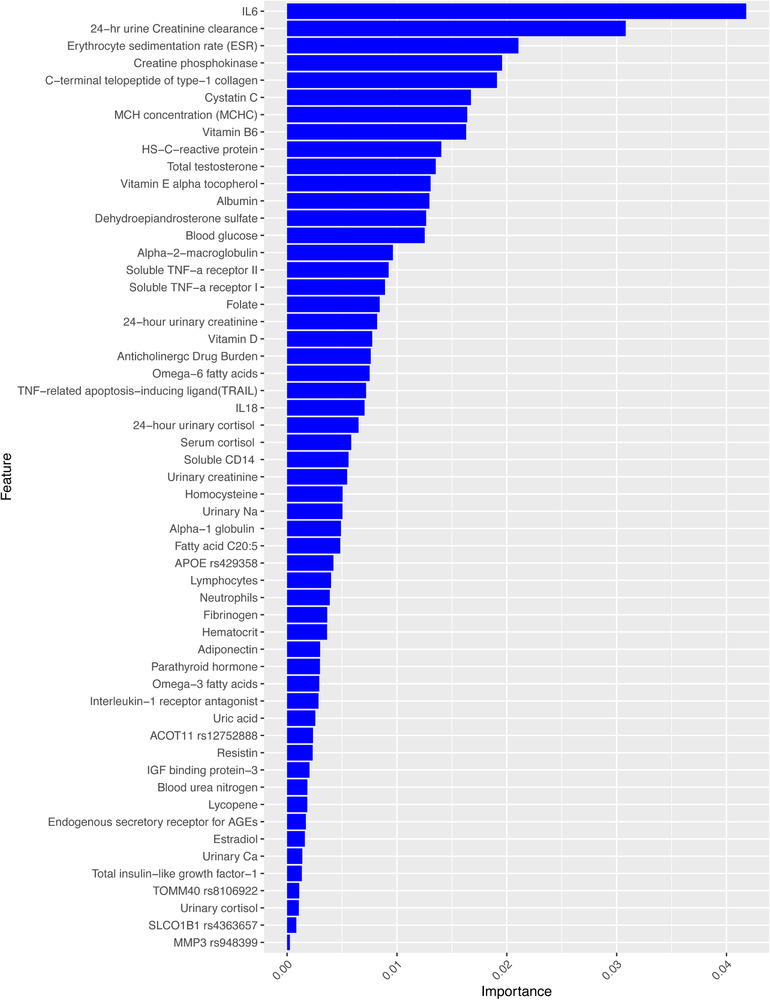
Results: We developed two highly accurate predictive models, with a Model I area under the curve (AUC) of 0.88 (95% confidence interval [CI] 0.83-0.90) and a Model II AUC of 0.86 (95% CI 0.80-0.90). These models indicate cognitive frailty is driven by dysregulation across multiple cellular processes including genetic alterations, nutrient and lipid metabolism, and elevated levels of circulating pro-inflammatory proteins.
Discussion: While our results establish a foundation for understanding the underlying biological mechanisms for the relationship between cognitive decline and physical frailty, further examination of the molecular pathways associated with our predictive biomarkers is warranted. Our framework is in alignment with other proposed biological underpinnings of Alzheimer's disease such as genetic alterations, immune system dysfunction, and neuroinflammation.
Keywords: bioinformatics; cognitive frailty; cognitive impairment; frailty; machine learning.
© 2020 The Authors. Alzheimer's & Dementia: Translational Research & Clinical Interventions published by Wiley Periodicals, Inc. on behalf of Alzheimer's Association.
Conflict of interest statement
The authors have no conflicts of interest to disclose.
Figures
References
-
- Kelaiditi E, Cesari M, Canevelli M, et al. Cognitive frailty: rational and definition from an (I.A.N.A./I.A.G.G.) international consensus group. J Nutr Health Aging. 2013;17(9):726‐734. - PubMed
-
- Fried LP, Tangen CM, Walston J, et al. Frailty in older adults: evidence for a phenotype. J Gerontol A Biol Sci Med Sci. 2001;56(3):M146‐56. - PubMed
-
- Paganini‐Hill A, Clark LJ, Henderson VW, Birge SJ. Clock drawing: analysis in a retirement community. J Am Geriatr Soc. 2001;49(7):941‐947. - PubMed
-
- Han ES, Lee Y, Kim J. Association of cognitive impairment with frailty in community‐dwelling older adults. Int Psychogeriatr. 2014;26(1):155‐163. - PubMed
LinkOut - more resources
Full Text Sources