


Strengthening national nutrition research: rationale and options for a new coordinated federal research effort and authority
- PMID: 32687145
- PMCID: PMC7454258
- DOI: 10.1093/ajcn/nqaa179
Strengthening national nutrition research: rationale and options for a new coordinated federal research effort and authority
Abstract
Background: The US faces remarkable food and nutrition challenges. A new federal effort to strengthen and coordinate nutrition research could rapidly generate the evidence base needed to address these multiple national challenges. However, the relevant characteristics of such an effort have been uncertain.
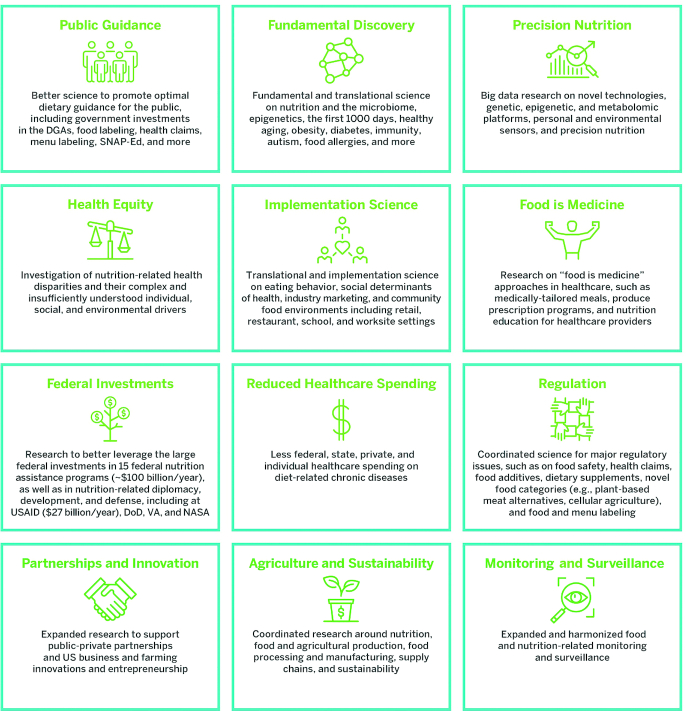
Objectives: Our aim was to provide an objective, informative summary of 1) the mounting diet-related health burdens facing our nation and corresponding economic, health equity, national security, and sustainability implications; 2) the current federal nutrition research landscape and existing mechanisms for its coordination; 3) the opportunities for and potential impact of new fundamental, clinical, public health, food and agricultural, and translational scientific discoveries; and 4) the various options for further strengthening and coordinating federal nutrition research, including corresponding advantages, disadvantages, and potential executive and legislative considerations.
Methods: We reviewed government and other published documents on federal nutrition research; held various discussions with expert groups, advocacy organizations, and scientific societies; and held in-person or phone meetings with >50 federal staff in executive and legislative roles, as well as with a variety of other stakeholders in academic, industry, and nongovernment organizations.
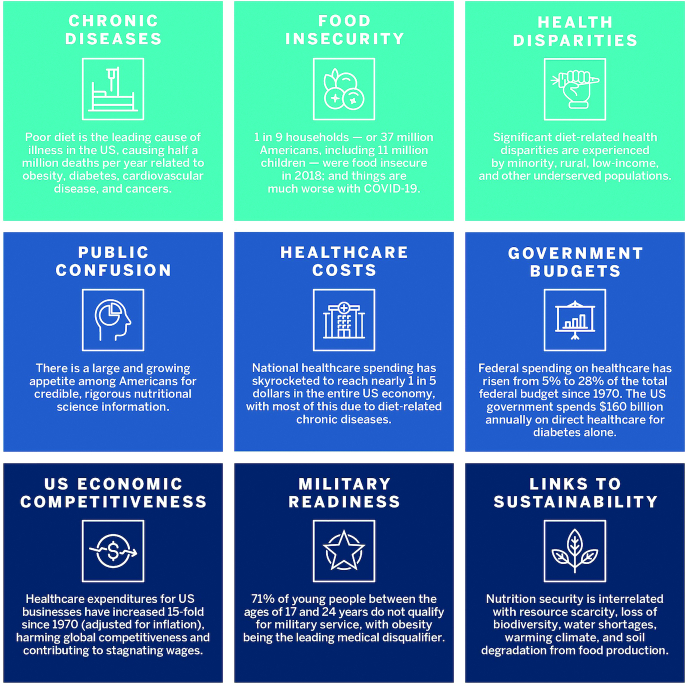
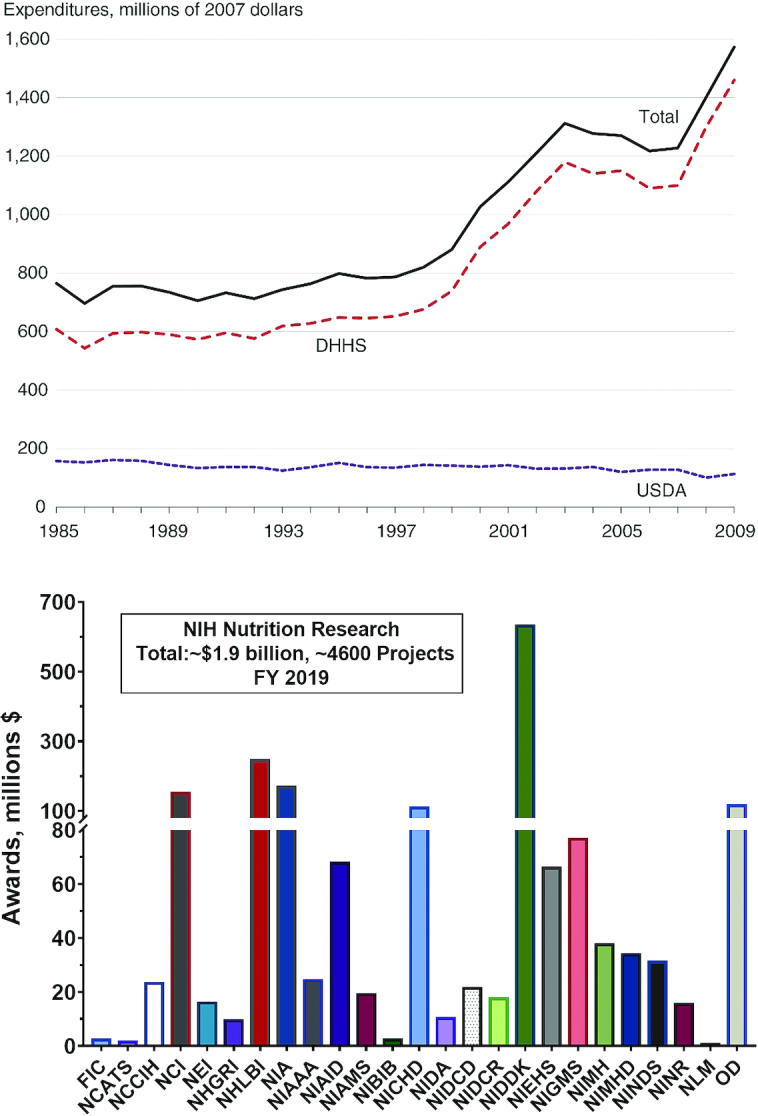
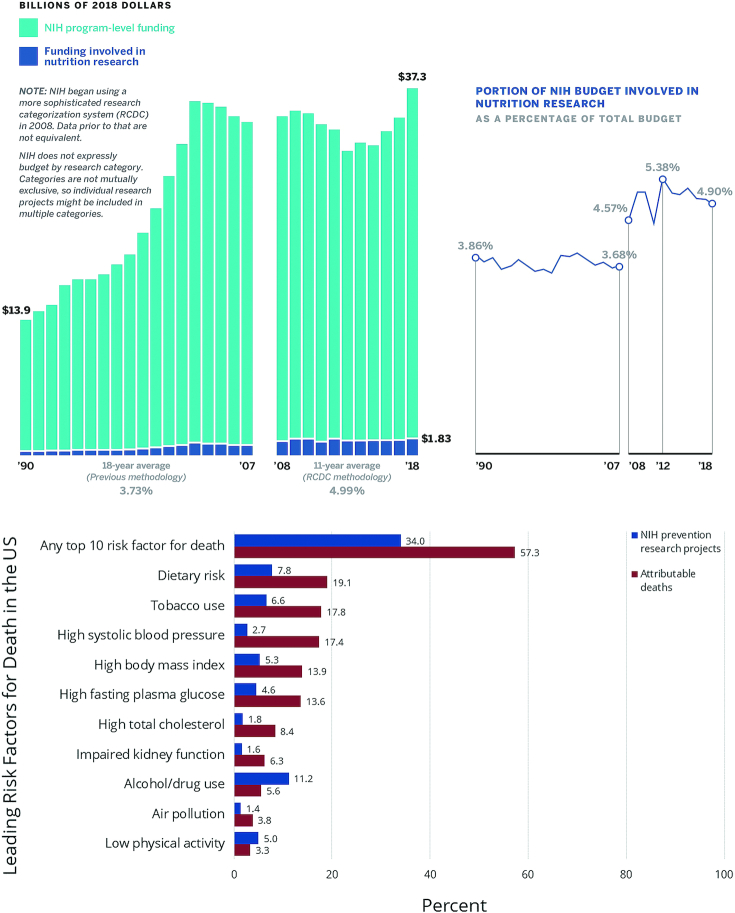
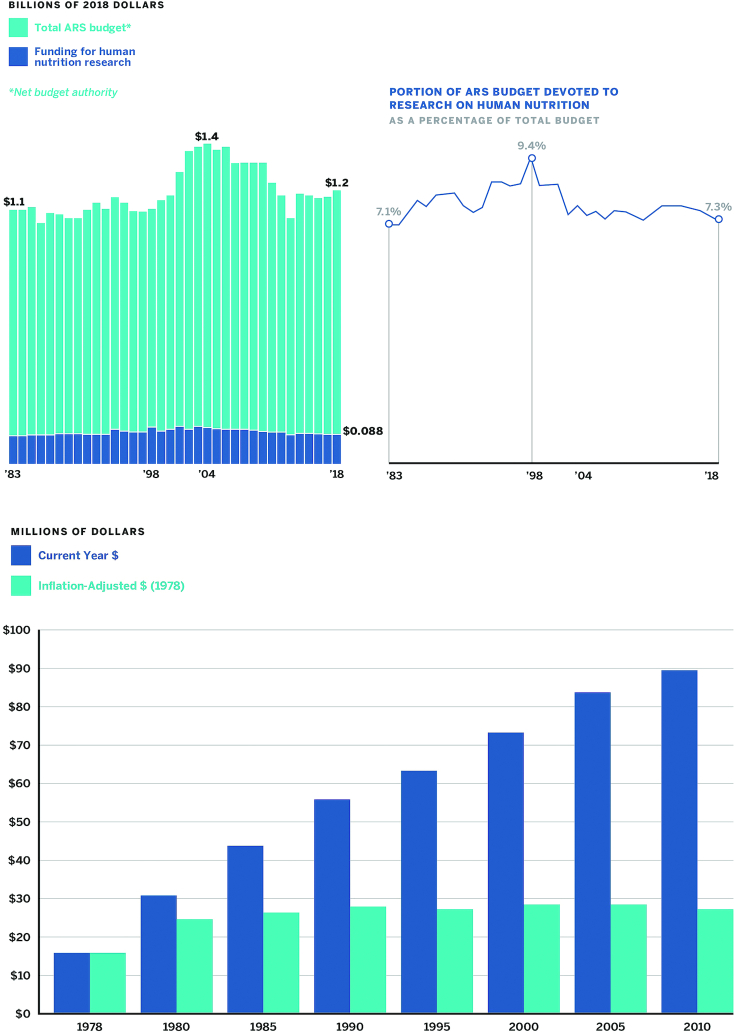
Results: Stark national nutrition challenges were identified. More Americans are sick than are healthy, largely from rising diet-related illnesses. These conditions create tremendous strains on productivity, health care costs, health disparities, government budgets, US economic competitiveness, and military readiness. The coronavirus disease 2019 (COVID-19) outbreak has further laid bare these strains, including food insecurity, major diet-related comorbidities for poor outcomes from COVID-19 such as diabetes, hypertension, and obesity, and insufficient surveillance on and coordination of our food system. More than 10 federal departments and agencies currently invest in critical nutrition research, yet with relatively flat investments over several decades. Coordination also remains suboptimal, documented by multiple governmental reports over 50 years. Greater harmonization and expansion of federal investment in nutrition science, not a silo-ing or rearrangement of existing investments, has tremendous potential to generate new discoveries to improve and sustain the health of all Americans. Two identified key strategies to achieve this were as follows: 1) a new authority for robust cross-governmental coordination of nutrition research and other nutrition-related policy and 2) strengthened authority, investment, and coordination for nutrition research within the NIH. These strategies were found to be complementary, together catalyzing important new science, partnerships, coordination, and returns on investment. Additional complementary actions to accelerate federal nutrition research were identified at the USDA.
Conclusions: The need and opportunities for strengthened federal nutrition research are clear, with specific identified options to help create the new leadership, strategic planning, coordination, and investment the nation requires to address the multiple nutrition-related challenges and grasp the opportunities before us.
Keywords: Dietary Guidelines for Americans; Dietary Reference Intakes; diet; federal nutrition research; nutrition; policy; prevention; research.
Copyright © The Author(s) on behalf of the American Society for Nutrition 2020.
Figures
References
-
- US Department of Health and Human Services; Centers for Disease Control and Prevention. Coronavirus disease 2019 (COVID-19). Situation summary. Updated March 18, 2020. [cited 2020 Mar 20] [Internet]. Available from: https://www.cdc.gov/coronavirus/2019-ncov/cases-updates/summary.html?CDC....
-
- Mozaffarian D, Glickman D, Meydani S. How your diet can help flatten the curve. CNN. Updated March 27, 2020. [cited 2020 Mar 28] [Internet]. Available from: https://www.cnn.com/2020/03/27/opinions/healthy-diet-immune-system-covid....
-
- Goger A. For millions of low-income seniors, coronavirus is a food-security issue. Posted March 16, 2020. [cited 2020 Mar 20] [Internet]. Available from: https://www.brookings.edu/blog/the-avenue/2020/03/16/for-millions-of-low....
-
- Brody JE. How poor diet contributes to coronavirus risk. The New York Times. Posted April 20, 2020. [cited 2020 Apr 22] [Internet]. Available from: https://www.nytimes.com/2020/04/20/well/eat/coronavirus-diet-metabolic-h....
Publication types
MeSH terms
LinkOut - more resources
Full Text Sources
Medical
