


Hemorrhagic stroke and anticoagulation in COVID-19
- PMID: 32689588
- PMCID: PMC7245254
- DOI: 10.1016/j.jstrokecerebrovasdis.2020.104984
Hemorrhagic stroke and anticoagulation in COVID-19
Abstract
Background and purpose: Patients with the Coronavirus Disease of 2019 (COVID-19) are at increased risk for thrombotic events and mortality. Various anticoagulation regimens are now being considered for these patients. Anticoagulation is known to increase the risk for adverse bleeding events, of which intracranial hemorrhage (ICH) is one of the most feared. We present a retrospective study of 33 patients positive for COVID-19 with neuroimaging-documented ICH and examine anticoagulation use in this population.
Methods: Patients over the age of 18 with confirmed COVID-19 and radiographic evidence of ICH were included in this study. Evidence of hemorrhage was confirmed and categorized by a fellowship trained neuroradiologist. Electronic health records were analyzed for patient information including demographic data, medical history, hospital course, laboratory values, and medications.
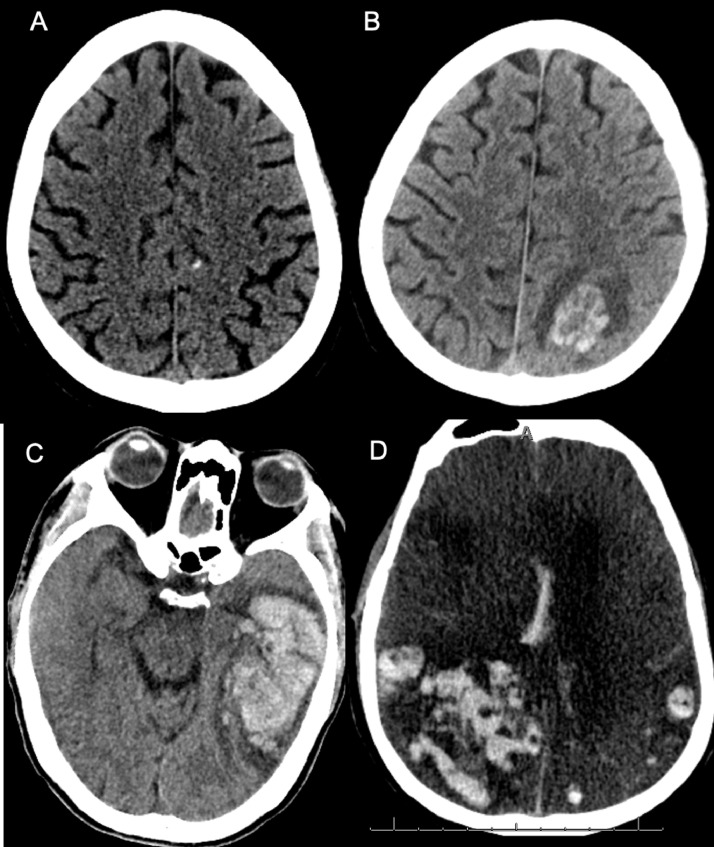
Results: We identified 33 COVID-19 positive patients with ICH, mean age 61.6 years (range 37-83 years), 21.2% of whom were female. Parenchymal hemorrhages with mass effect and herniation occurred in 5 (15.2%) patients, with a 100% mortality rate. Of the remaining 28 patients with ICH, 7 (25%) had punctate hemorrhages, 17 (60.7%) had small- moderate size hemorrhages, and 4 (14.3%) had a large single site of hemorrhage without evidence of herniation. Almost all patients received either therapeutic dose anticoagulation (in 22 [66.7%] patients) or prophylactic dose (in 3 [9.1] patients) prior to ICH discovery.
Conclusions: Anticoagulation therapy may be considered in patients with COVID-19 though the risk of ICH should be taken into account when developing a treatment regimen.
Keywords: Anticoagulation; COVID-19; Hemorrhagic stroke; Intracranial hemorrhage.
Copyright © 2020 Elsevier Inc. All rights reserved.
Conflict of interest statement
Declaration of Competing Interest R. Jain is a consultant for Cancer Panels Inc., receive royalties from Thieme Inc., and is on the advisory board for Nuevozen Inc. S. Galetta has served as a consultant to Biogen. The other authors report no conflicts.
Figures
References
-
- Purrucker J.C., Haas K., Rizos T. Early clinical and radiological course, management, and outcome of intracerebral hemorrhage related to new oral anticoagulants. JAMA Neurol. 2016;73:169–177. - PubMed
MeSH terms
Substances
LinkOut - more resources
Full Text Sources
Medical
