Utilization and Outcomes of Single and Dual Kidney Transplants from Older Deceased Donors in the United Kingdom
- PMID: 32690721
- PMCID: PMC7480543
- DOI: 10.2215/CJN.02060220
Utilization and Outcomes of Single and Dual Kidney Transplants from Older Deceased Donors in the United Kingdom
Abstract
Background and objectives: Kidneys from elderly deceased donors are often discarded after procurement if the expected outcomes from single kidney transplantation are considered unacceptable. An alternative is to consider them for dual kidney transplantation. We aimed to examine the utilization of kidneys from donors aged ≥60 years in the United Kingdom and compare clinical outcomes of dual versus single kidney transplant recipients.
Design, setting, participants, & measurements: Data from the United Kingdom Transplant Registry from 2005 to 2017 were analyzed. We examined utilization rates of kidneys retrieved from deceased donors aged ≥60 years, and 5-year patient and death-censored graft survival of recipients of dual and single kidney transplants. Secondary outcomes included eGFR. Multivariable analyses and propensity score analysis were used to correct for differences between the groups.
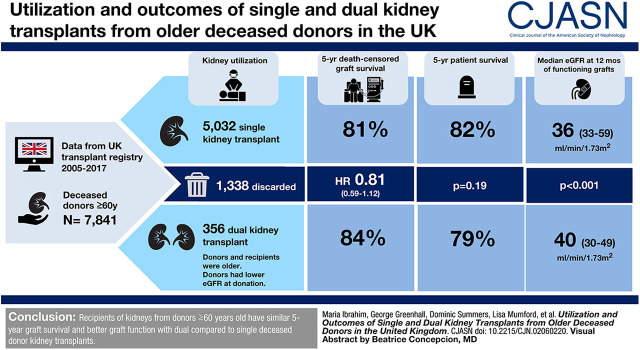
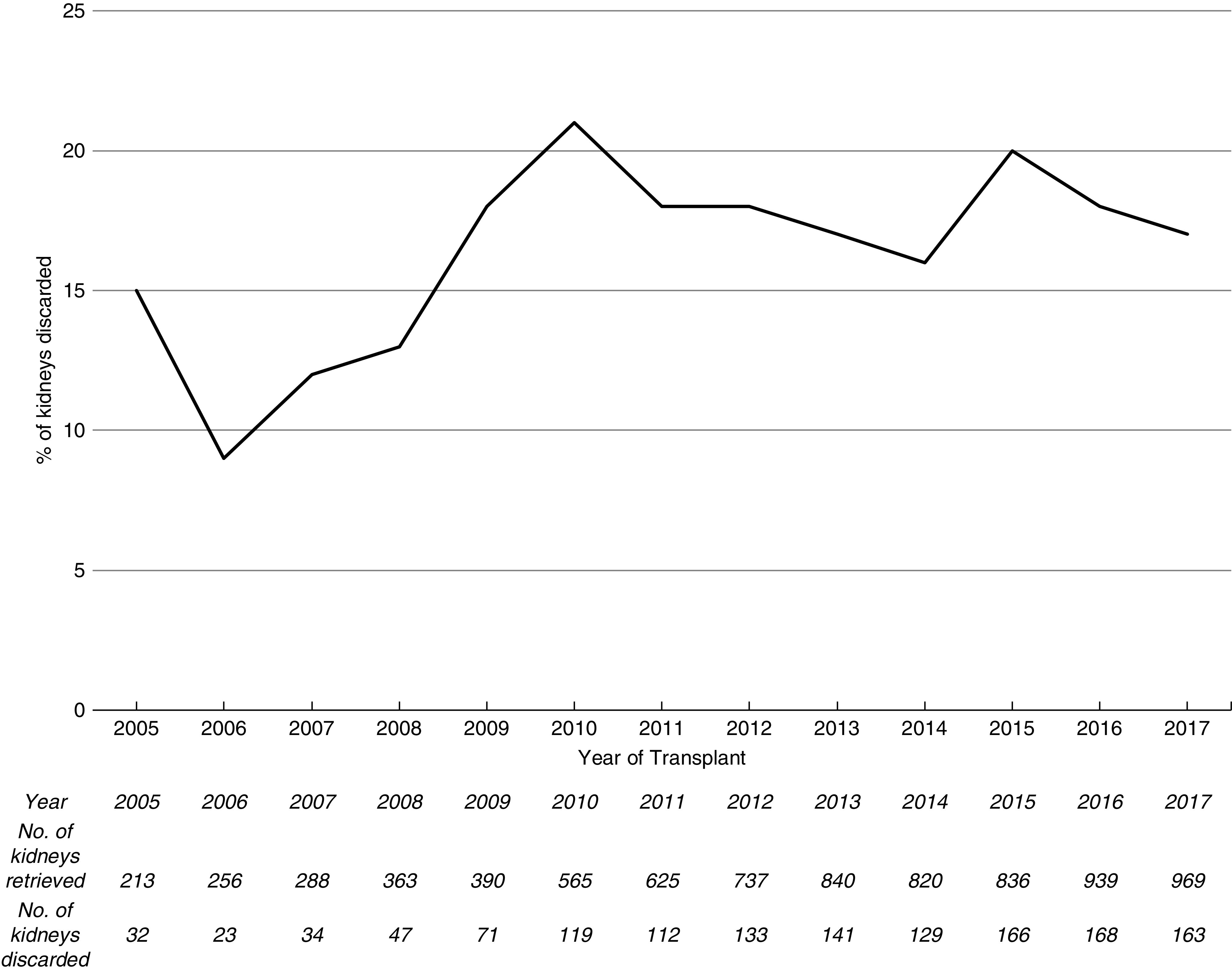
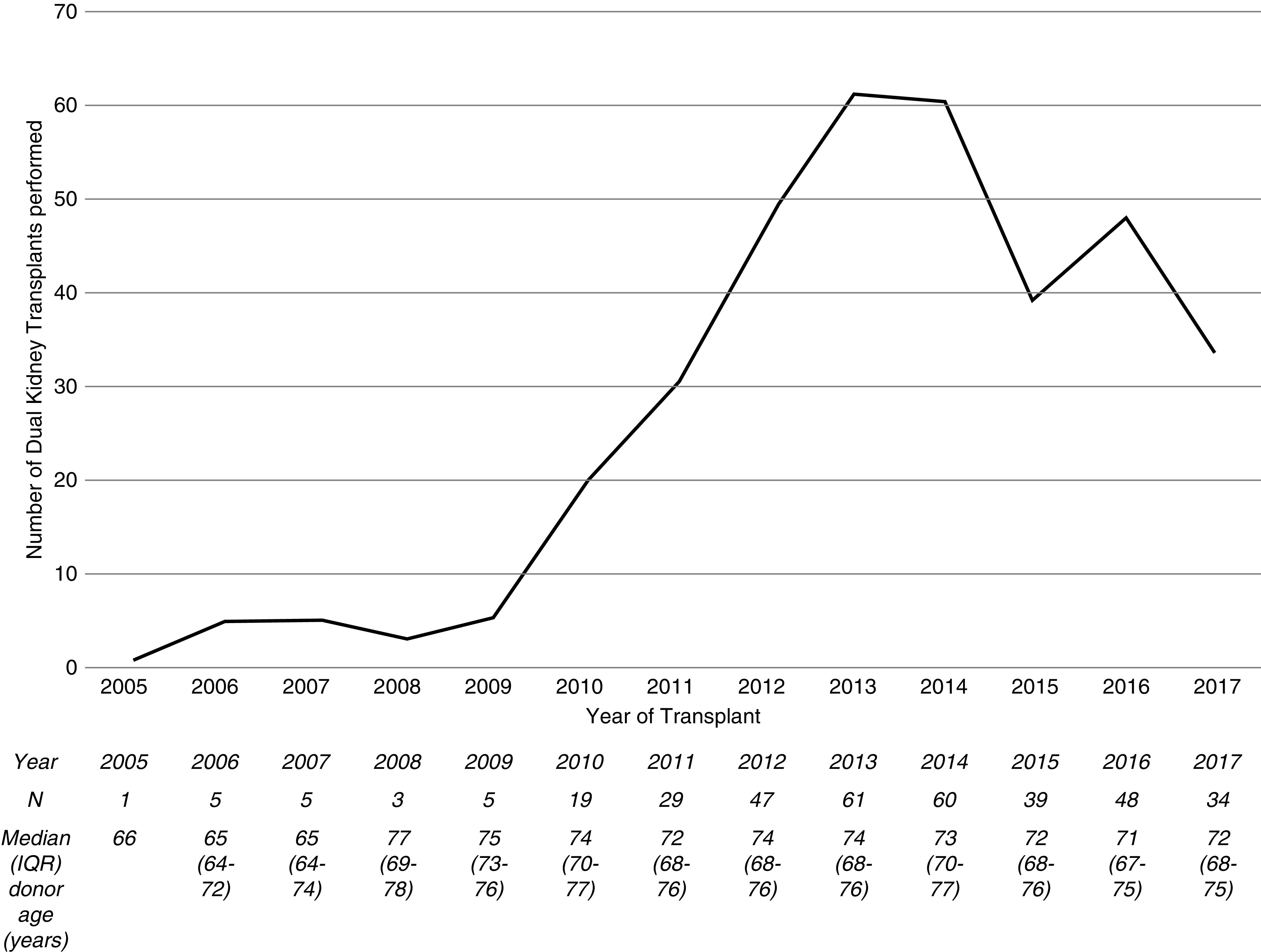
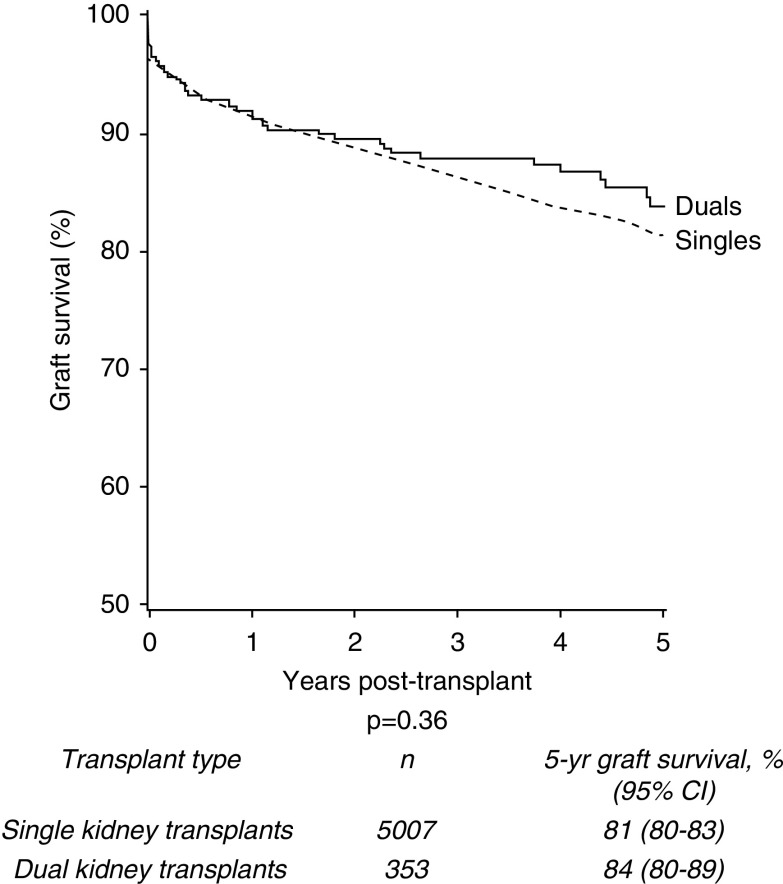
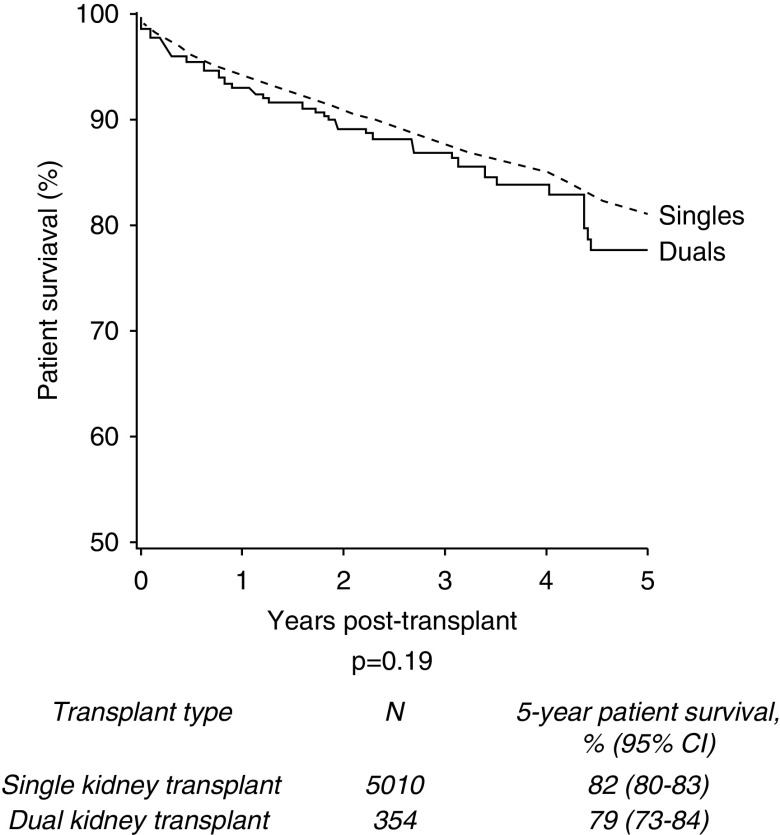
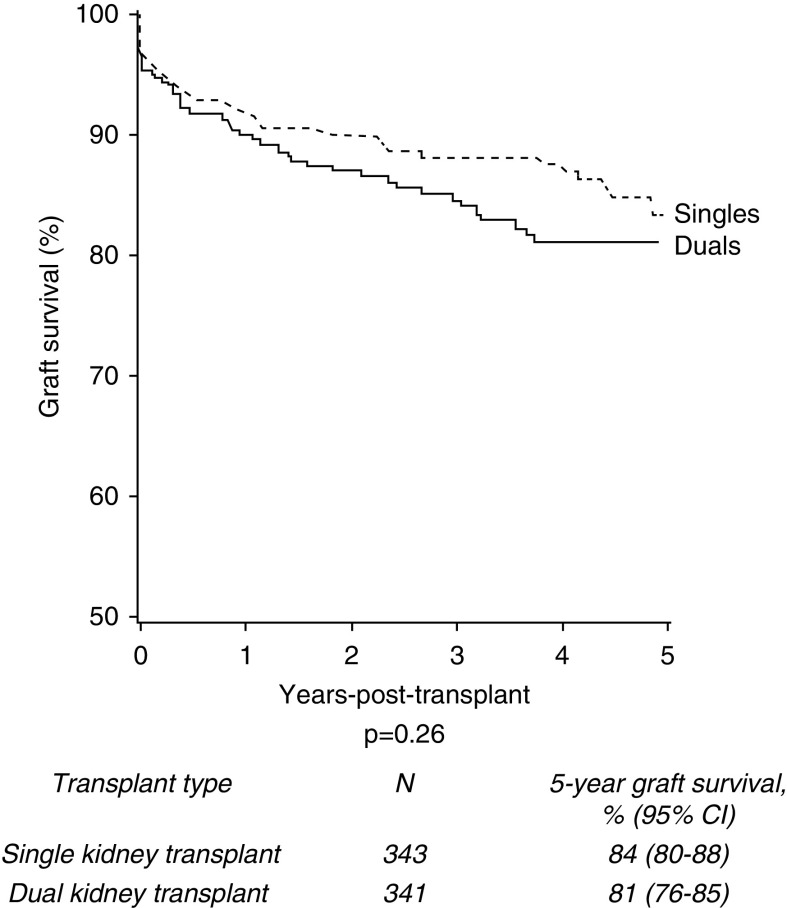
Results: During the study period, 7841 kidneys were procured from deceased donors aged ≥60 years, of which 1338 (17%) were discarded; 356 dual and 5032 single kidneys were transplanted. Donors of dual transplants were older (median, 73 versus 66 years; P<0.001) and had higher United States Kidney Donor Risk Indices (2.48 versus 1.98; P<0.001). Recipients of dual transplants were also older (64 versus 61 years; P<0.001) and had less favorable human leukocyte antigen matching (P<0.001). After adjusting for confounders, dual and single transplants had similar 5-year graft survival (hazard ratio, 0.81; 95% CI, 0.59 to 1.12). No difference in patient survival was demonstrated. Similar findings were observed in a matched cohort with a propensity score analysis method. Median 12-month eGFR was significantly higher in the dual kidney transplant group (40 versus 36 ml/min per 1.73 m2; P<0.001).
Conclusions: Recipients of kidneys from donors aged ≥60 years have similar 5-year graft survival and better graft function at 12 months with dual compared with single deceased donor kidney transplants.
Keywords: deceased donor; kidney donation; kidney donor; kidney transplantation; organ transplant; renal transplantation; survival; transplant outcomes; transplantation; utilization.
Copyright © 2020 by the American Society of Nephrology.
Figures
References
-
- Johnson RJ, Bradbury LL, Martin K, Neuberger J; UK Transplant Registry : Organ donation and transplantation in the UK-the last decade: A report from the UK national transplant registry. Transplantation 97[Suppl 1]: S1–S27, 2014. - PubMed
-
- Remuzzi G, Grinyò J, Ruggenenti P, Beatini M, Cole EH, Milford EL, Brenner BM: Early experience with dual kidney transplantation in adults using expanded donor criteria. Double Kidney Transplant Group (DKG). J Am Soc Nephrol 10: 2591–2598, 1999. - PubMed
-
- Alfrey EJ, Lee CM, Scandling JD, Pavlakis M, Markezich AJ, Dafoe DC: When should expanded criteria donor kidneys be used for single versus dual kidney transplants? Transplantation 64: 1142–1146, 1997. - PubMed
-
- Glassock RJ, Rule AD: Aging and the kidneys: Anatomy, physiology and consequences for defining chronic kidney disease. Nephron 134: 25–29, 2016. - PubMed
-
- Coresh J, Astor BC, Greene T, Eknoyan G, Levey AS: Prevalence of chronic kidney disease and decreased kidney function in the adult US population: Third National Health and Nutrition Examination Survey. Am J Kidney Dis 41: 1–12, 2003. - PubMed
Publication types
MeSH terms
LinkOut - more resources
Full Text Sources
Medical
Research Materials
Miscellaneous