


Systematic review of the global epidemiology of viral-induced acute liver failure
- PMID: 32690747
- PMCID: PMC7375632
- DOI: 10.1136/bmjopen-2020-037473
Systematic review of the global epidemiology of viral-induced acute liver failure
Abstract
Objectives: The aetiology and burden of viral-induced acute liver failure remains unclear globally. It is important to understand the epidemiology of viral-induced ALF to plan for clinical case management and case prevention.
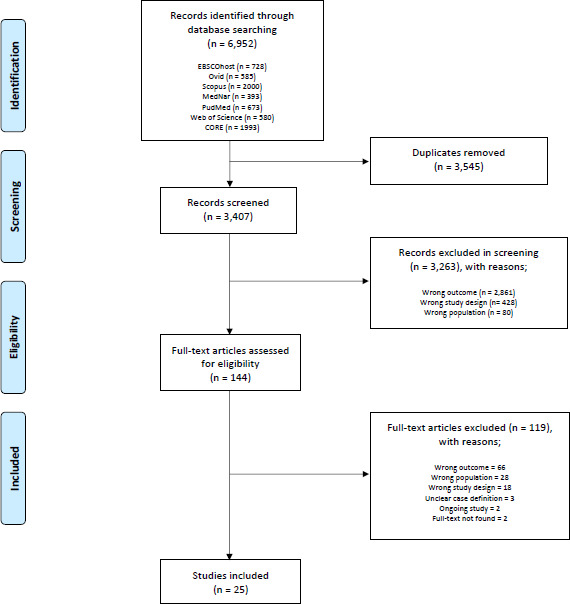
Participants: This systematic review was conducted to synthesize data on the relative contribution of different viruses to the aetiology of viral-induced acute liver failure in an attempt to compile evidence that is currently missing in the field. EBSCOhost, PubMed, ScienceDirect, Scopus and Web of Science were searched for relevant literature published from 2009 to 2019. The initial search was run on 9 April 2019 and updated via PubMed on 30 September 2019 with no new eligible studies to include. Twenty-five eligible studies were included in the results of this review.
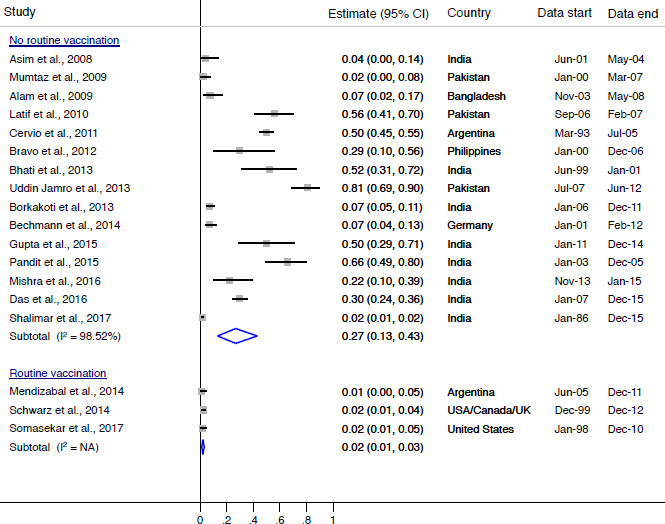
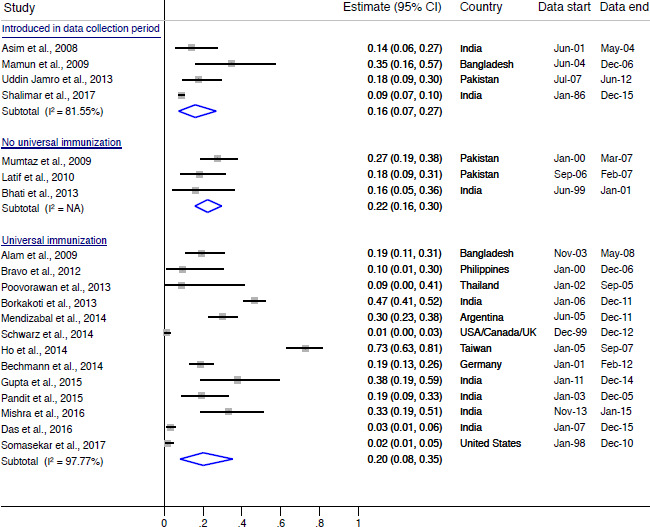
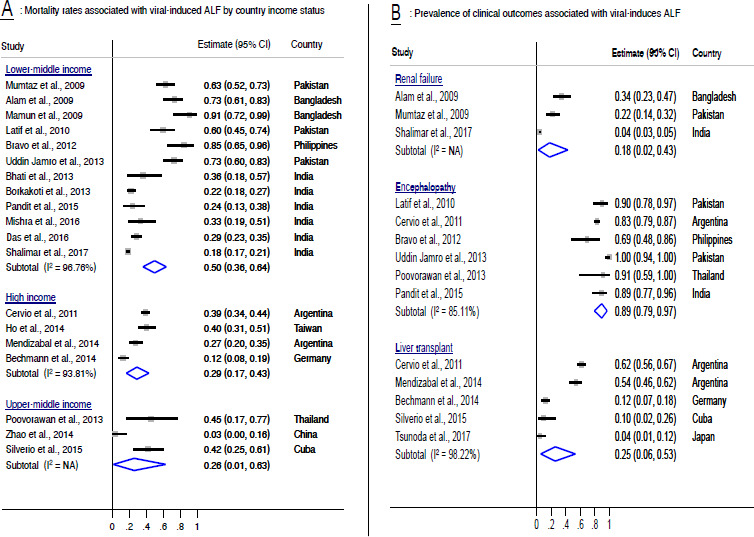
Results: This systematic review estimated the burden of acute liver failure after infection with hepatitis B virus, hepatitis A virus, hepatitis C virus, hepatitis E virus, herpes simplex virus/human herpesvirus, cytomegalovirus, Epstein-Barr virus and parvovirus B19. Data were largely missing for acute liver failure after infection with varicella-zostervirus, human parainfluenza viruses, yellow fever virus, coxsackievirus and/or adenovirus. The prevalence of hepatitis A-induced acute liver failur was markedly lower in countries with routine hepatitis A immunisation versus no routine hepatitis A immunisation. Hepatitis E virus was the most common aetiological cause of viral-induced acute liver failure reported in this review. In addition, viral-induced acute liver failure had poor outcomes as indicated by high fatality rates, which appear to increase with poor economic status of the studied countries.
Conclusions: Immunisation against hepatitis A and hepatitis B should be prioritised in low-income and middle-income countries to prevent high viral-induced acute liver failure mortality rates, especially in settings where resources for managing acute liver failure are lacking. The expanded use of hepatitis E immunisation should be explored as hepatitis E virus was the most common cause of acute liver failure.
Registration: PROSPERO registration number: CRD42017079730.
Keywords: epidemiology; hepatology; virology.
© Author(s) (or their employer(s)) 2020. Re-use permitted under CC BY-NC. No commercial re-use. See rights and permissions. Published by BMJ.
Conflict of interest statement
Competing interests: None declared.
Figures
References
-
- European Association for the Study of the Liver. Electronic address: easloffice@easloffice.eu, Clinical practice guidelines panel, Wendon, J, et al. EASL clinical practical guidelines on the management of acute (fulminant) liver failure. J Hepatol 2017;66:1047–81. 10.1016/j.jhep.2016.12.003 - DOI - PubMed
-
- Morabito V, Adebayo D. Fulminant hepatitis: definitions, causes and management. Health 2014;06:1038–48. 10.4236/health.2014.610130 - DOI
Publication types
MeSH terms
LinkOut - more resources
Full Text Sources
Medical
Miscellaneous
