


Early life adversity decreases pre-adolescent fear expression by accelerating amygdala PV cell development
- PMID: 32692310
- PMCID: PMC7413666
- DOI: 10.7554/eLife.55263
Early life adversity decreases pre-adolescent fear expression by accelerating amygdala PV cell development
Abstract
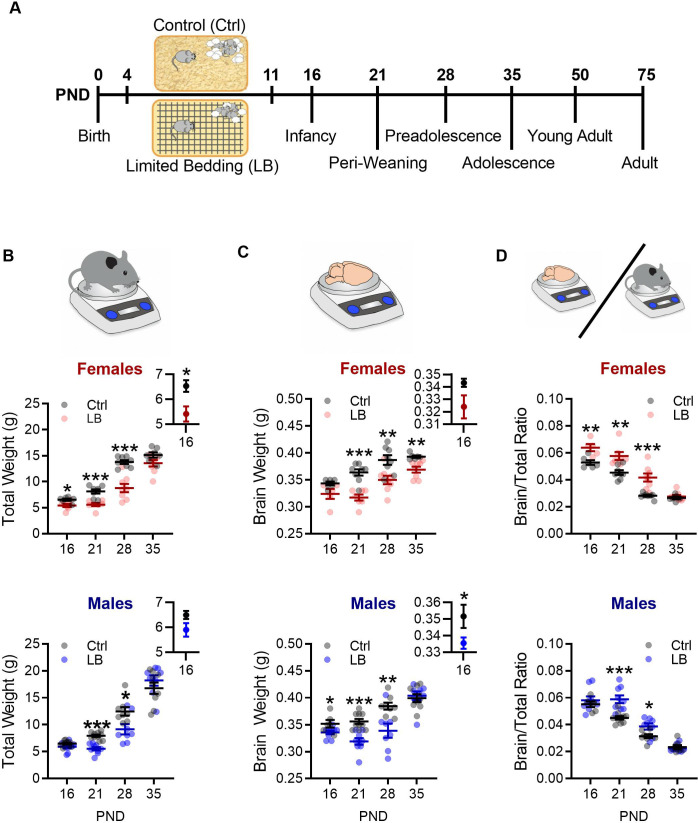
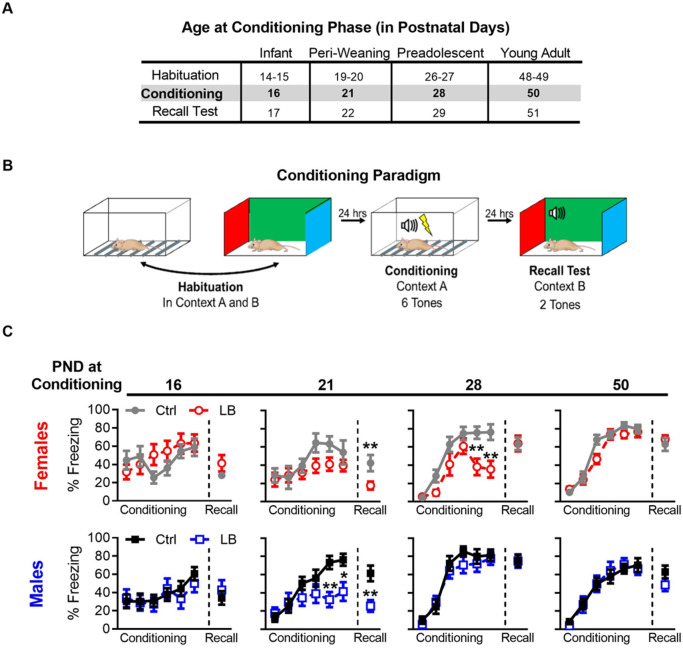
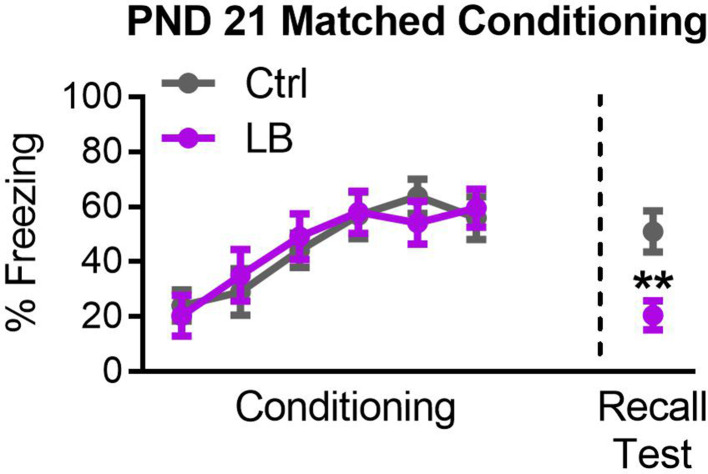
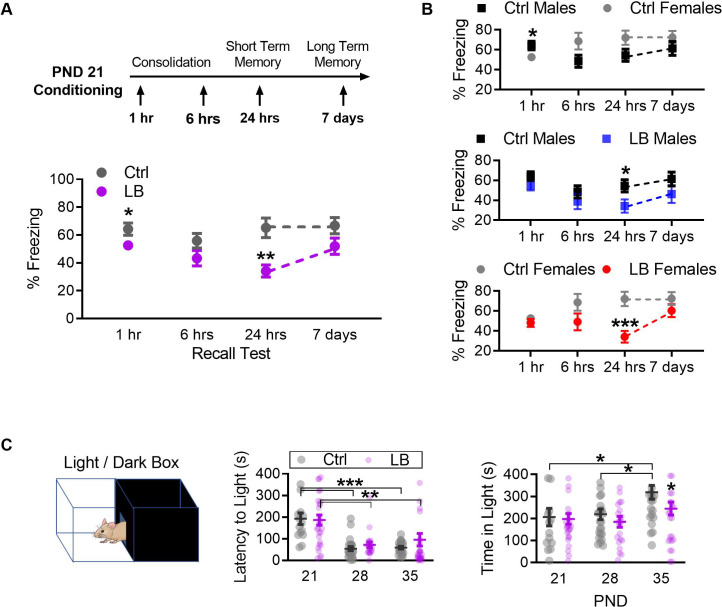
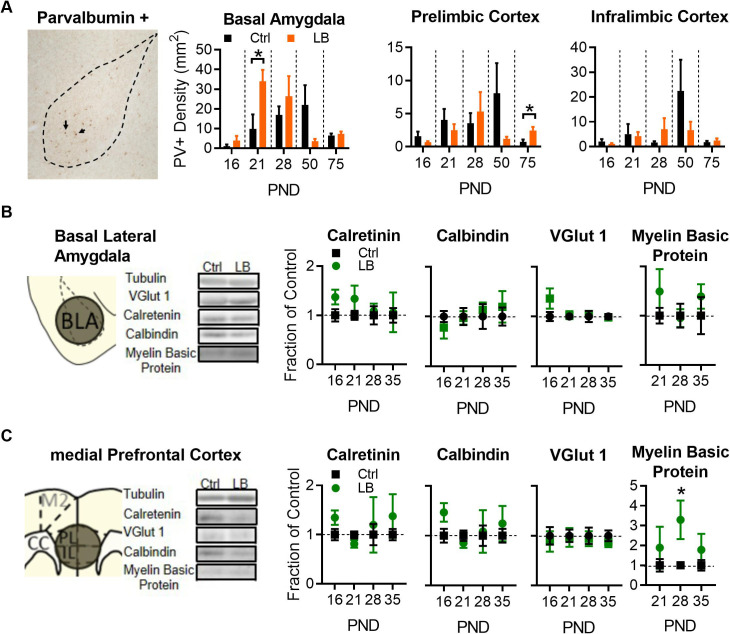
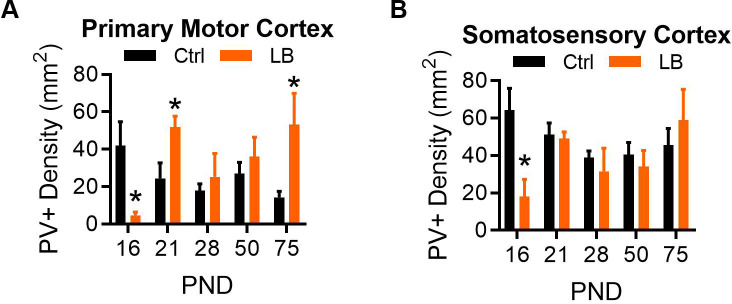
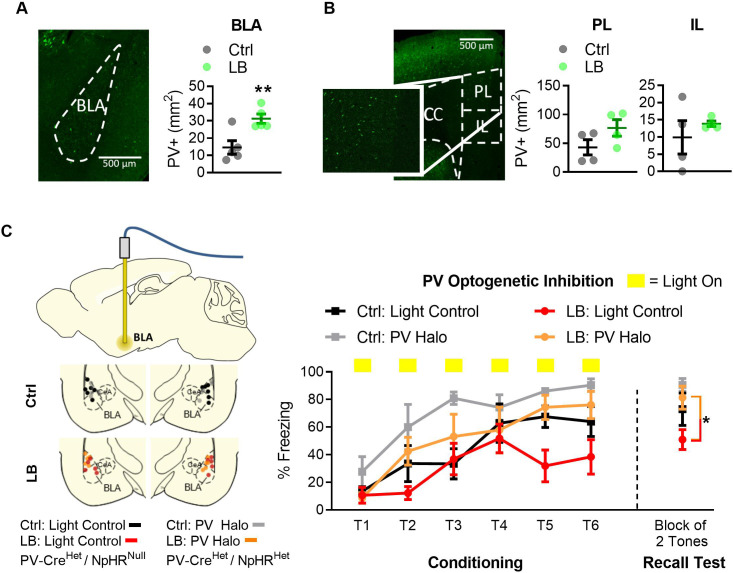
Early life adversity (ELA) is associated with increased risk for stress-related disorders later in life. The link between ELA and risk for psychopathology is well established but the developmental mechanisms remain unclear. Using a mouse model of resource insecurity, limited bedding (LB), we tested the effects of LB on the development of fear learning and neuronal structures involved in emotional regulation, the medial prefrontal cortex (mPFC) and basolateral amygdala (BLA). LB delayed the ability of peri-weanling (21 days old) mice to express, but not form, an auditory conditioned fear memory. LB accelerated the developmental emergence of parvalbumin (PV)-positive cells in the BLA and increased anatomical connections between PL and BLA. Fear expression in LB mice was rescued through optogenetic inactivation of PV-positive cells in the BLA. The current results provide a model of transiently blunted emotional reactivity in early development, with latent fear-associated memories emerging later in adolescence.
Keywords: amygdala; development; early life adversity; fear conditioning; medial prefrontal cortex; mouse; neuroscience.
© 2020, Manzano Nieves et al.
Conflict of interest statement
GM, MB, SB, KB No competing interests declared
Figures
References
-
- Agid O, Shapira B, Zislin J, Ritsner M, Hanin B, Murad H, Troudart T, Bloch M, Heresco-Levy U, Lerer B. Environment and vulnerability to major psychiatric illness: a case control study of early parental loss in major depression, bipolar disorder and schizophrenia. Molecular Psychiatry. 1999;4:163–172. doi: 10.1038/sj.mp.4000473. - DOI - PubMed
Publication types
MeSH terms
Grants and funding
LinkOut - more resources
Full Text Sources
Medical
Molecular Biology Databases
